Rocket Companies Inc. -Current market's rocket?-

ValueAct has increased its ownership in Redfin after the merger at prices of $13.46-$13.94. Ownership is now 8.9%.

GwZY0qMW8AAzvUH

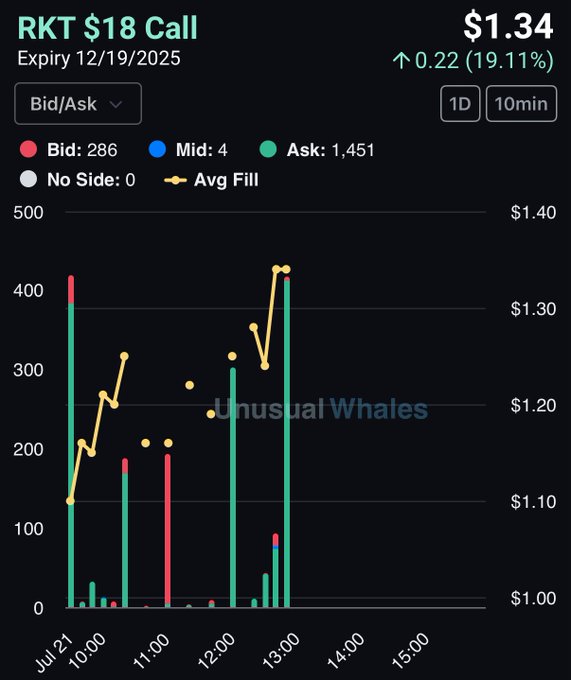
$18 calls expiring on 12/19/25 were opened on the stock a moment ago for $213k.

GwZWUSkWwAAh_O4

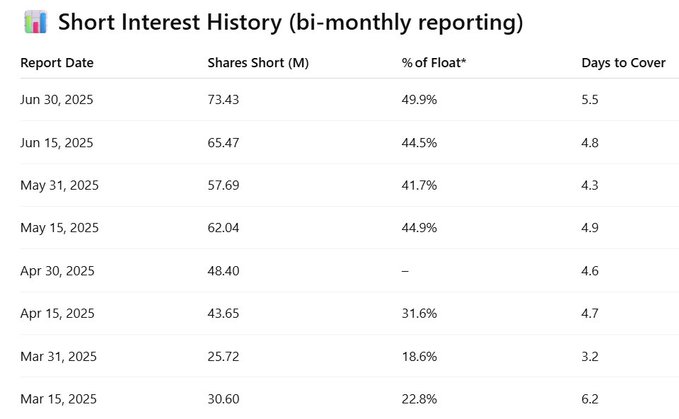
Short interest remains at very high levels. The market is based on differences in opinion, and in Rocket’s case, these are exceptionally large:

GwTsmYGXIAA2xmc

EDIT:

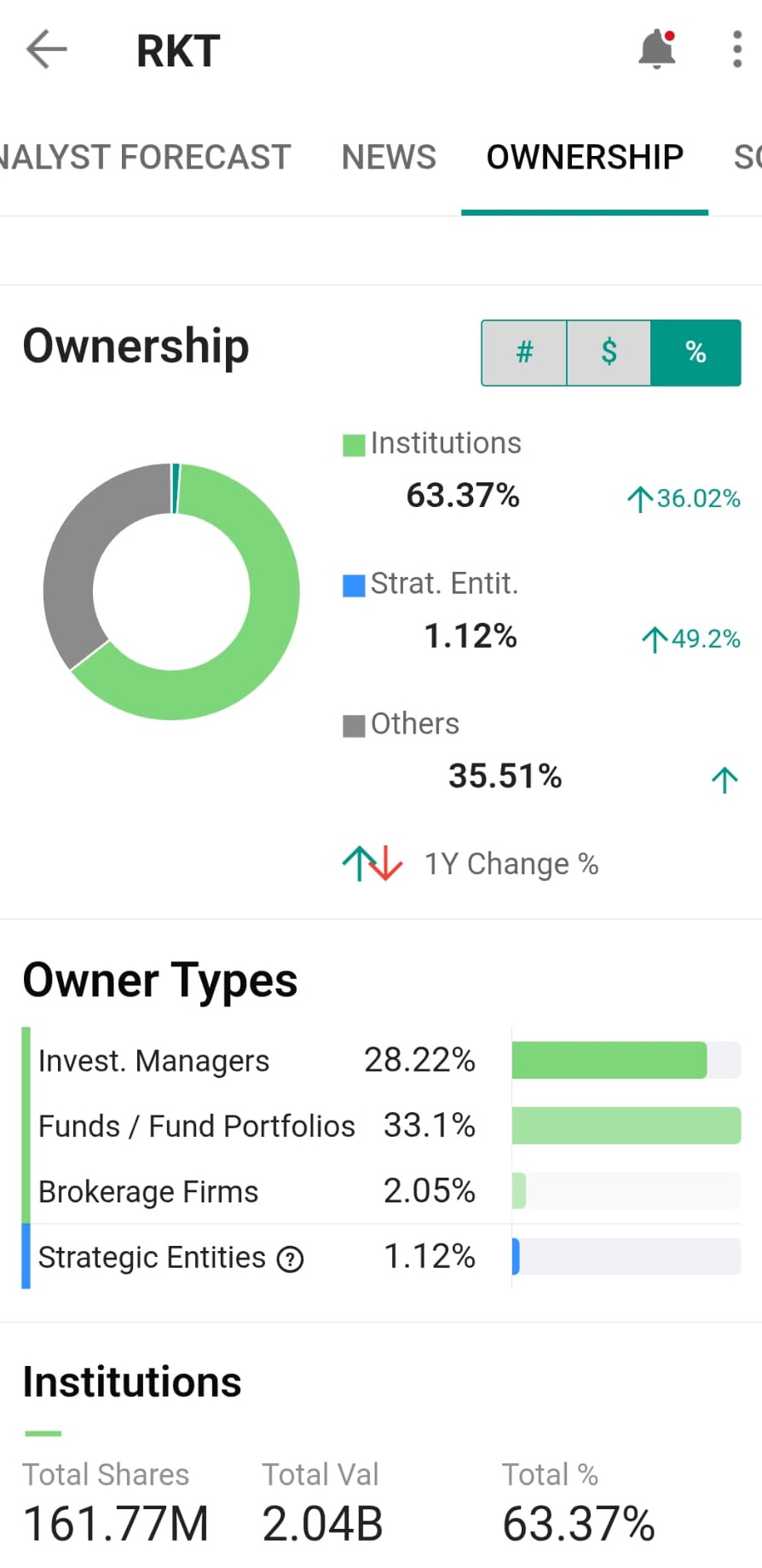
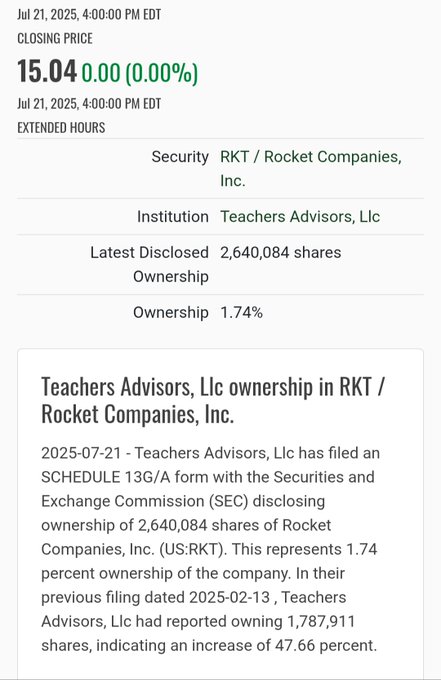
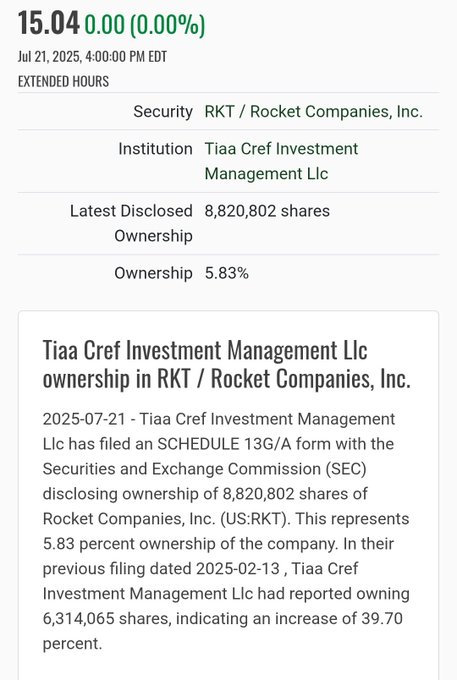
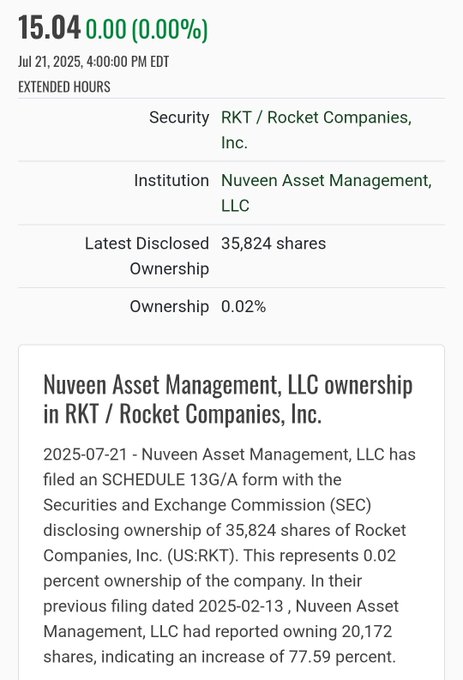
RKT’s larger fund/institutional owners have increased their positions by +40-48% based on recent 13G/A filings. Ownership stakes have grown steadily over the past year, and institutions have increased their holdings by +36%. I believe that in just over a year, approximately 80-85% of the company will be held by institutions. In addition, the free float is decreasing day by day:

Institutional holdings as of 21.7.2025. The recent additions below are not yet reflected in the listing.
Institutional holdings 22.7.2025

GwajJxHW8AY6SQX

GwajJxIWwAASNJU

GwajJxPWEAIHKF0

3 Likes

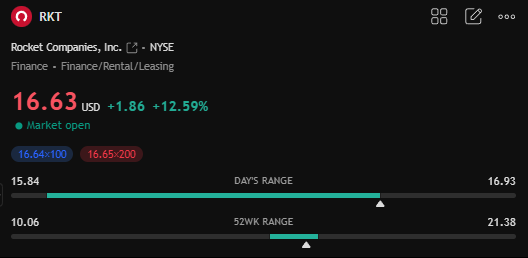
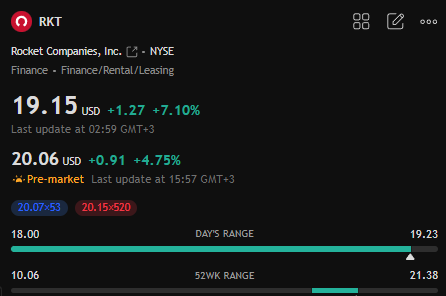
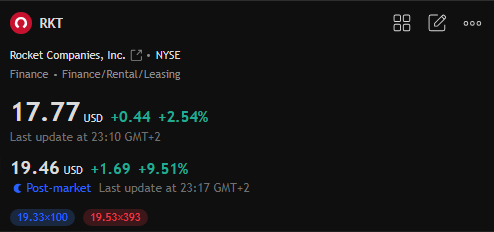
Rocket is up approx. +7.5% in the after-market (@$17.23, today’s daily gain +6.4%), and Wall Street Bets, among others, is working on a Short Squeeze based on X messages, meaning we might be close to the moment I’ve been anticipating since spring.

Additionally, based on recent messages, the Trump administration has focused on bringing down mortgage rates one way or another. And best of all, I believe the company will be a winner in the future, whether a short-term Short Squeeze happens or not.

Rocket Companies short sellers:
https://fintel.io/sosh/us/rkt

I mentioned a few weeks ago that Rocket was the seventh most likely Short Squeeze target based on the screener below. The latest number is slightly higher (42).
https://fintel.io/shortSqueeze

The next few days will likely be worth following.

10 Likes

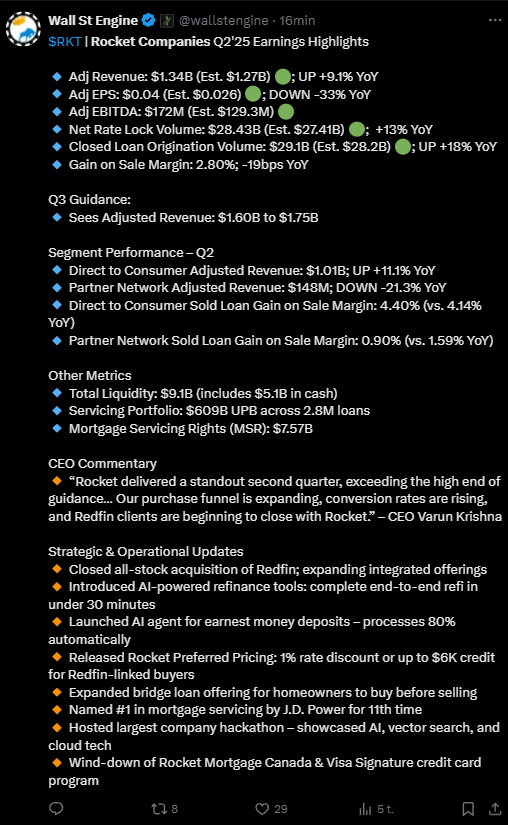
Good performance in challenging conditions. Needs further analysis over time. However, eyes are primarily on the future.

image

EDIT: The RKT Earnings Call was comprehensive, and I recommend listening to it if you are interested in RKT as an investment. Below are my miscellaneous notes from the call. There may be errors in the text.

  • Market outlook is starting to be optimistic. Consumer sentiment has started to improve since a challenging April. The momentum from the end of Q2 has continued into Q3.

  • Housing prices are slowly starting to soften (stabilize) and the market is gradually turning in favor of buyers. Buyers are finally gaining leverage in the market after years.

  • New customers for Rocket (approx. 50% of recent customers).

  • The growth rate of housing prices has slowed down, which is a good thing.

  • The CEO’s brief view of the quarter was “Execution”.

  • The utilization of AI agents is progressing, the system is fully automated.

  • The use of the AI “system”, i.e., MCP (Model Context Protocol), is progressing daily.

  • Time savings generated by MCP currently approx. 20,000 hours per year.

  • Chat users convert into customers better and more efficiently.

  • The application is completed from start to finish in about 30 minutes thanks to the AI system.

  • Integration with Redfin has progressed well from day one as a result of prior groundwork.

  • Mr. Cooper merger is progressing on schedule. Teamwork is key in both mergers.

  • The goal is to revolutionize the entire housing market with Rocket’s concept.

  • Guidance was exceeded despite a slow start to the quarter and a challenging market.

  • They are cautiously optimistic about summer buyers (it usually quiets down after Labor Day, i.e., 9/1/25), but this year the summer season seems longer.

Based on the call, the continuation seems to be progressing well and according to plan.

EDIT: 1.8.2025

The market liked RKT’s earnings report.
image

8 Likes

Now it seems that the necessary catalyst has arrived for the stock to really start performing. Have you, @Thiebault, tried to model what kind of results the company would be able to achieve in a lower interest rate environment? The case would be appealing because the direction from here on seems quite clear, but when I look at the kind of results the Rocket + Cooper + Redfin combo made in 22-23, I’m not particularly convinced by the valuation, P/E 30? Of course, my approach is probably flawed, as there is certainly pent-up demand even for refinancing alone, and comparing to past years is therefore incorrect.

4 Likes

I’ll reply quickly (and apparently at length :grinning:) without notes and will clarify later if needed.

I have been estimating potential calculations on paper throughout the spring (as new data has become available), and based on those, I saw RKT as an almost ‘sure’ investment in the long term (6-18 months) (especially at $12-14 prices). Only the timeline and the success of mergers were/are the biggest question marks. Modeling is certainly not simple in any way (precisely because of the mergers, and the possibility of failure must also be considered), and there have been 50% short positions, so I’ve had to review my very bullish analysis quite critically.

Indeed, one can look at the period immediately after the pandemic, i.e., 2020 and 2021, for indications of future potential, when interest rates saw a significant downward movement and Rocket went public when the market was quite high, and my own estimates concern precisely the so-called peak market, which I believe we are slowly heading towards. Rocket’s EPS alone were $4.04 in 2020 and $2.43 in 2021, so the only question remaining was when interest rates would start to fall and whether Trump and Bessent would succeed in bringing them down before the 2026 midterm elections. I also believe in Rocket’s vision of revolutionizing the entire US housing market. For clarity, I believe interest rates will fall significantly in the coming years and much lower than market expectations and consensus. Additionally, the MBS market brings significant additional revenue, and the benefits offered by AI are very challenging to estimate.

Furthermore, since the post-pandemic period, Rocket has gained access to MCP (AI tools), meaning efficiency improvements are expected, as are synergy benefits from Redfin and Mr. Cooper mergers. Additionally, the need for workforce decreases, which brings cost savings. Having reviewed numerous companies last year, I only came across three truly interesting AI companies that benefit very clearly from the use of artificial intelligence, and almost their entire operations are built upon leveraging AI. These companies were Palantir, Snowflake, and Rocket Companies. Nowadays, there are, of course, many more. Each of these companies is a market leader in its field, but only Rocket’s potential seemed to be hidden from investors. Furthermore, significant short positions offered the possibility of a short squeeze, the occurrence of which in some form/size was, in my opinion, only a matter of time. In my opinion, with Rocket’s results yesterday, we moved into precisely the market conditions I have been waiting for since spring (and last year). I will make more detailed estimates of the potential once I have time to read the Q2 report thoroughly.

Attached are also Jaguar Analytics’ notes from yesterday’s EC call.
image

11 Likes

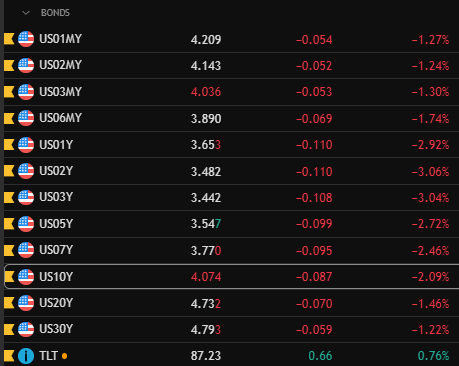
Last weekend, several positive hints and data emerged regarding the direction the (housing) market might be turning. Defensive sectors shone, such as XLV, XLP, XLU, as well as Homebuilders and mortgage stocks like Rocket Companies. Mortgage rates simultaneously began to fall. Additionally, US bond yields decreased on Friday, with the US02y being the biggest decliner with a -7.09% drop.

The correction move targeting Nasdaq and Sp500 at the end of the week pushed bond yields to lower levels. Yields are relatively flat so far today.
image

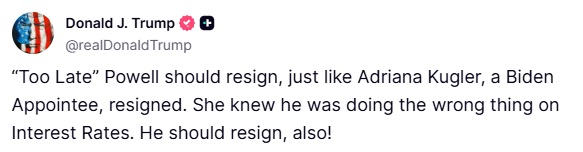
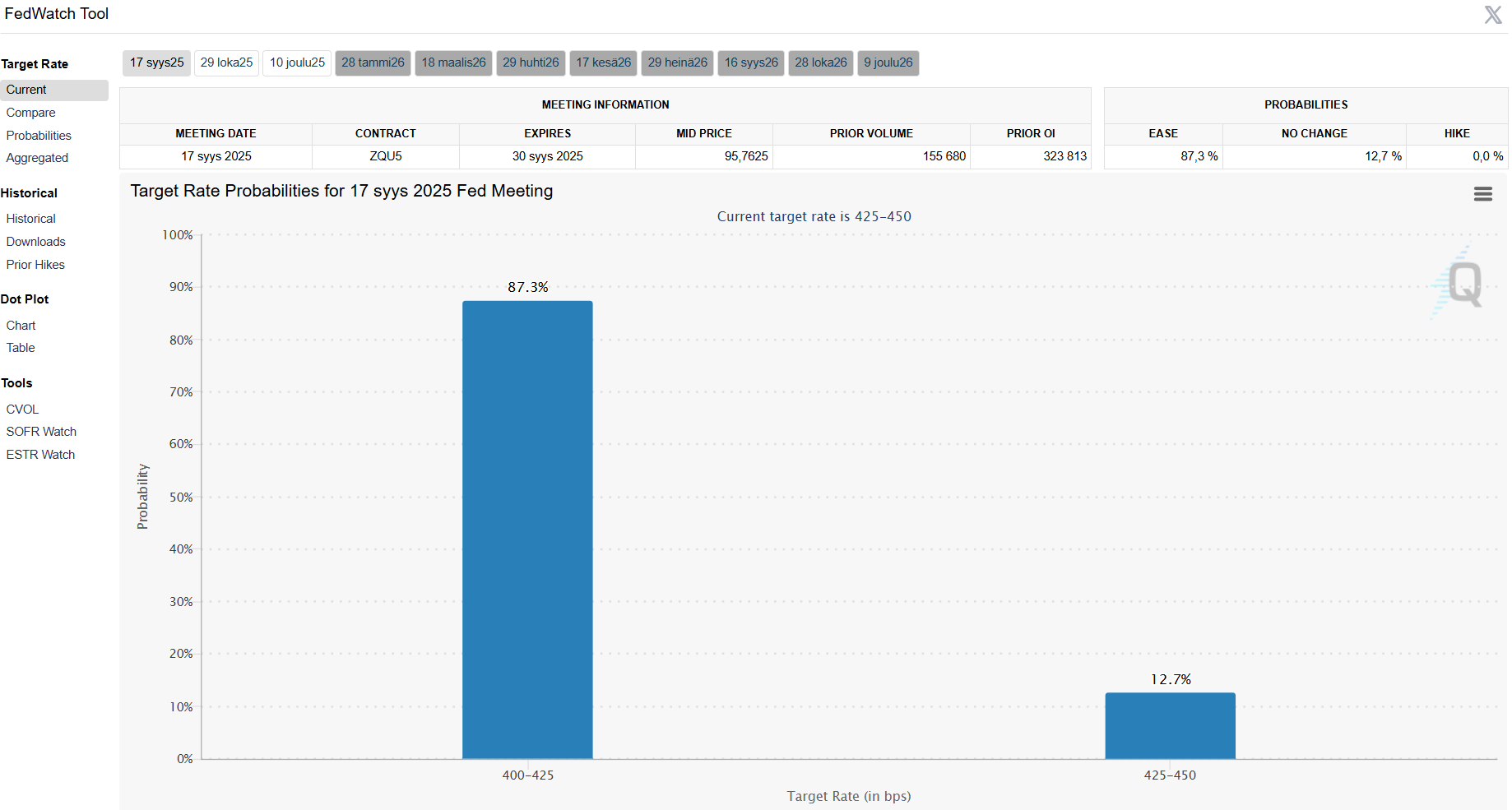
Generally, a slightly softening economy like the current one (e.g., decreasing jobs) is, in my opinion, a relatively optimal situation for a company like Rocket. The probability of the Fed cutting rates (25-50 bps) in September rose to 87.4% today, and looking at Friday’s unemployment figures (and also previously revised downward figures), one can conclude that Powell is likely late. In other related news, Fed governor Kugler resigned on Friday.

GxTKKTwWwAA-3w5

GxQz-g7WQAM5Nzo

I personally don’t see the potential inflation brought by tariffs as a problem, so in my original estimates, I expected Powell to cut rates already during the summer. On Friday, larger players flocked to safer asset classes like bonds and MBS, and a broader decline in stocks and lower yields often correlate quite directly with mortgage rates. The attractiveness of MBS, in particular, increases amidst uncertainty, which in turn lowers mortgage rates. Theoretically, the Fed could also buy MBS, supporting lower mortgage rates, but as I understand it, the Fed has been reducing them during 2025. The ten-year bond yield is a kind of “benchmark” for mortgage rates, among other things, so its decline generally also lowers mortgage rates and is the most closely watched yield.

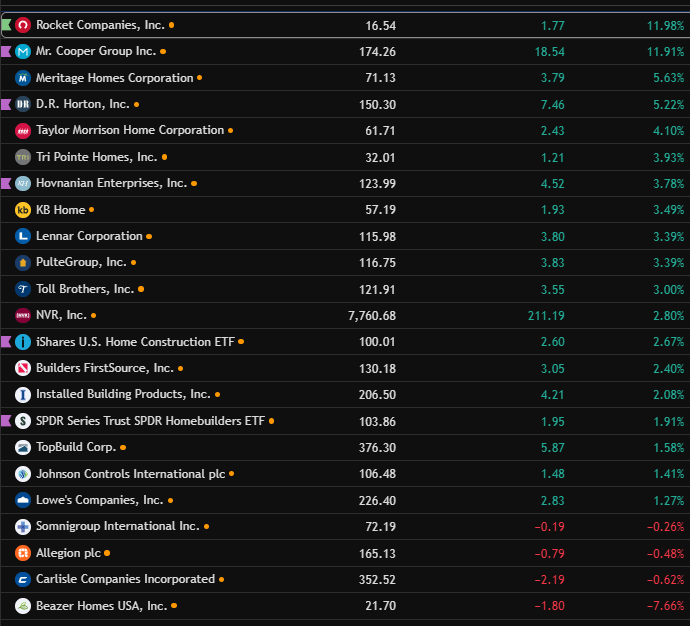
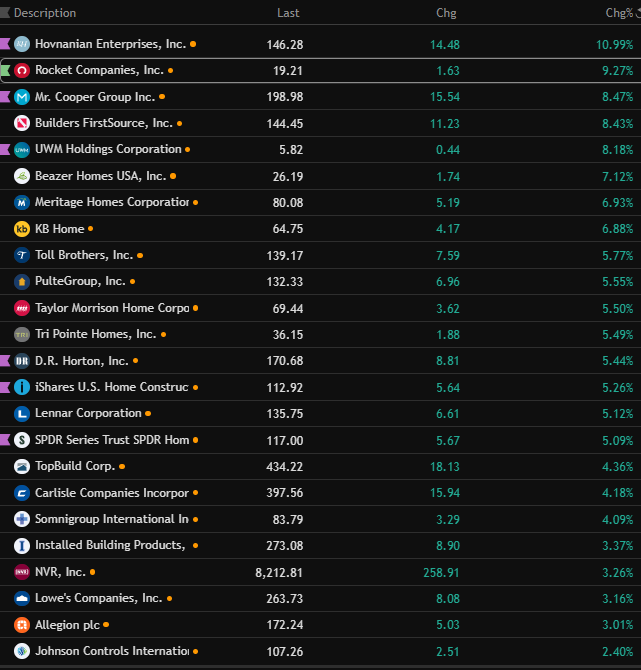
Homebuilders stocks/ETFs, as well as RKT and COOP, were on the rise on Friday:
image

Usually, just a signal from the Fed about rate cuts is more important for getting mortgage rates to fall than the actual rate cut itself, because the market typically prices in new information within days (front run). In that sense, the current situation is even more optimal than if the Fed were to actually cut rates, because the market is forward-looking and investors act according to future expectations. These events and changes over the past couple of days may lead investors and borrowers to anticipate “almost certain” September rate cuts, and these are usually priced in well in advance of the actual cut. This also explains why stocks, for example, usually fall when rates are finally cut. The same applies to Rocket’s stock, which I believe was worth buying when the market was pricing in “higher for longer” and even rate hikes. Short sellers seemed to be using Rocket as a kind of hedge against high rates, and as rates fall, that bet may start to unwind. For me, selling Rocket shares will happen at the latest when the first hints of rising rates emerge sometime in the distant future, i.e., at the peak/latter part of the uptrend cycle.

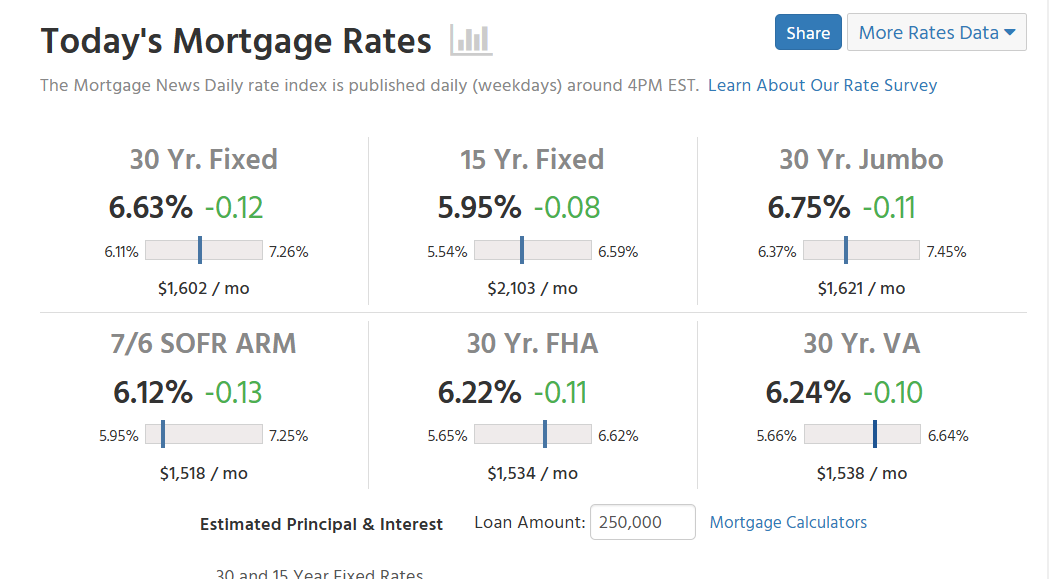
Mortgage rates began to fall on Friday, partly due to weakening job figures:
image

A slowing economy and decreasing jobs can certainly make the situation difficult for homebuyers, but I still see future falling rates (Fed Funds Rate and Mortgage rate) as net positive for Rocket, especially due to refinancings. Rates are currently artificially kept high, and I see no reason to keep them at these levels anymore. The market, in my opinion, began to price this in once again at the end of last week.

In the US housing market, it’s not about a lack of buyers, but rather excessively high housing prices and high interest rates, which Rocket mentioned in the recent EC. Currently, it’s a buyer’s market, so falling rates and moderating housing prices, in my opinion, support the housing market, even if the economy softens at the same time. A significant and rapid drop in rates would potentially cause a refinancing boom, from which Rocket would naturally benefit considerably. Additionally, due to high housing prices, it’s possible that lenders and also the administration will try to lower mortgage rates through various means to stimulate housing sales before the 2026 midterm elections. Trump has repeatedly stated that the market situation should be made favorable for homebuyers. Furthermore, the massive MBS market adds its own complexity to the mortgage rate mix, and they have a direct impact on, for example, the 30 Yr Fixed rate.

Trump’s Friday message regarding Russia and Medvedev’s nuclear submarine is just one more example of the uncertainty that periodically appears in the markets, and generally, uncertainty makes larger players seek out perceived safe bonds and MBS even more eagerly.

image

The mortgage and MBS market, the Fed’s actions and balance sheet runoff, bonds, and the overall picture are, of course, not as simple as I try to explain above, and there are countless variables. I wouldn’t be surprised if mortgage rates (30 Yr. Fixed) fell to between 5.00-6.00% within a few months from the current 6.63% level, because market repricing usually happens quickly. The only thing one can probably rely on is that Trump and Bessent will try to lower mortgage rates to ensure a Republican midterm victory in 2026, and falling mortgage rates would directly benefit Rocket in several different ways.

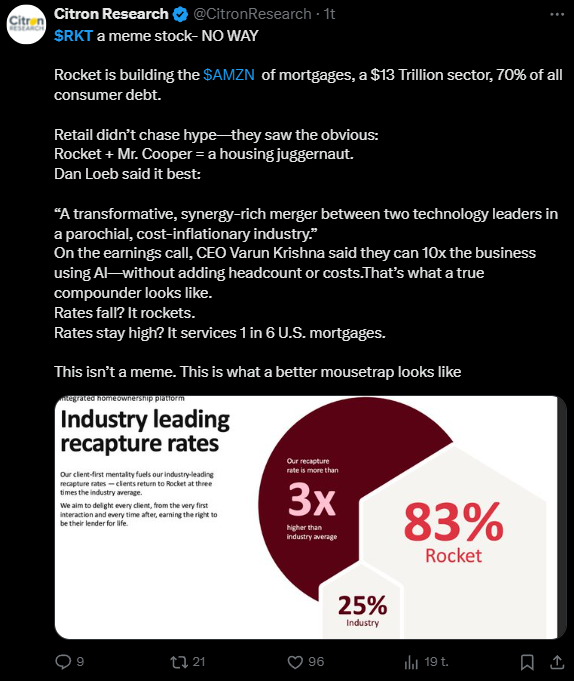
EDIT: Citron Research is once again writing bullish comments about Rocket:
image

10 Likes

I will briefly open up my own assessment of the valuations and potential after the RKT + Redfin + Mr. Cooper merger with simplified examples. This is, of course, merely an educated guess, and based on significant short positions and ValueAct’s and Citron Research’s long positions, opinions on Rocket are clearly divided.

The assessment includes, among other things, dilutions, changes in shares, synergies, and lower mortgage rates of 4-5% (30 Yr Fixed, now 6.57%), meaning it would be a rather optimal bull market where downward pressure on interest rates or their stabilization at lower levels is the base scenario, not a rise in rates. Furthermore, the synergy benefits can include Mr. Cooper’s 150 million customer interactions and Redfin’s 50 million monthly visitors, in which case the potential for utilizing AI might be underestimated (or overestimated) by myself.

My own estimate for the merged Rocket’s EPS is $3.20-3.50 by 2026-2027, at which point the fair value in a potential bull market would be P/E 10-15 (or P/E 8-20) approximately $26.00-70.00. The realization of synergies, benefits achieved through AI, and the interest rate level have a significant impact on the stock’s valuation. Lower-than-estimated interest rates and broader synergy benefits would make the case very bullish, and I do not rule out rates below 4.00% within a few years, as interest rates generally move quickly once a decline begins and the market starts repricing.

In a negative scenario, where synergies are barely realized, the market would remain quite soft, interest rates would not fall significantly (below 6.0%), inflation would slow down the housing market, EPS would remain at $0.60-0.80, and an acceptable P/E would be 10-15, in which case the stock price would potentially hover around $6.00-12.00 or even lower. Risks could include integration challenges, “higher for longer” interest rates, regulatory risks, and rising inflation. This is likely the scenario that short-sellers have been betting on or hedging for longer.

Based on future potential and my own estimated calculations, buying the stock at $12.00 was reasonable, but as pricing approaches $18.00-$21.00++, it requires expectations of mortgage rates falling to at least 6.0% (and below) and/or rising valuation multiples, the realization of the merger and synergies, and benefits derived from AI.

On the other hand, considering the steadily growing revenue stream, synergy benefits, market leader position, and the significant potential brought by AI, as well as the market’s forward-looking pricing, I believe the stock’s valuation will settle at P/E 12-15 (P/E 20+ bullish), in which case my semi-bullish range is $33.50-50.00 within 2-3 years. Customer service, marketing, and loan processes optimized through AI, Mr. Cooper’s loan portfolio management, improved recapture rate and cross-selling, and the “10x” scalability mentioned in the EC, can increase margins by, for example, 2-3% (+4-5% would already be very bullish), which would support growth and could give the revamped RKT significantly higher speculative valuation multiples.

EDIT: Citron Research, i.e., Andrew Left, continues messaging about RKT:

image

Additionally, Daniel Loeb has written an article about RKT, which I haven’t had time to read yet.
https://seekingalpha.com/article/4808415-rocket-and-mr-cooper-a-transformative-synergy-rich-merger

10 Likes

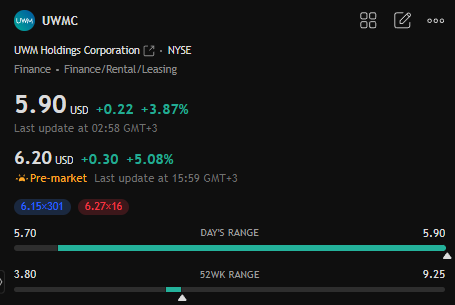
At a quick glance, uwmc posted an excellent quarter and result. The toughest competitor and peer.
Screenshot_2025-08-07-17-40-10-48_40deb401b9ffe8e1df2f1cc5ba480b12

2 Likes

UWM would be increasing its profitability in Q2 and Matt was positive, it’s worth listening to the UWMC Q2 call as well.

I mean increasing its margins in Q3

This might give others room regarding profitability?

That article said that Rocket takes about 20 days for those loan closings, which is better than the incredibly long time it usually takes, but I think UWMC is much faster than Rocket, let alone others.

It was said about Mr. Cooper that it’s the largest on the servicing side; UWMC is now bringing servicing in-house. So, these companies will certainly compete fiercely, but hopefully, both can profitably take market share from weaker players.

I’m not immediately convinced that Rocket would be superior, but there are acquisitions coming, and AI efficiency, etc. Synergies.

UWMC has 2000 developers in-house building systems and software. Matt commented in Q1 that he’s not interested in buying things when they can develop them themselves.

The closing time for others is incredibly long indeed; was it 45 days on average or something similar?

Hey. Where have you been watching the changes in market interest rates? Yesterday was a good day for the owners of these (UWMC and Rocket Companies).

If the Fed starts to loosen and that gets priced in, we’ll get refinance activity.

1 Like

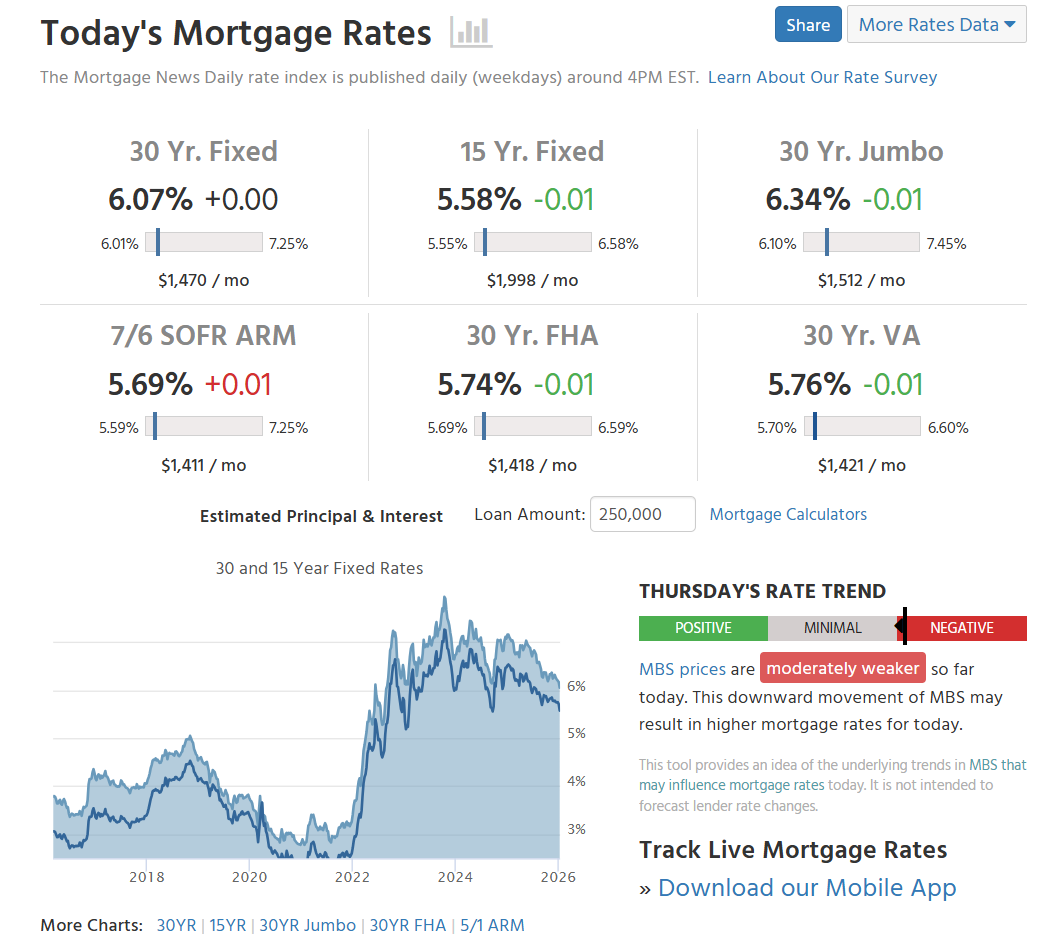
I’ve been following mortgage rates here: https://www.mortgagenewsdaily.com/mortgage-rates

image

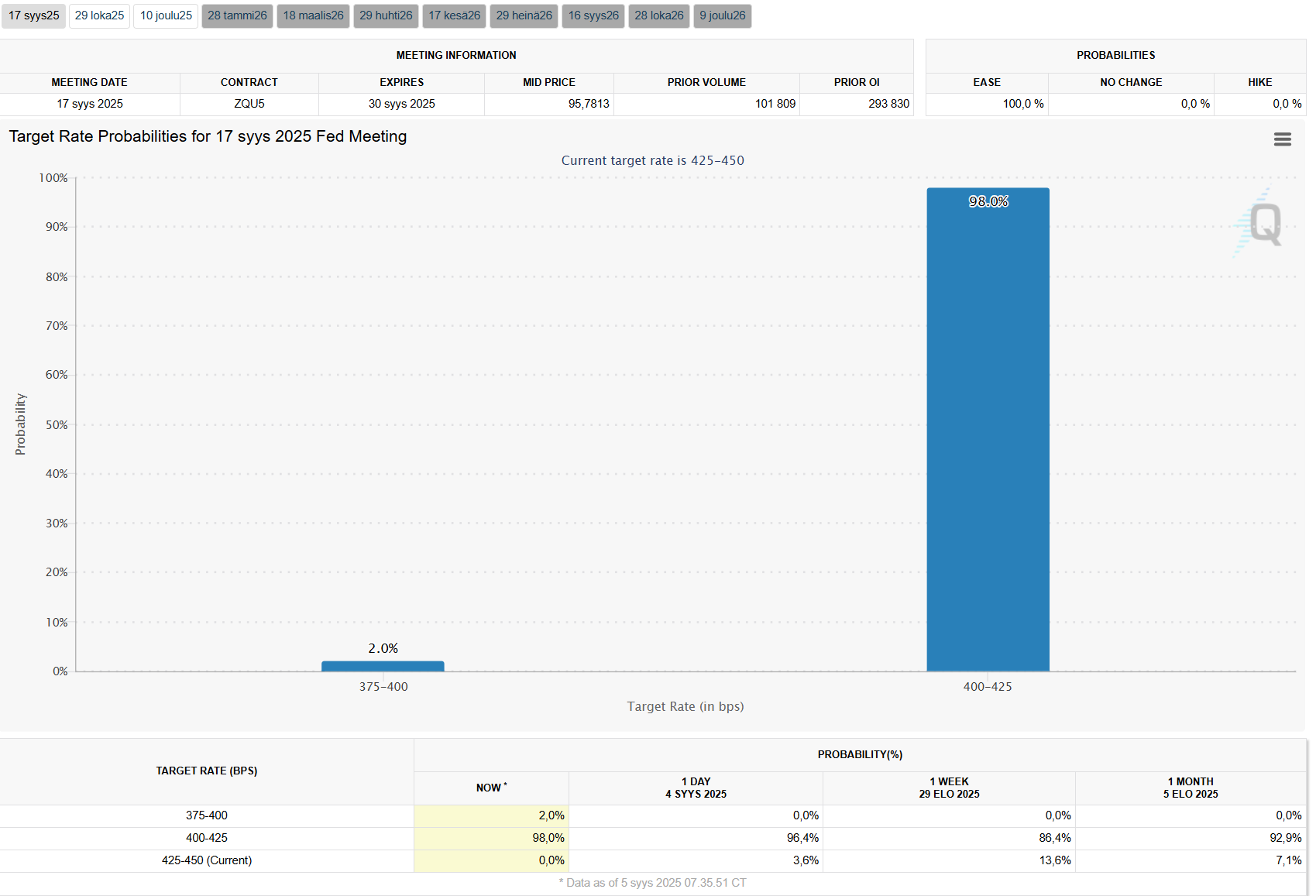
I follow regularly updated Fed rate cut forecasts here: https://www.cmegroup.com/markets/interest-rates/cme-fedwatch-tool.html

image

The market once again priced in lower rates (mortgage and Fed funds rate) immediately after Jackson Hole and Powell’s speech, and the Homebuilders sector, among others, also received an additional boost.

image

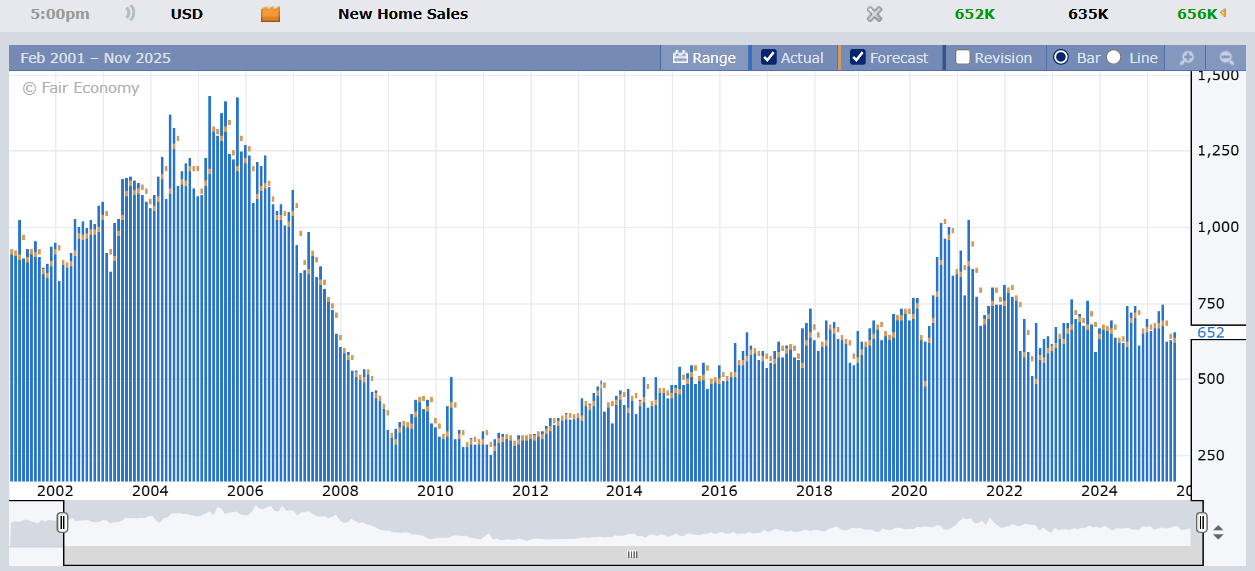
EDIT: New home sales were slightly better than expected (652K actual vs 635K expected):
image

4 Likes

Great job, thanks. Now we just have to wait and see how our easy ones do. Q2, uwmc at least promised good progress.

When will Rocket, Cooper, and the other one possibly reach the finish line?

Yesterday, Mr. Cooper’s shareholders approved the RKT+COOP merger.

Below, I will try to explain as clearly as possible MBS (Mortgage-Backed Securities) and at the same time, RKT’s biggest driver, if Fannie Mae and Freddie Mac’s (F+FM) MBS limits are removed in the near future and their IPO were to happen.

In my opinion, Trump’s and Bessent’s goal has been from the beginning to lower voters’ mortgage rates by the 2026 midterm elections. Previous goals to lower the ten-year yield (which is tied to the 30y fixed rate) have so far failed, so the Trump administration might have a scenario like the one described below in mind.

In the article below, Steve Goldstein presents a way for the administration to shake up mortgage rates through political decisions, and that equation would include, among other things, the removal of Fannie and Freddie Mac’s (F+FM) MBS sales limits (“caps”). Fannie and Freddie Mac act as a kind of MBS intermediary in the mortgage market, buying loans from banks and, for example, RKT, and selling them packaged as MBS. During the financial crisis (2008), strict limits were placed on the market regarding how much MBS F+FM could buy/sell, the purpose of which was to restrict growth and limit risk.

Currently, the spread between bonds (e.g., US10Y) and mortgage rates (such as 30 Year fixed) is historically high, i.e., over 2%. Even if the FED were to lower rates, the spread might remain large due to, among other things, high inflation concerns and partly also due to pressure on the Fed’s impartiality.

The privatization of F+FM, i.e., the removal of strict supervision and MBS limit restrictions (“caps”), would accelerate MBS markets and simultaneously free up opportunities for lenders and loan/MBS sellers (such as RKT) to grant more loans and sell them much more easily, which F+FM would package into MBS. According to Citrini Research’s estimate, this would unleash approximately $1000 billion in demand and act as a kind of QE directly for the housing market.

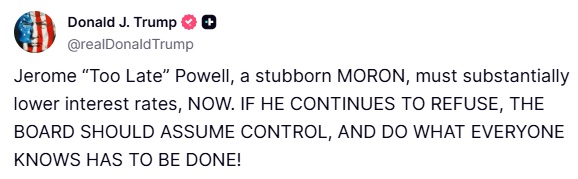
The first hints of potential moves by the Trump administration have already been seen, as Trump flashed the “national housing emergency” card, which would suggest that a possible removal of limits might be done as part of a political game. This move would, as it were, bypass the bond market and direct the entire massive stimulus directly to the housing market, instead of the entire market, because bond yields, in Trump’s opinion, have not fallen enough and they simultaneously keep mortgage rates “too” high. The culprit is also easily found, and in Trump’s opinion, it is “Too Late” Powell.

So-called caps or limits have restricted the number of MBS buyers, forcing lenders to keep mortgage rates higher to make MBS attractive to investors. By removing the limits, MBS can be sold more cheaply, which would cause mortgage rates to fall faster and activity in the housing market to accelerate, as more and more people would have the opportunity to buy a home or refinance an old high-interest loan. This removal of limits would also lower the historically high spread between bond yields and mortgage rates and bring it closer to historical averages. In simple terms, lenders would start competing with lower rates to attract homebuyers, and the housing market would quickly heat up. This is a so-called “stimulus through housing credit,” a way to stimulate the economy without the Fed starting to print more money.

Rocket would benefit from the situation as the largest lender by originating new loans, collecting fees from them, and bundling them into loans/MBS, which it then sells to, for example, Fannie and Freddie Mac, who in turn sell them to investors. The more attractive MBS are to investors, the easier it is for Rocket to sell loans forward. A $1000 billion increase in MBS demand would be a real boost for the entire market, meaning RKT would not have to worry about whether the loans would sell.

Lower mortgage rates would trigger a significant refinancing boom, and according to the CEO’s Q2 earnings call, RKT’s AI-based platform can scale up to a 10x increase in loan volumes. According to estimates, as MBS and mortgage volumes grow, the ROE of all participants in the loan market will also increase, as will volumes and margins. If F+FM limits (or Caps) are removed in the future, it would be a huge turbo boost for a company like Rocket. Redfin and Mr. Cooper, to be acquired later this year, further support RKT’s growth in the loan markets. If the aforementioned scenario of limit removal were to materialize, RKT’s stock would likely and quickly see a massive short squeeze, which would simultaneously price in significant future growth potential.

More fresh perspectives on the mortgage market:

8 Likes

Today’s weak employment data practically seals the deal that interest rates will be cut on 17.9. Now the speculation is whether the cut will be 25 or 50 BPS.

image

In premarket, Rocket and UWMC, among others, jumped significantly after the data, and bond yields fell clearly. However, I am bracing for a “Sell The News” phenomenon in several stocks when interest rates are finally cut, as my overweight position has grown significantly as a result of the rallies:

image

image

image

7 Likes

After the holidays, I wrote a bit more extensively about my thoughts on the merger, the data from recent months, Rocket’s future, and the market situation.

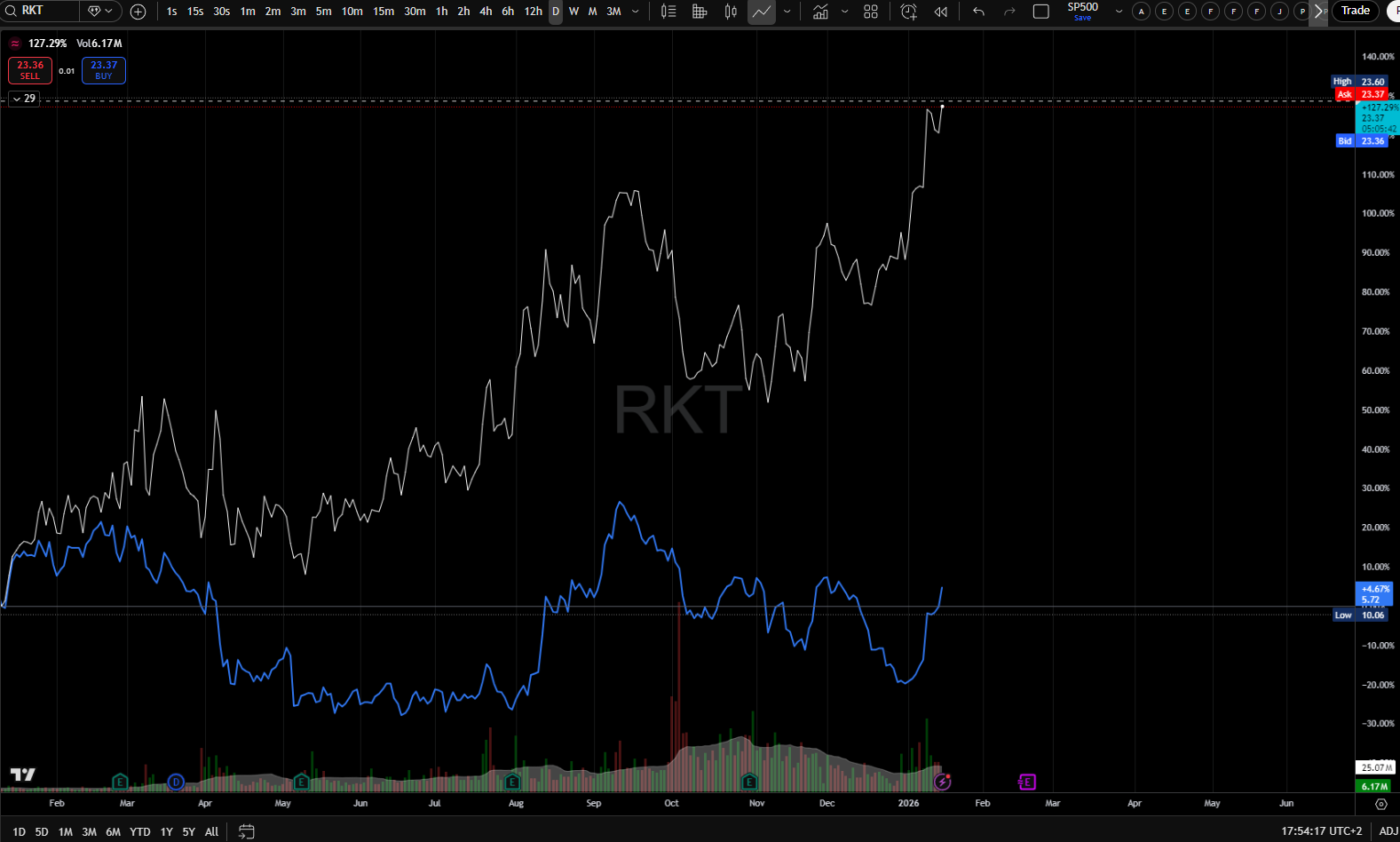
The stock has risen by well over +100% since hitting rock bottom in April (@$10.94) to its peak before the September interest rate cut (@$22.56), but the journey has not been straightforward.

The journey to the current peak has been quite bumpy, and the stock is plagued by significant volatility, which was also experienced today when big money exited its $20-21 call options opened last week immediately after the open, and in the evening there was a quick dip when the Federal Trade Commission (FTC) issued a challenge to Redfin (and thus Rocket) and Zillow Group, accusing them of “an unlawful agreement that eliminates Redfin as a competitor in the market” (direct quote).

Simply put, Zillow paid Redfin and the companies made an agreement which stipulated advertising, and Redfin agreed, in exchange for $100 million, to stop competing for certain properties. The authority saw the practice as harming competition and consumers. More detailed information on the matter can be found via the link:

Today is the last day Mr Cooper trades as a separate company, and COOP owners will receive 11 shares of Rocket stock and a $2.00 dividend upon the merger taking effect. Starting tomorrow, Rocket, Mr Cooper, and Redfin will form a new conglomerate whose goal is to manage the entire home buying process from start to finish, meaning Redfin provides the data, Rocket handles (re)financing, and Mr Cooper manages loan servicing (services).

AI is at play in the background, whose advertised capabilities and the trio’s synergies will only truly be tested in the coming months and years. Currently, for example, the refinancing process takes about half an hour thanks to AI, and the goal is to compress that time to 10 minutes. Rocket still believes it can be significantly more efficient than competitors thanks to its scalable AI, i.e., its Model Context Protocol. Reportedly, a lot of groundwork has already been done regarding the merger, but mergers and corporate cultures rarely hit the ground running immediately after the initial whistle.

There is already some evidence of Redfin’s synergies, however. In the first three weeks, over 200,000 people clicked the “Get Prequalified” button on Redfin’s housing search website, of whom 12% started a loan application and 23% shared enough information for contact. The target remains $200 million in synergy savings, and an increase in synergies has also been hinted at.

Last quarter, every month in the housing market showed an upward trend from April to June, which could promise a longer summer season as the tariff war shock finally began to clear. In the last quarter, Rocket helped over 100,000 people start the loan process in a challenging market, which is +19% compared to the previous year, while at the same time, Existing Home Sales fell by -2.7% from May to June. This achievement can be considered excellent, as Rocket advertised that customer retention was a whopping 97%, so a host of new customers emerged from a difficult market, looking to the future. This bodes very well for the future, as customer churn has always been very low in Rocket’s business. In addition, many Rocket customers have taken out new additional loans on top of older, lower-interest loans to cover living expenses, which has brought additional business to Rocket.

Last summer, for the first time in a long while, it was a buyer’s market, and sellers outnumbered buyers by 35.2% in August. There were 506,000 homes for sale on the market. June marked the highest gap between buyers and sellers in history dating back to 2013, with sellers outnumbering buyers by 36.3%. The number of willing buyers was also the lowest since 2013, with only 1.44 million intending to buy. High housing prices and persistent interest rates still make home buying challenging, although the pace of price increases has moderated in recent years. Canadians are also no longer as eager to move to the US, as their buying interest has dropped by -19.5% from last year, and the decline began when Trump came to power. The weak Canadian dollar, battered by the tariff war, has also negatively affected the willingness to move.

At these prices ($19-22), the stock has priced in many future successes, lower interest rates, perhaps even Trump’s upcoming Housing Crisis measures, such as the privatization of Fannie Mae and Freddie Mac and the removal of MBS limits, which I wrote about earlier. This measure could quickly lower interest rates, stimulate the market, and heat up the housing market very rapidly, giving Rocket’s stock a new driver. If one believes in that scenario, then buying Fannie Mae’s OTC stock could still be a viable option even after a significant rise. I calculated that FNMA’s value would at least double on that news.

On the statistics side, I monitor the interest rates Americans currently have, as they provide a hint about the timeline for refinancing them. Currently, 19.7% of US homeowners have a mortgage interest rate above 6%, which is the highest figure since 2015, and the number is increasing by approximately 0.8-1.4% each quarter. For example, mortgage rates below 3% taken during and before the COVID era now only account for 20.4%, and this number has been steadily decreasing each month. At its peak, 24.6% of all homeowners enjoyed rates below 3% in 2022. Rates below 6% are now held by only 80.3%, whereas three years ago the figure was 92.7%.

The data suggests that refinancings are steadily increasing, especially if interest rates fall below 6%. Indeed, refinancings grew by +58% in mid-September from the previous week, although applications for new loans only grew by +3% in the same period. According to Redfin, people are waiting for interest rates below 6%, so that threshold can well be considered critical, at which point refinancings will increase and home sales will begin to pick up.

Currently, Rocket’s P/E at approximately $19.00 is a whopping 82, i.e., 7x higher than its peers, but in Rocket’s case, everyone who invests in it is taking the view that the mergers will succeed, synergies will materialize, interest rates will fall, Trump will do everything to bring mortgage rates back to reasonable levels and affordable for the average voter by the midterm elections, or at least that the situation will not worsen from here.

Analysts’ consensus currently is that earnings will first fall by -7% in 2025, rise by +206% in 2026, and continue to climb by +55% in 2027. Capex is also on the rise, approximately 33% YoY, which is well above its peers, but it also indicates how aggressively Rocket is investing in AI development/utilization and the efficiency it brings. Competitors might be severely disadvantaged in terms of investments if the housing market were to show a clear turnaround next year.

In light of the figures for the coming years, the stock is no longer so expensive for a market-leading company that genuinely utilizes AI, but the stock has already priced in the approximately +100% scenario that I expected to happen only before the November 3, 2026, midterm elections. The market is indeed forward-looking, and especially in a rising market, it sometimes fronts the future quite quickly and efficiently. For the future, a positive point is that in an emerging bull market, the largest expenses and investments are already behind, and margins should rise sharply, potentially making the stock’s valuation forward-looking again. There is ample cash, i.e., $6 billion (plus $7.6 billion in loan repayments receivable), so there is no need to worry about financing. At least all the building blocks are in place starting tomorrow; all that’s needed now are lower mortgage interest rates.I stuck to the Sell The News plan and on the day of the FED interest rate cut, I sold all my COOP shares and 25% of Rocket, based on the principle that interest rate cuts are always front-run and then cool down for a while. Some have compared Rocket to the housing market’s “Carvana,” which has similar leverage potential. I once bought Carvana as a trade near the bottom without researching or understanding its leverage effect and sold a small position with a +50% profit. I wouldn’t want to repeat a similar mistake with Rocket, although a +9000% rocket won’t be achieved from this.

15 Likes

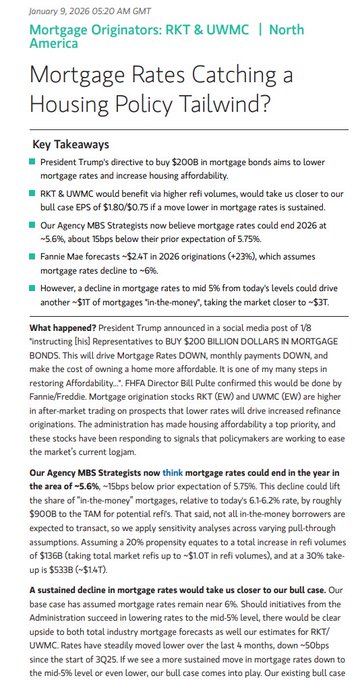
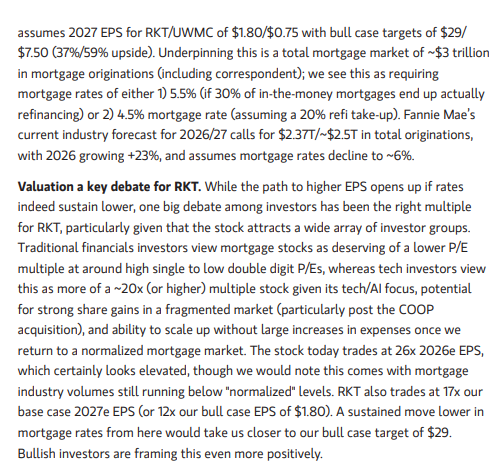
Trump’s intention to buy $200 billion in Mortgage Bonds has fueled the stock price rise of Rocket and UWMC.

The situation is assessed in the Morgan Stanley press release below:


If lowering mortgage rates succeeds through Mortgage Bond purchases, which is likely, then nothing is stopping Trump from continuing the purchases until rates are at his desired level and the November midterms are, from his perspective, hopefully won.

When I bought Rocket, the view behind the entire investment was that Trump would do everything possible to bring rates down one way or another and keep voters satisfied, the Republicans would win the elections, and Trump would avoid what are fairly certain extensive charges of official misconduct. At the moment, it seems that Trump might even succeed in his plan, although time is running out. At least potential homebuyers have more money left for purchases, and the consumer situation will improve even further if mortgage rates decrease from here on.

Attached is a brief mention of the development of consumer purchasing power:

In the stock market, the XLP (i.e., Staples) sector, among others, jumped sharply during the week when Trump announced the bond purchases. If the measures are effective and rates fall, I see the rotation continuing longer into rate-sensitive stocks and eventually also into consumer stocks. Home improvement stocks, such as Lowe’s and Home Depot, have also risen recently. Lowering mortgage rates to the 4-5% levels would also effectively prevent a recession, which I personally haven’t considered a risk.

8 Likes

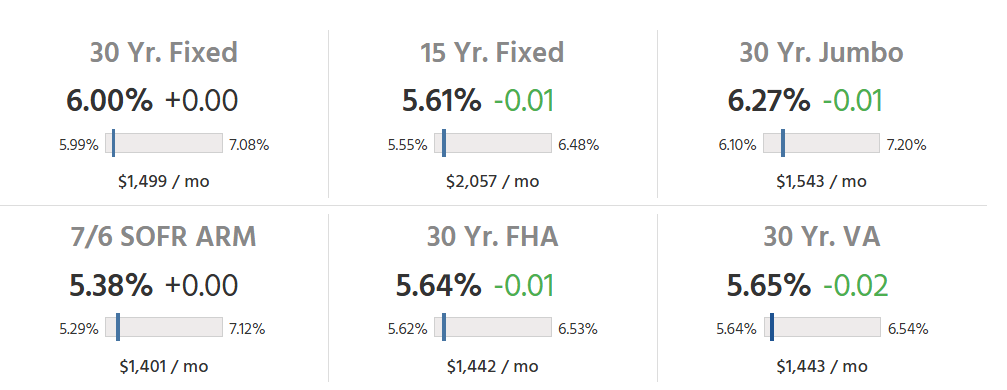
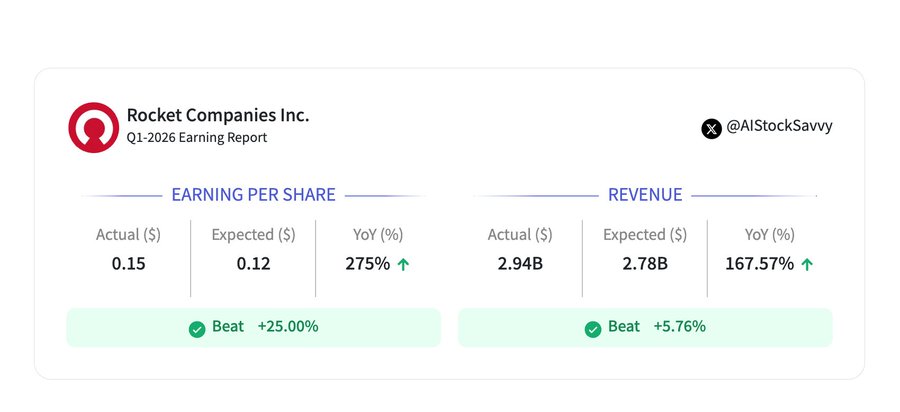
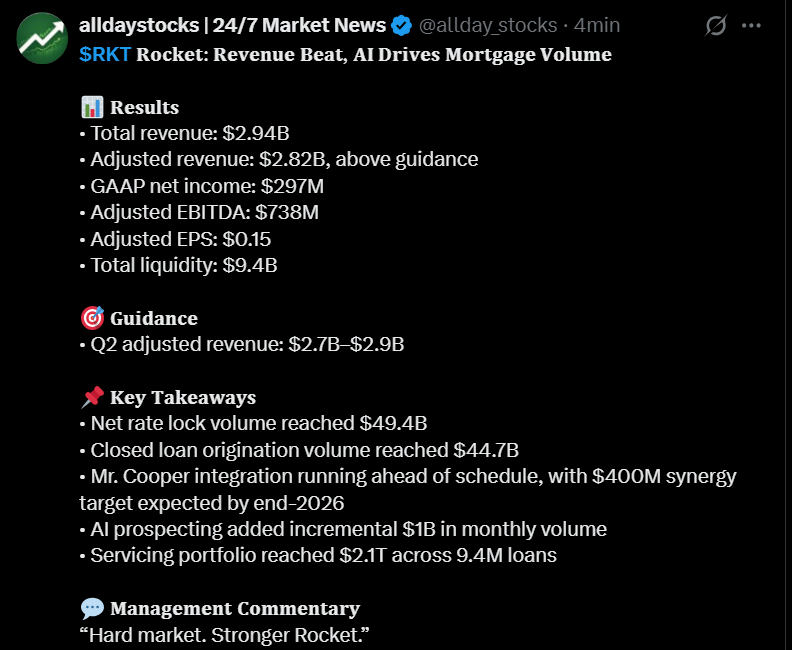
Rocket with a good result and strong guidance. The stock has significant leverage if mortgage rates (30 Yr Fixed) start falling below six from here.

Announced three-year strategic alliance with Compass International Holdings to expand housing inventory and create a more streamlined and affordable home buying and selling experience for American families.

Appointed Rocket Companies’ CFO Brian Brown to the role of President, who will continue as CFO and Treasurer, effective February 26, 2026.

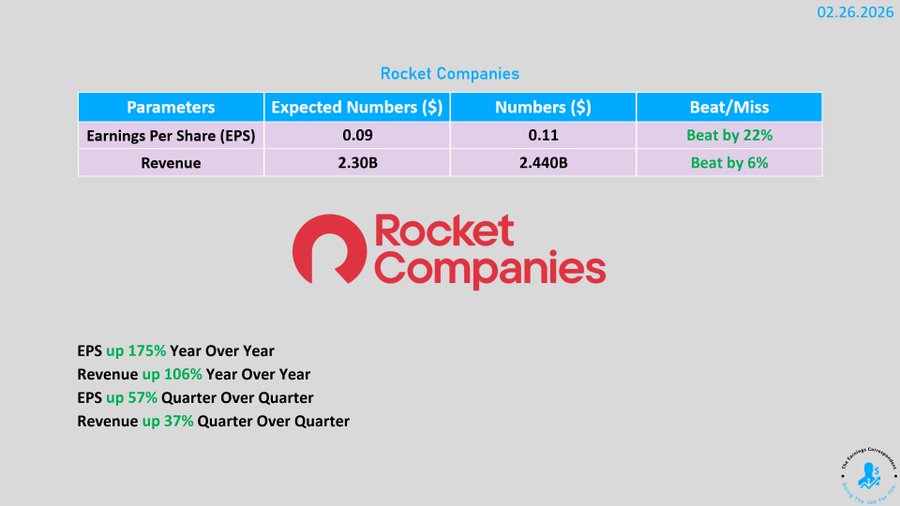
Generated Q4’25 total revenue, net of $2.69 billion and adjusted revenue of $2.44 billion. Adjusted revenue came in above the high end of our guidance range.

Reported Q4’25 GAAP net income of $68 million and adjusted net income of $316 million.
Delivered Q4’25 adjusted EBITDA of $592 million.

Rocket Companies Sees Q1 Sales $2.600B-$2.800B vs $2.374B Est

5 Likes

Very good result and a clear beat; the guidance is cautious and slightly below expectations, which is understandable in this market.

A short comment to finish. Personally, I returned as a shareholder before the earnings report with a smaller position than before and currently plan to hold until the next upcycle. Many are likely afraid that white-collar workers will be laid off in the coming years and the entire housing market could be in crisis with house prices collapsing if the solvency of those considered the most stable borrowers starts to weaken.

Furthermore, mortgage rates never dropped below the 6.00% mark by more than a fraction (30y Fixed). The US housing market is absolute trash, inflation remains elevated, and the uncertainty brought by war is at its peak—and that is a surprise to no one. What might be a surprise to some is how effectively Rocket is able to navigate even in a weaker market using its AI. Additionally, I believe Rocket will be added to the S&P 500 as soon as the criteria are met. I’ll write some of my own analysis at some point on how the situation might progress, now that I have some skin in the game again.

7 Likes