Personally, I don’t believe in a negative profit warning, and certainly not a positive one either. Following the last profit warning, the guidance was adjusted enough that they should reach it. And a positive warning would surely require some major new partnership, and that would definitely be reported.
17 Likes
That’s what I believe too, and on the other hand, there’s hardly even a need for meticulous analysis; most things are already known by December.
1 Like
I suspect that the later reporting date of February 26th is due to the IAR integration, as there is still work to be done on it. Q4 figures are determined very quickly, so it’s fairly safe to assume that there won’t be a profit warning. Nonetheless, it’s probably best to expect the lower end of the guidance to avoid disappointing expectations.
25 Likes
I’ve been thinking about Qt’s business risks, and the only major threat I can come up with is nothing less than an existential question: will genAI reduce the need for software frameworks? The accompanying article considers whether the development of genAI will lead to the development of customized, optimized applications within companies using entirely custom code instead of utilizing generic frameworks. I don’t have enough industry expertise to evaluate this seriously. Can any software developer weigh in on this type of risk?
https://jbenx.medium.com/will-ai-kill-traditional-software-frameworks-a2915901fd78
6 Likes
A profit warning must be issued without delay, i.e., as soon as possible.
We are now dealing with full-year actual figures rather than partial forecasts, so there is less room for interpretation or broader “maneuvering.” Of course, consolidating group figures might take a bit longer than usual due to the IAR acquisition, but the final days are fast approaching. A closing process of more than two weeks would be quite slow.
8 Likes
Komatsu Selects Qt Group to Automate UI Testing for Its Construction Equipment
Komatsu’s construction machinery is used in more than 190 countries, and its digital displays support 27 languages. The need to streamline the testing process is further emphasized as Komatsu introduces more digital technologies to its equipment, most recently Komtrax and Smart Construction.
74 Likes
Cantor Fitzgerald’s price target cut to 29 presented earlier this morning. I don’t think there is much new in it. He reiterates his concerns about AI and the ability of customers to “do more with less”. He also speaks about the IAR acquisition and how it will lower sales in 2026 as IAR transitions to SaaS. These are all known concerns.
“Qt Group remains a conviction Underweight for 2026, as it was for 2025. We have been the lone Cassandra since our initiation in 2024 and, importantly, we have been right. We continue to believe consensus remains too high and that downside risk persists as weakening end-market demand, AI-driven pressure on seatbased monetisation, and IAR-related execution risk converge into 2026. Even after a ~60% drawdown from the 2024 highs, the de-rating has been driven primarily by materially reduced earnings expectations, leaving the shares still trading around 20x Bloomberg consensus P/E for FY26. While not optically expensive for the software sector, we don’t see the stock as ‘cheap’ considering the decidedly negative earnings momentum, risks to outlook, and the AI threat becoming central and, in our view, making it hard to point to any valuation floor. We reiterate our Underweight rating and reduce our price target to €29 (from €31), the lowest price target on the Street. “
27 Likes
I wonder if Qt has the viability and growth potential in the current AI environment? To me, the future seems quite uncertain for Qt, and it looks like a sunset company. This is a shareholder’s reflection. What do others think?
4 Likes
It had better have, if only because I’m in with a significant amount 
But seriously, AI won’t replace everything. And for those who are already customers, the switching barrier is really high. It’s just like with ERP systems. Transitioning is a nightmare.
I’m sure some AI stuff will come out of this outfit too. And at least I hope that before spring we’ll be closer to a €50 share price.
I jumped on board just in time at around €48. I think it was before the earnings report. The idea was to do what I’ve done before: a short hold and take the easy money. Well, it crashed, and now I’ve been buying like crazy to average down the price 
14 Likes
Everyone here seems to have fallen into despair No one’s commented on the Komatsu deal… I’ve got no clue what it might bring? Quite a big outfit though…
12 Likes
Is the “pup” (Qt) finally reaching buying prices, when even a value investor like Random Walker is tipping it as the winner stock for 2026?
At the end of 2025, Sijoitustieto asked well-known investors for their winner stock pick from the Helsinki Stock Exchange for the year 2026. Giving their views this time were Aki Pyysing, Almanakka, Henri Elo, Jarkko Aho, and Tomi Lahti.
Jarkko “Random Walker” Aho: Qt Group (@€31.64 Dec 21, 2025)
Sijoitustieto columnist, investment author ( Laatuguru, Arvoguru, Pikkuguru), investment coach
I have never yet managed to snag a win in the investment competition, even though I have been involved every time since the start of the contest in 2017. It is time to change tactics. I have made my previous selections from companies I have followed for a long time and know well. Many of the companies have also been in my actual portfolio, and I have seen long-term potential in them above all else. This time, my choice, Qt Group, deviates from the usual, as I only started getting to know the company more closely this year and have never owned it. I also don’t feel I am particularly good at analyzing this type of technology company, where the operating environment can change rapidly. Therefore, I can’t say much about its longer-term prospects. This time, my choice is clearly a riskier bet, better suited to the nature of a short-term competition. I have, of course, followed the company from the sidelines for a long time, but the very high valuation of the stock has kept my interest low.
However, the situation has changed dramatically over the last year. The stock price has fallen from nearly 100 euros to the current level of just over 30 euros. At its peak, the stock reached 180 euros in the fall of 2021, so the price development hasn’t been a non-stop victory lap in previous years either. In the market crash following the start of the war in Ukraine, the stock momentarily dropped below 40 euros but recovered quite quickly. At that time, I still considered the price too high and didn’t bother to get to know the company further. Only now is the margin of safety starting to look right. It is worth emphasizing, however, that the valuation of these types of growth companies is very difficult, and the range of justifiable value is exceptionally wide.
Although small technology companies are not among my favorite investment targets due to the uncertainty surrounding valuation, I consider Qt’s business to be of quite high quality. Its position in software development tools for embedded systems is strong, and the products seem very competitive. The business model scales well, so profitability will improve clearly once sales pick up at some point.
I am not so much worried about the weakness of the current market, which is due to customers cutting back on their R&D investments, as it is temporary in nature. In my opinion, the bigger question marks relate to tightening competition and technological development, and through that, the threat of substitute products. Since the greatest risks lie in the long-term development of the industry, I fortunately don’t believe they will have an impact yet during the competition period. Decisive for my competition success is specifically how the investment activity of Qt’s customers develops and how quickly market demand returns closer to the accustomed level.
Qt is unlikely to reach the peak earnings level of 2024 (EPS €2.26) in the immediate coming years, so it’s better to estimate the “new normal” based on analyst forecasts. The consensus EPS forecast for next year is €1.40, which gives a P/E ratio of about 23. The valuation is therefore no longer particularly high, considering that it is a highly profitable growth company.
Indeed, I find Qt’s short-to-medium-term risk/reward profile very interesting. The current valuation (P/E 23) does not price in any great expectations. It can be justified with a 19% return on equity (less than half the level of the good years) and 6% annual earnings growth, if the investor’s required rate of return is the market average of 9% per year:
Justified P/E = (1–growth/ROE)/(required return–growth) = (1–6%/19%)/(9%–6%) = 22.8
The difference to the pricing of a year ago is massive, not to mention the ATH prices of 2021. Even with the peak earnings of 2024, the P/E was over 40 a year ago. Now, both the valuation (P/E) and profitability expectations (ROE) have been cut in half, and exceptionally rapid growth is no longer required.
The situation is ideal from an investor’s perspective. In principle, it is enough for one of the three components (P/E, ROE, growth) to perform better than expected to achieve a better-than-average return. If the company’s market situation improves even slightly, expectations will likely rise across several factors simultaneously. In that case, a stock price increase of several tens of percent is, in my opinion, a completely realistic scenario.
84 Likes
My understanding of coding is very limited, which is worth noting when reading the thoughts below. I have followed and owned Qt almost since the company was spun off from Digia into an independent listed company.
Recent performance has been weak and naturally raises concerns about the sustainability of Qt’s competitive advantages. The company doesn’t seem to be worried about the situation, and competitors don’t seem to be viewed as a real threat. At the same time, when reading developer forums, one inevitably gets the impression that new platforms, especially Flutter, are taking giant strides in the market (particularly in the automotive sector, which is important to Qt). Based on my understanding, Qt-based software runs significantly lighter than, for example, Flutter (lower CPU usage, energy efficiency, cheaper components with less memory possible, etc.), which is a major advantage especially in embedded systems with lightweight hardware—of course, the Qt ecosystem is also very versatile and established. My understanding is that Qt’s strengths are specifically in high-performance / mission-critical applications and when deep hardware integration is required.
However, from a coder’s perspective, Flutter seems to be much faster to grasp, easier to use, faster, more intuitive, and above all free. @Antti_Luiro, how worried are you that Flutter, for example, might capture market share in the automotive industry or, for instance, in “rich display” consumer electronics (smart TVs / other home electronics, etc.), where the hardware doesn’t necessarily impose such strict requirements?
How do you view Qt’s aggressive license pricing—is there a risk that Qt is pricing itself out of the market? Personally, I fear that Qt’s aggressive pricing model could be one of the biggest risks / bottlenecks for the future. Have you discussed Qt’s competitiveness with Qt customers (or embedded coders) at seminars or industry events? Additionally, many issues related to usability / Flutter’s superior technical features (Hot Reload, rendering, etc.) seem to come up on forums, which Qt has certainly tried to address in its own product development. The Flutter community is also growing at a significant pace and is very active, while the Qt forum seems to have quieted down—how does Qt ensure its relevance among the new generation of developers / start-ups?
How worried are you, @Antti_Luiro, that Qt’s stagnation is not just due to market weakness / that Qt’s addressable market is narrowing?
Below are some further reflections gathered mainly from forums, on some of which my own technical expertise is not sufficient to comment.
How to simplify the onboarding?
- Steep learning curve and lack of beginner-friendly templates
- Modernize documentation layout?
- Enable quick “start → see results” workflow?
Modern C++ Integration?
- Qt does not fully adopt the modern C++ practices (like RAII)
- Offer safer, modern APIs
- Replacing legacy patterns to attract new C++ developers?
Next-Gen Renderer – does RHI in Qt 6 solve this issue?
- Compete with Flutter/Unity/Unreal by having faster cross-platform GPU rendering
- Support unified shader pipelines, 2D + 3D blending, richer animations
- Go beyond Qt Quick 3D?
Accessible Pricing
- Has the license pricing been too aggressive (especially with Flutter being free)?
- Should there be affordable tiers for small teams and freelancers / some kind of “pay-as-you-grow” model to make the framework accessible for start-ups?
Stronger Language Bindings
- Adoption of a unified cross-language strategy?
- Announcement of integration with Rust, Python, .NET, Swift, and Kotlin/Java in May 2025 – what is the status?
How to react to increasing competition especially from Flutter?
- Flutter seems to be anything but dead, significant milestones taken in 2025
- Flutter has become a serious player in cross-platform app development with several key advantages e.g.
- Hot Reload - Flutter vs Qt with Felgo?
- AOT and JIT compilation – compared to Qt Quick Compiler?
- Entirely free, easier adoption and more intuitive due to Dart, rapid development
- Rapidly expanding community
- Superior documentation (documentation especially in QML apparently far behind?)
- Very strong rendering engine – Qt solution vs Impeller?
38 Likes
As a follow-up question, how significant a risk do you see that, due to current license pricing, more and more teams are trying to scrape by with a minimum number of commercial licenses while the rest of the team uses the free version, or that entire teams in certain industries have switched to the free license?
Bring it on. Pricing for small businesses can be found on the website.
6 Likes
I would see the competitive threat from other solutions as being greatest in the “long tail” of the market, i.e., among smaller device manufacturers, for whom Qt’s solution may be too extensive (and thus the price point also too high). Here, for example, Slint could be an interesting alternative.
For large device manufacturers, in addition to performance, the primary factors are the scope of the tools (Qt is strong here) and the duration of support, which in commercial solutions is baked into the service and is something they are willing to pay for. In free solutions like Flutter, continuity is not a given, even though open source allows for making fixes yourself. This, of course, costs time and resources. Delayed product launches or software development challenges can be such expensive problems—through weakened sales or recalls—that it is worth paying something to avoid them. For example, Volkswagen has had these problems at least previously.
Qt’s pricing has been so-called aggressive for a long time and it has resonated well with the market, so for now, the value perceived by the customer has kept pace with the price. But this is, of course, one route through which challengers can start to contest market shares; so far there have been no signs that this has started to bite.
This hasn’t been done for a while! But at some point, it might be quite appropriate to get an update 
I addressed this earlier here 
This is indeed a relevant threat. I’m mainly thinking about this right now through the impact of AI’s efficiency benefits; even now, we see a clear increase in the productivity of individual software developers → the same product can be built with a smaller team and a smaller number of licenses (and Qt receives less developer license revenue).
Juha, if I remember correctly, argued in the last webcast that embedded systems are not at the forefront of AI adoption due to safety criticality (e.g., Health and Defence). This is certainly a relevant factor, but there are other verticals in embedded, and those AI tools will fundamentally evolve at some point to be so good that even these safety-critical products can be developed more efficiently with them.
The biggest question in my mind is where this development capacity, growing through efficiency increases, will be allocated  i.e., will product companies take in cost savings (reducing the number of developers and license counts), or will they raise the bar for the product (developing broader/better products with a larger team). I would guess that in the short term, this will be a cost play (partly due to profitability pressures brought by tariffs, among other things), but in the long term, they will move back to strengthening products and competitiveness. The net impact would therefore be negative in the short term and more neutral in the longer term. This is a guess at this point, and I don’t have the definitive answer to this.
In the current situation, that kind of maneuvering (developing a commercial product with a free version) carries legal risks related to Qt’s product licenses, although some workarounds may possibly exist. But from a product company’s risk management perspective, playing this risk for a relatively small cost item does not sound sensible, and Qt’s large global device manufacturer customers have not gone down this path. I don’t feel that anything essential has changed in this regard. Qt also has many purely commercial products whose availability in such maneuvering I’m not quite sure about, so some breadth of development tools would also be lost in this operating model.
46 Likes
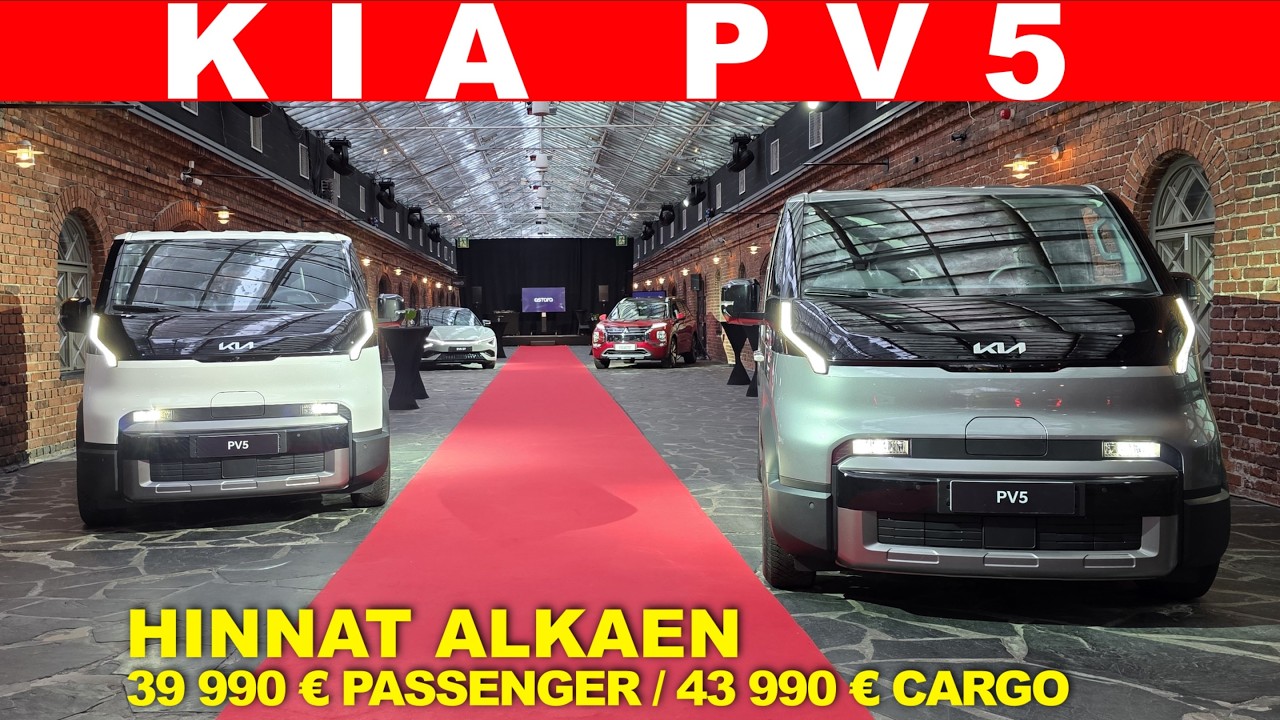
This new Kia electric van / MPV has an Android-based system. Does this mean that Kia is planning or conducting an evaluation of its future operating system for passenger cars as well? Will there be an impact on the Qt customer relationship if they move more towards an Android system?
6 Likes
Yes, it has Android. If you watch this car feature, the Kia representative confirms it there.
8 Likes
This is a completely relevant concern and a reality – it applies to practically all software. Previously, off-the-shelf software had so many coding hours poured into it that it was very difficult to set out and do the same.
Now that replicating a product is 10-20x cheaper than before, it will definitely eat into the market for these kinds of platforms.
Android Automotive OS consists of two elements:
- Operating System (OS), such as QNX and Linux
- User Interface (UX) and application suite
QT is not an operating system; instead, it runs on top of all these operating systems. The question for the car manufacturer is whether they want to use Android’s standard applications and user experience, or if they want to implement their own look and feel using QT.
22 Likes
Today’s Tecnotree takeover bid and the previous WithSecure deal made by Siilasmaa and the consortium have reignited the idea of whether a similar consortium could form around, for example, Ingman, to take Kuutti off the exchange. If the largest owners see Kuutti’s future as being as promising as Varelius always describes in every quarterly report, this would be a prime opportunity for them to take Kuutti private and milk the profits later. Today, for the first time in a long time, the €30 level was broken.
18 Likes