Defense Industry – The Free World's Security or Merchants of Death

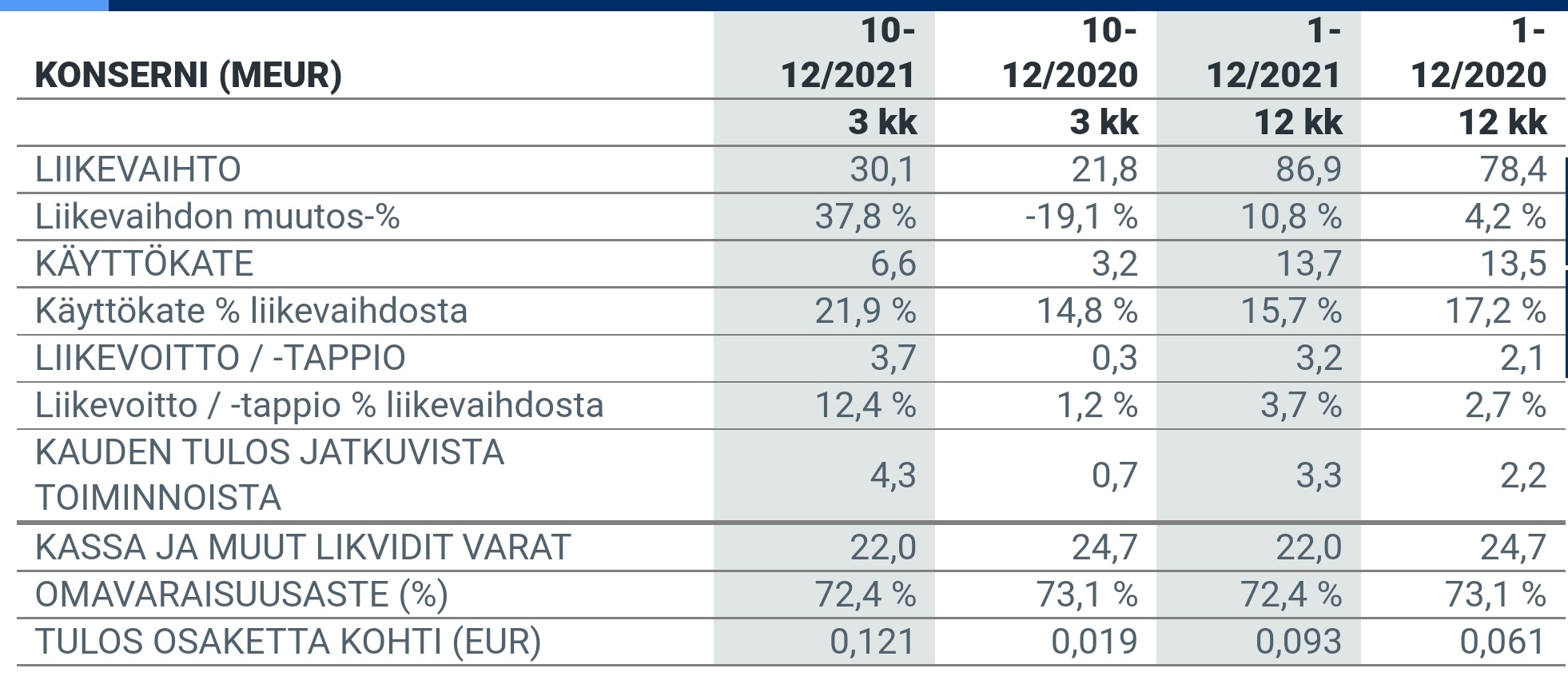
Bittium is an interesting case. The valuation is tight; the net profit for last year was €3.3M, and the market capitalization is currently €190M, making the P/E ratio 57.

However, the 10-12/21 result was €4.3M, and Q1/22 was -€1M, indicating a lot of quarterly fluctuation. Overall, the development is strongly trending northeast despite losses due to the chip shortage.

4 Likes

Kamil Galeev’s short Twitter thread on Rheinmetall’s Russia projects 2011-2019.

https://twitter.com/kamilkazani/status/1547226267883393024?s=21&t=mo_6Qg4QZ5hQDTCiiaEKtA

2 Likes

The war in Ukraine has prompted European governments to reverse the course of years of shrinking defence spending

Still, it remains unclear whether the rush of new policy announcements will become a reality. Kajsa Ollongren, the Dutch minister of defence, admits similar pledges have been made before, only to fail. This time, however, she believes the reality of combat in Europe will help to force the issue. “In the past . . . people have been saying this in the context of [defence] budget cuts. And now we are saying it in the context of budget increases,” she says. “That’s a big engine for us to use.”

Europe’s plans may yet be hampered by some harsh realities. A portion of the recently announced budget increases will have to be spent on boosting the salaries of armed forces and replenishing stockpiles of weapons that have been depleted in the effort to help Ukraine, before new hardware can be considered.

Then there is the ever-present siren call of US equipment. Germany’s first big purchase after announcing it would launch a €100bn military modernisation fund was the American-made F-35 fighter jet, capable of carrying nuclear weapons. Some European industry executives worry that a large part of the extra money will not be spent at home.

“I see an inherent risk that we focus too much on satisfying short-term demands by predominantly buying non-European off-the-shelf equipment,” says Michael Schoellhorn, chief executive of Airbus Defence and Space.

To do so, he warns, would be to undermine Europe’s “long-term technological excellence”, which could create “additional dependencies” in the future and potentially “result in a weakening of its defence [industry] and thereby be detrimental for European integration as a whole”.

“We need to spend better and to spend more,” says Alessandro Profumo, president of ASD, the European industry’s trade association, and chief executive of Italy’s defence champion, Leonardo. To achieve that, he adds, there needs to be closer co-ordination at EU level on procurement: “We must have this integration process. It won’t be fast, but it has to happen.”

Since Russia’s full-blown invasion of Ukraine began in February, EU member states have announced defence spending increases worth about €200bn. But officials point out that the rise follows years of cuts and underspending. Between 1999 and 2021, the bloc’s combined spending on defence rose just 20 per cent, compared with 66 per cent by the US, 292 per cent by Russia and 592 per cent by China.

The bloc’s industrial challenge, according to Bastian Giegerich, director of defence and military analysis at the International Institute for Strategic Studies, is threefold: to replenish stockpiles run down over the past two decades; replace obsolete Cold War-era equipment that is being flushed out by the war in Ukraine; and rebuild and innovate for new capabilities.

“The industrial challenge will be to do the replenish, the replace and the rebuild all at the same time,” he says. “I think that makes it quite challenging.”

The poor record on co-operation is borne out by spending. In 2020, just 11 per cent of EU defence budgets were spent on collaborative projects — well below the 35 per cent target set by Brussels’ own European Defence Agency. The picture is the same in research and technology spending: in 2020 just 6 per cent was spent in collaboration with other member states, the lowest level since data collection began in 2005 — and well short of their 20 per cent target.

Between them, the bloc’s militaries operated 17 different main battle tanks compared to just one for the US, according to 2017 data published by the European Commission. The EU data, however, included variants and Cold War-era models, as well as the UK’s Challenger system. There were 29 different naval frigates or destroyers, compared with just four different types in the US.

In the past, divisions over IP ownership and workshare between companies have bedevilled large pan-European programmes. “How intellectual property rights are distributed is the biggest challenge,” says Armin Papperger, chief executive of Germany’s Rheinmetall.

Nato officials, who represent almost all the continent’s militaries, say that even ramped-up European defence spending will not achieve its goals if the EU does not force its member states to streamline procurement and swap inefficient national goals for pan-European ones.

(ei koko artikkeli, vain otteita)
1 Like

Has anyone encountered or looked into something like that?

I just saw the insider buying like crazy :money_mouth_face:

https://finance.yahoo.com/quote/NILE?p=NILE&.tsrc=fin-srch

1 Like

I took a look at Mission Ready Solutions Inc (MSNVF); it hasn’t really taken off. Has anyone researched the company further?

They haven’t won a single deal since last year, and the US government’s fiscal year ends tomorrow, so they’ll have to hurry if they want to win anything this fiscal year. According to MRS management, they are involved in 55-60 open tenders (totaling over a billion dollars), and their readiness to succeed is better than ever, but it might just be empty rhetoric. Contract awarding times have been record-long, so theoretically, everything is open. If they don’t win anything relevant quickly, there will be a massive offering at these prices, and bankruptcy can’t be ruled out. On the other hand, they could get a $500 million multi-year manufacturing contract at any time. It’s a lottery.

1 Like

Hi. I tried searching for an ETF that includes the defense sector. As a terrible Googler, I couldn’t find one… does anyone else have information about these that they’d like to share?

2 Likes

I haven’t been able to find one here either (in the European ESG (Environmental, Social, and Governance) land of fools). There are some in the US, though. Degiro doesn’t even allow buying direct shares of arms companies from the US (sigh). Interactive Brokers does.

So far, my portfolio only includes sector star LMT with their F-35s and HIMARS. I intend to acquire Saab, but the price keeps rising, and I didn’t think to jump in mid-month. If they have a poor result, I might get it at a discount.

https://etfdb.com/etfs/industry/aerospace--defense/

2 Likes

Thanks for the tips. An ETF for these would be nice so I could get in with even a few bucks, but I guess there isn’t one.

I’m very interested in buying into this sector because I believe that for a few years, order books will be quite full. How much can prices be raised as demand grows without it causing harm to sales or reputation?

Is so much of the future purchasing already priced in that, for instance, Lockheed’s share price didn’t move at all following Poland’s upcoming $10bn deals? Or was this already common knowledge beforehand? After all, it involves 1/6 of last year’s revenue, and certainly not at a poor price.

So, is it the case here too that smaller suppliers are cherry-picking the best opportunities from the high demand while the big giants bear the risk? It seems strange if the contracting mechanics couldn’t be structured so that the risk is carried by the end customer.

The longer all military aid to Ukraine is delayed, the more will eventually have to be provided as the opponent also has time to arm themselves. And that means even more orders for these manufacturers. The prolongation will surely also affect other countries’ eagerness to rearm, leading to even more orders.

I imagine there will be volume for many years at least, but if it only results in losses, it’s obviously not a very good thing.

Saab AB communicated that the war in Ukraine only began to show in the Q4 figures, illustrating the slowness of procurement processes in this market. And even the material that was visible in Q4 was likely infantry weaponry, which has the shortest delivery times.

The organic growth target was raised from five percent to ten.

Additionally, Saab stated that following Sweden’s NATO application, they have gained access to tables where they previously did not have a seat.

8 Likes

“Rheinmetall is currently working “at full capacity” to make 250 tanks available for Ukraine, Papperger says. According to him, more than 40 Marder infantry fighting vehicles are ready for use, and by the end of the year, there will be a hundred of them. In addition, about 30 out of 50 Leopard 2 tanks are ready for use. There are about 100 older Leopard 1 main battle tanks, of which 88 can be prepared for use.”

7 Likes

This Sijoittaja.fi article provides a fairly comprehensive overview of the defense industry, as well as six companies in the sector. :slight_smile:

Europe and Western nations are rearming at a rapid pace following the war started by Russia. What are the most important companies in the defense sector, and what risks are associated with arms industry firms?

While Finland has maintained its national defense capability even after the end of the Cold War, the rest of Western Europe has significantly cut its defense budgets. The war in Ukraine woke Europe up to a new reality. Germany, which had remained restrained for historical reasons, announced an additional investment of 100 billion euros and a permanent increase in its defense budget to over two percent of gross domestic product.

6 Likes

Saab has signed an agreement with the Swedish Defence Materiel Administration (FMV) for support and maintenance services for the JAS 39 Gripen C/D fighter aircraft. The order ensures continued operation and a cost-effective solution for the maintenance and availability of the system. The order value is SEK 308 million.

4 Likes

More disappointment: poor diversification with only 29 companies and steep fees of 0.55%. It feels like these sector-focused ETFs are just milking the investor. There’s a similar setup available on the hydrogen side.

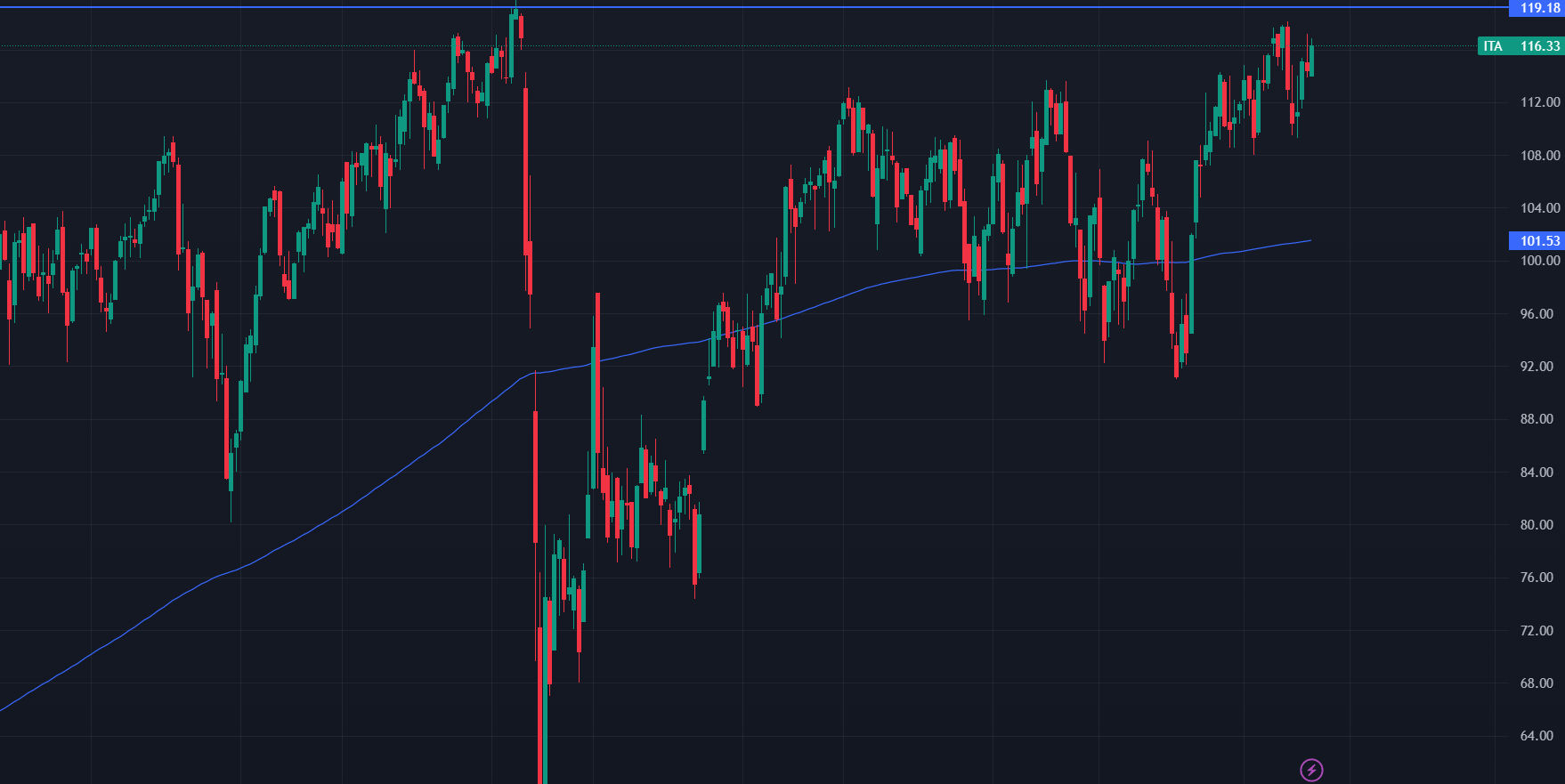
In the US, Aerospace and Defense ETFs XAR and ITA offer 34 and 37 companies with fees of 0.35% and 0.39%, so they aren’t free either. Someone might think that the war train has already left and it’s no longer worth buying. ITA seems to still be at the level it was before the COVID dip. Arms dealers living off government contracts should perform well in a recession; falling inflation and a loosening labor market also help. Additionally, leaked docs don’t show that the war in Ukraine is ending, and as a bonus, China is also acting up off the coast of Taiwan.

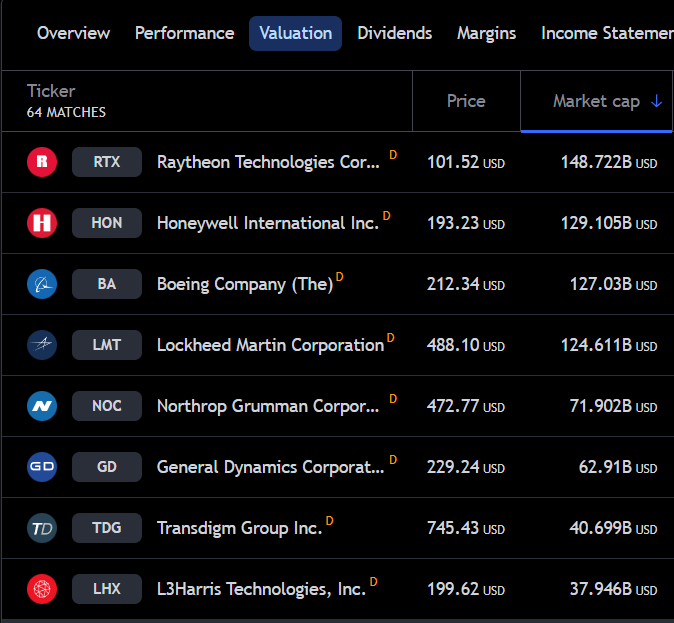
I should pull myself together too and just coldly buy the top 5 and stop hesitating. Every time there’s a pullback, I wait to see if it goes lower, or then I don’t have time to follow. Now I’ve at least put in a few limit orders (pilkki) in case they start filling.

6 Likes

MIND Technology reports (again) an order roughly the size of its market capitalization, which would be realized during 2024.

(The early day share price reaction of +14% returned it to the level of a month ago, which is probably within the limits of normal daily volatility for this ticker. After all, its spread is usually in the 8-10% range.)

4 Likes

translation:
“The defense companies request financing from the EIB. But investing in weapons is not compatible with the bank’s sustainability ambitions”

Before the invasion of Ukraine, the defense industry was treated by funds and banks, and partly also by politicians, like the tobacco industry. The phase of attitude change is still ongoing.

2 Likes

Saab AB raises its outlook in connection with the Q2 results:

“Upgraded outlook for organic sales growth 2023: organic sales growth to be between 16-20%, compared to previous outlook of around 15%”

“Sales increased to SEK 12,475m (10,171) with an organic growth of 22%, driven by high pace in project activity across all business areas.”

This speaks more broadly to the impact of the war in Ukraine on this sector.

7 Likes

Market overreaction in my opinion, added a small slice.

1 Like