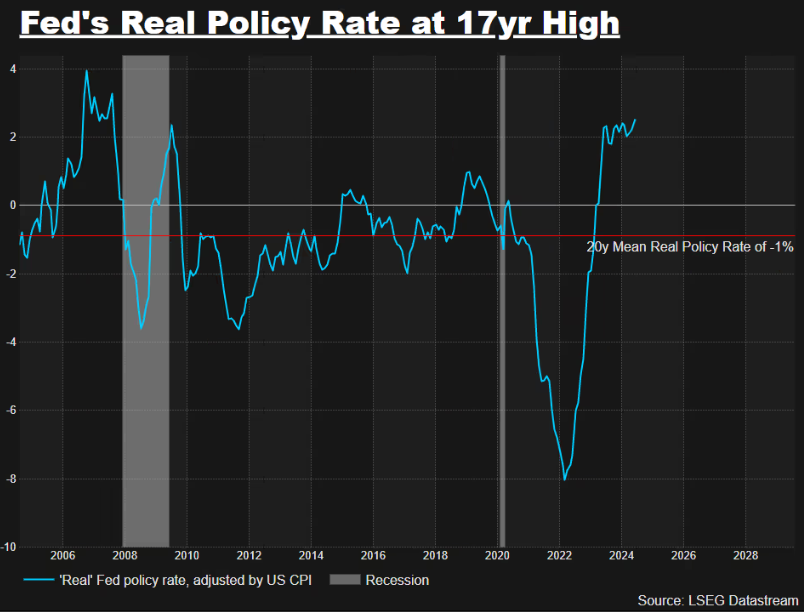
Good morning! For Thursday, a few words on real interest rates, which for the Fed funds rate have risen to their highest level in 17 years. This also means that interest rates are starting to seriously put a spoke in the wheels of the economy. Based on that as well, the Fed has room to implement less restrictive monetary policy.
This is veering a bit into daily chatter for this big-picture-focused thread, but according to Bloomberg, the folks at JP Morgan estimate that “75% of the global carry trade has been unwound.” Returns have fallen, wiping out this year’s gains and then some.
OP’s Chief Strategist Lippo Suominen and Communications Manager Ville Rajala discussed the latest market news.
Market turbulence at the beginning of August left investors concerned. Market worries included, among other things, recent economic data and the consequences of the Bank of Japan’s interest rate hike. What is behind all this, what is happening right now, and where the markets are headed from here – OP’s new Chief Strategist Lippo Suominen is here to provide the answers.
Topics:
00:50 How do the stock markets look now, has the situation calmed down? 01:31 What was behind these market jitters? 09:16 Has the overall economic outlook now changed for the worse? 13:16 How do the equity and bond markets look from here on? Is there reason for an investor to be worried about the increased nervousness? 14:48 Which themes will be at the center of the markets this autumn? 16:08 What kind of advice would you give now to an investor considering the situation?
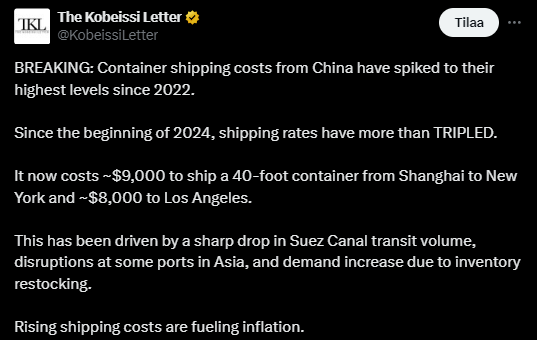
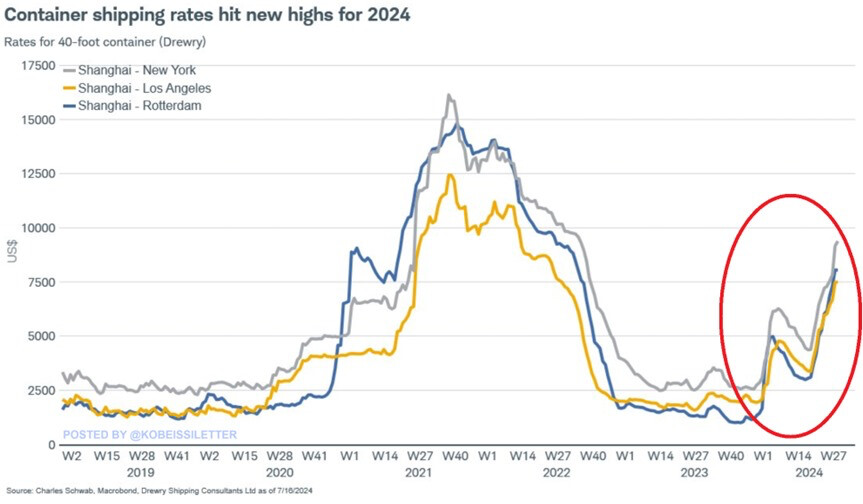
If I interpreted it correctly, container shipping costs from China have more than tripled since the start of 2024. This kind of cost increase adds to inflation, but it has apparently already been known to the market, so it’s not surprising as such.
There was a discussion above about how Americans inherit huge real estate and monetary assets as the baby boomers pass away. This Kauppalehti article, which discusses the funding of elderly care in various countries, reveals that they might not necessarily inherit it; instead, it is liquidated to cover care costs:
I’m hesitant to quote directly since it’s probably behind a paywall without that Ampparit link, but the highlights include a 40% increase in the number of elderly people over the next decade, which will drive up care costs:
“The problem especially affects middle-income earners, who do not receive support through the system until their own assets have been used up. Long-term care often means that the assets accumulated during a lifetime have been spent on care by the time the person dies.”
That’s how it is. “Becose situation of red Sea” is the subject line of the email. And even already agreed freight rates might jump 300%.
Maritime law is wonderful. In it, the customer always pays. If the ship sinks, the customer pays; if the ship burns, the customer pays. If the ship is late and doesn’t get a port berth, the customer pays..
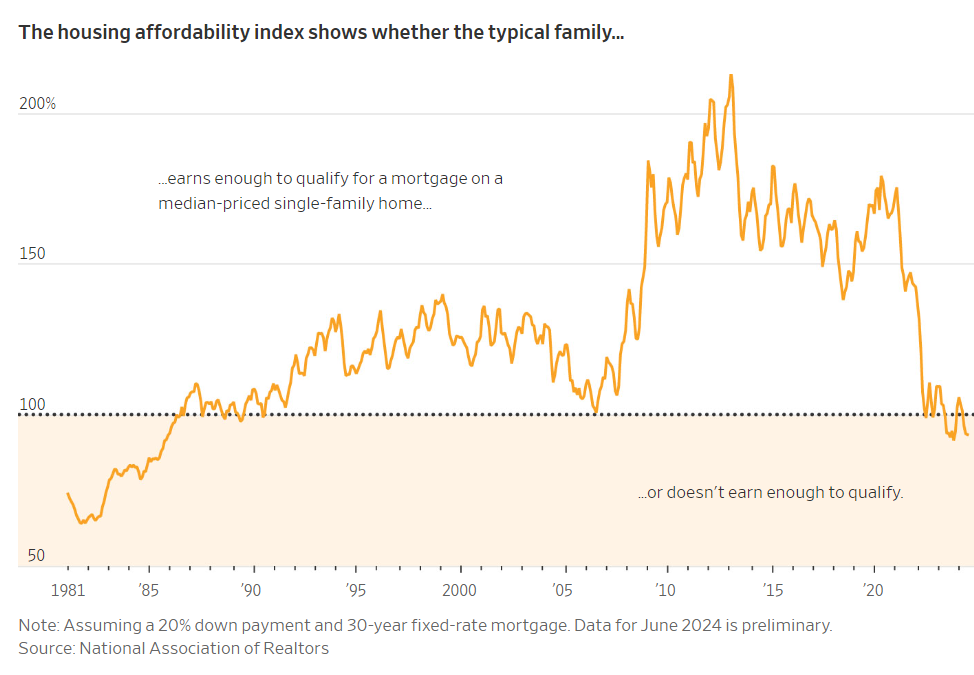
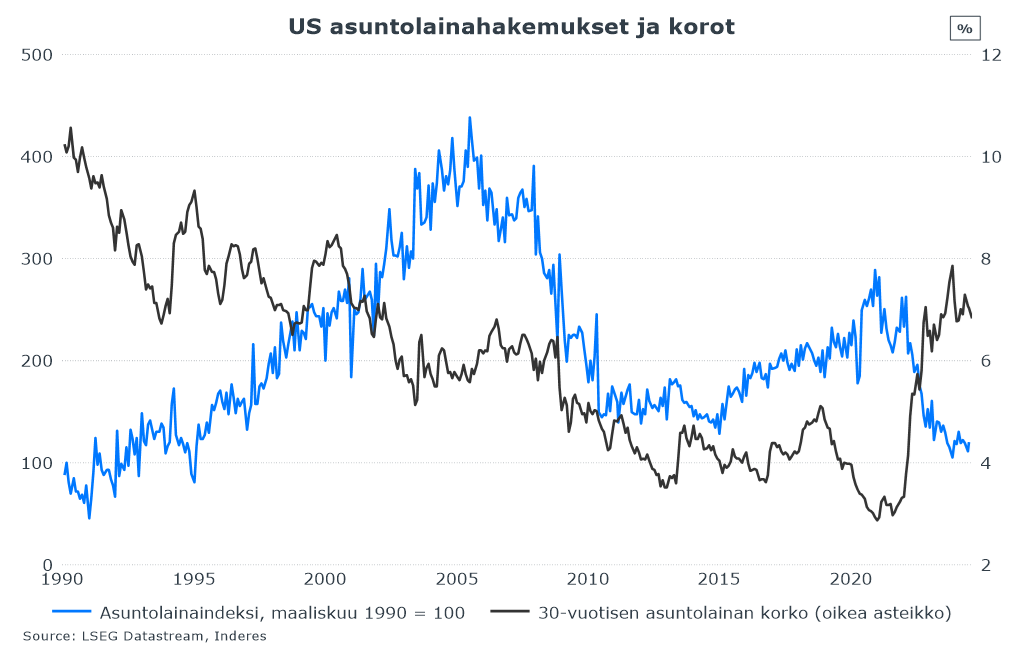
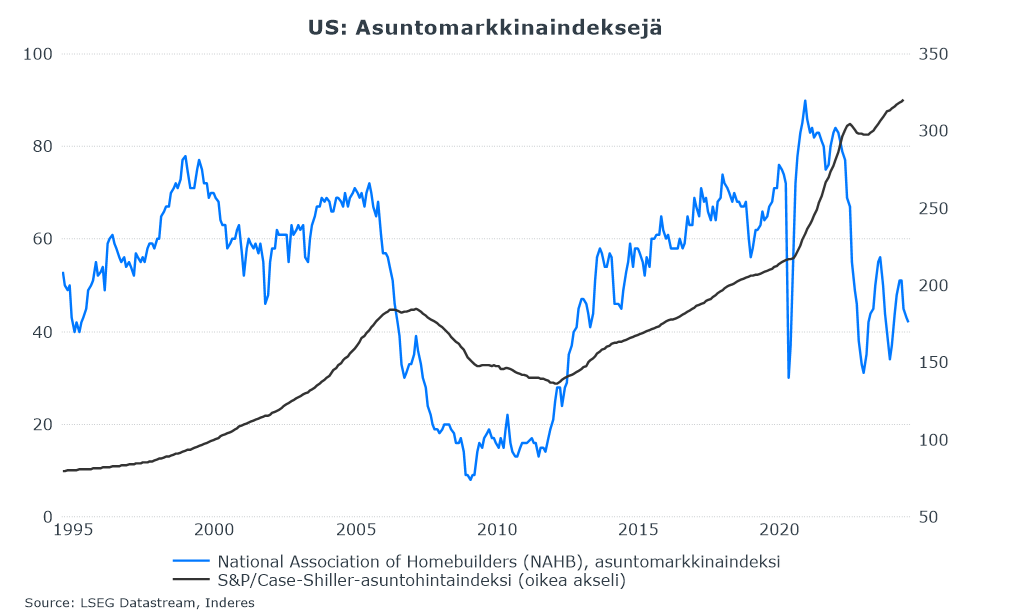
Good morning and a great start to the week to the thread! Last week, the stock market went up and down, and we are also in a bit of a Ferris wheel in the housing market. Regarding the wealth discussion, I spotted an interesting story in the WSJ about US household assets relative to housing costs (including prices and interest rates). We are in a pretty dismal state—namely, as weak as in '85—due to the rise in prices and interest rates. Especially the latter has also punished Finnish households, but house prices have come down.
Here is an August stock market review by Harri Kojonen, representing the same company.
EDIT:
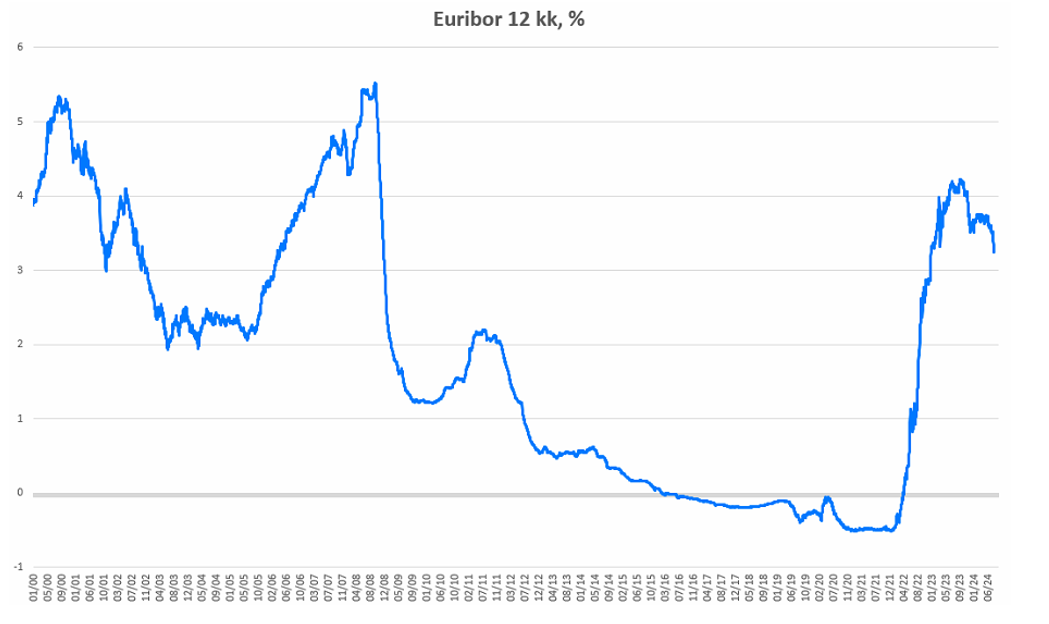
I’ll also add Timo Heikkilä’s article on Euribor here.
The drop in Euribor rates is visible in the wallet of the average Finn. A year ago, on August 1, 2023, the 12-month Euribor was 4.076%. Now, Euribor is 3.176%, meaning a decrease of 0.90 percentage points.
Assuming a loan margin of 0.50 percent, the loan interest rate would have been 4.576 percent a year ago and is 3.676 percent now.
Using the Interest Calculator, we can see that a 0.90 percentage point drop in interest rates already has a significant impact on interest expenses. Assuming a loan of 100,000 euros, the annual savings in interest costs are 900 euros. If the loan amount is 300,000 euros, the savings are already 2,700 euros per year. This is a substantial sum that mortgage holders have available for loan repayments, investing, or consumption.
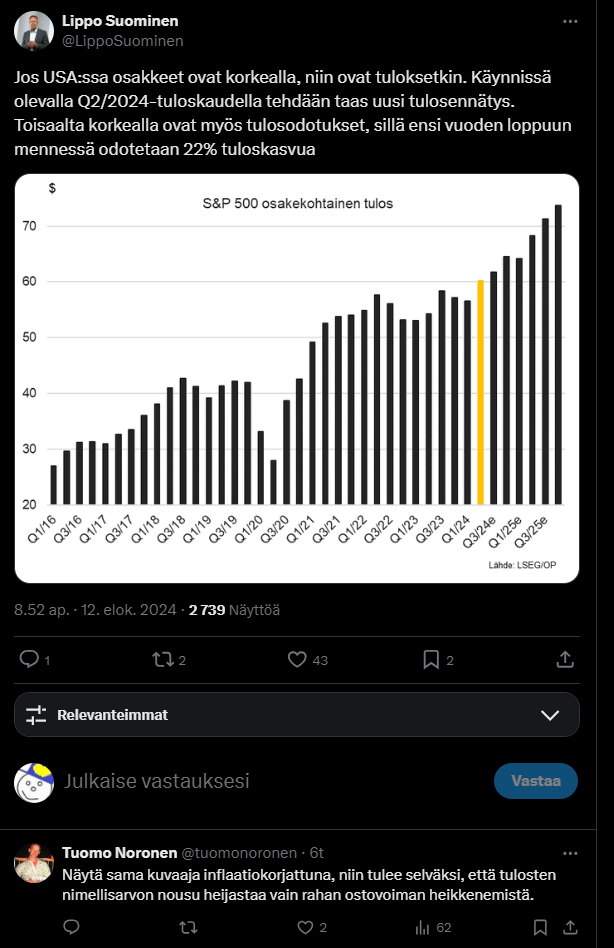
“Oh, a 15% increase? Well, the merchant takes care of it!”
We’ll see what happens to the already poor purchasing power after the VAT change. Even the ECB’s cuts won’t help It could be tough, especially for retail chains (which the above obviously refers to ).
Essentially, these will be passed on to the prices; there’s simply no other basis for it. Over time, it’s then possible that prices will come down. But this is nothing more than an inflationary hike.
I know this through my own business – why on earth would I sell my expertise for that much cheaper now?
edit: besides, this whole inflation thing is like a game of hide-and-seek at the grocery store. Package sizes have shrunk, and that way prices can look lower. But look at the price per kilo!
if my hourly rate has been e.g. 100e/h, in the future it will be 95e/45min – voila, who wins?
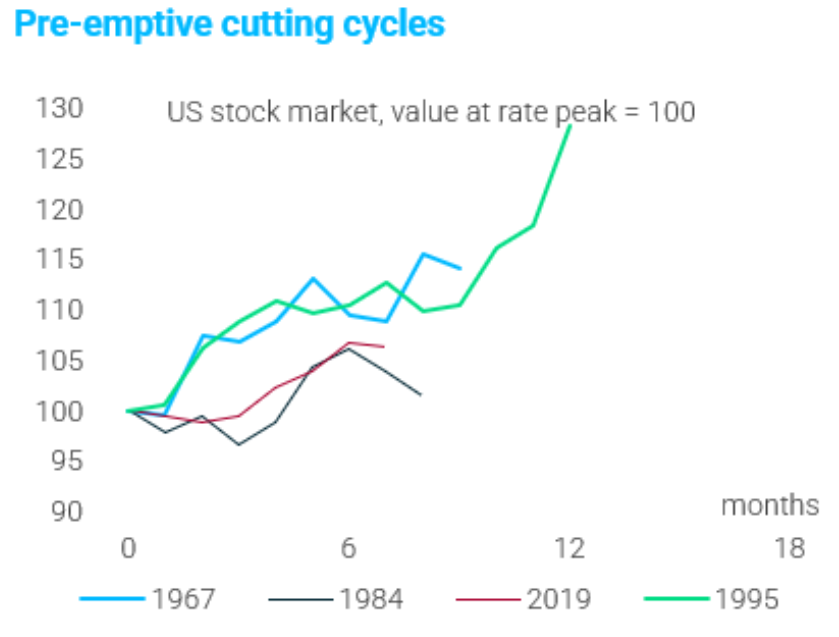
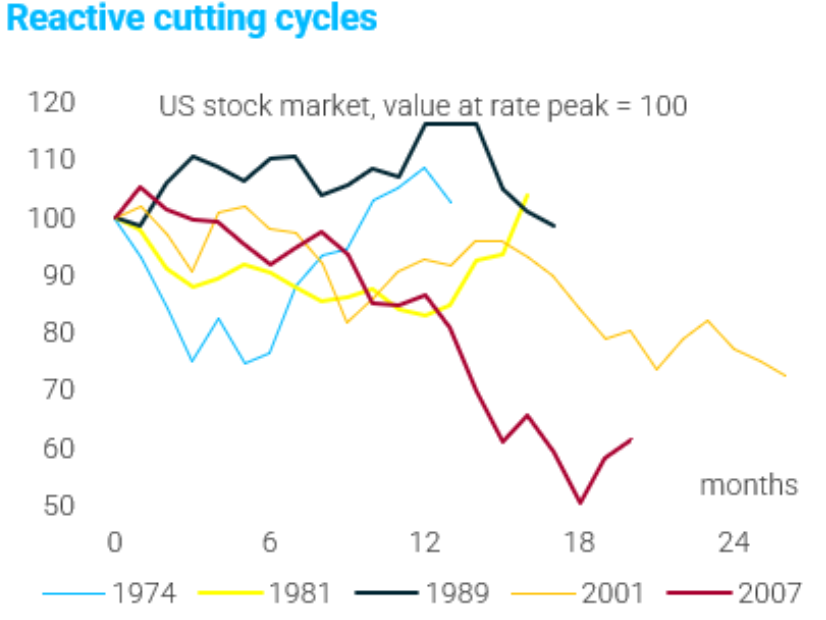
Good morning! One of today’s burning questions is: is the Fed already “behind the curve”? I found some interesting charts from TS Lombard on what happens in the stock market if that’s the case. And things usually turn out poorly then. So there’s reason to hope that monetary policy is proactive rather than reactive. Pinpointing exactly where we are right now is challenging. More on this topic in the macro review.
The Fed seems to have it deeply ingrained in their core to make decisions reactively; some “genius” gets a bright idea and the madness begins until they’re left clueless again. (Rates to zero and massive stimulus until inflation suddenly explodes, followed by aggressive rate hikes in a short period). Let’s see how the rate cuts affect inflation… if the economy is already trudging through the mud, maybe it won’t push inflation up; it’ll be a worse situation if it does.
Aren’t we already stimulating [the economy] on a massive scale? Governments are taking on new debt and pouring money into the economy at a terrifying rate. Then they act surprised when wage/service inflation refuses to let up. Another driver is the labor/talent shortage. In all Western countries, more people are retiring than there are new ones to replace them. This is a new situation for the Fed (too).
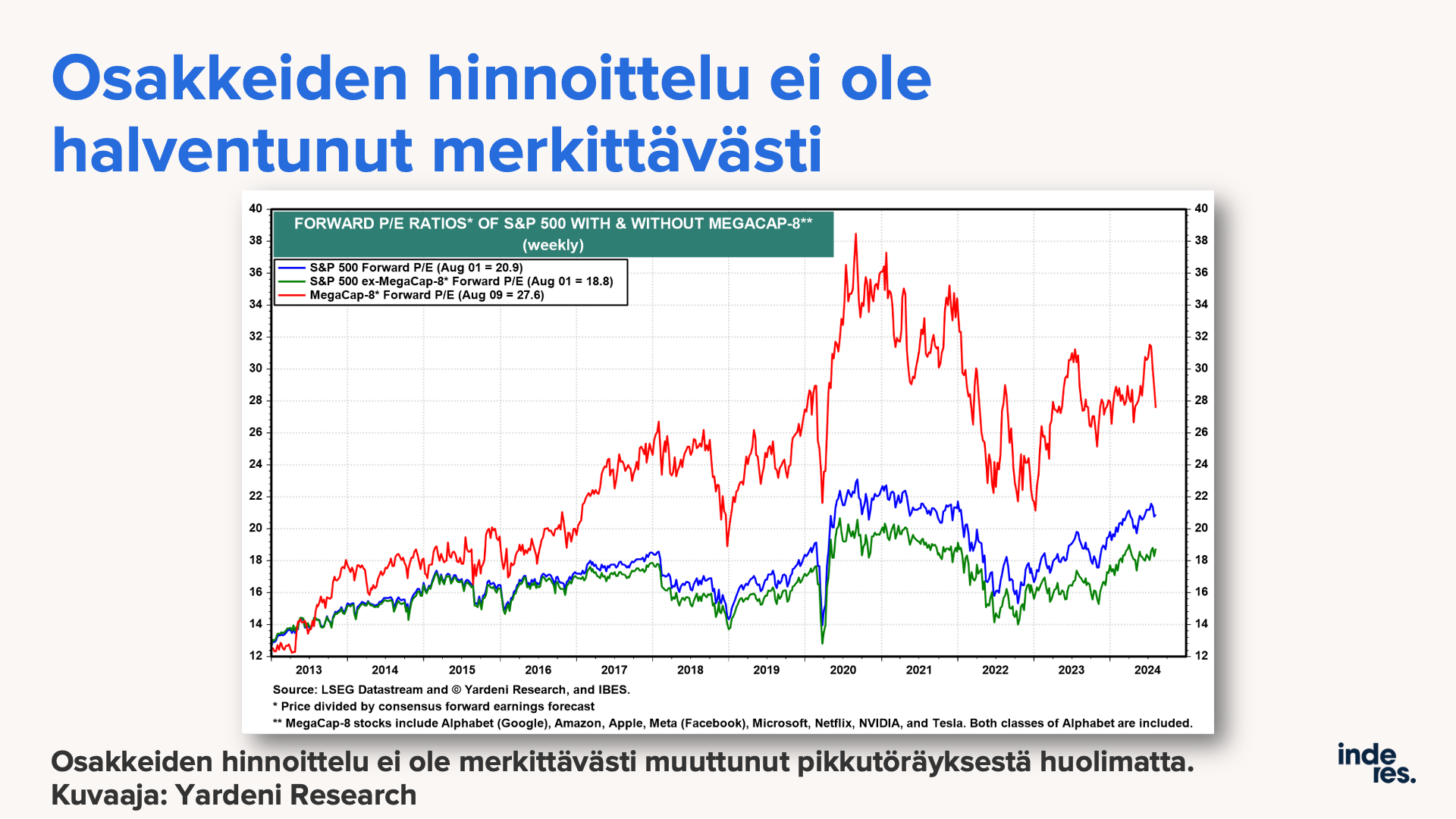
The recent stock market crash might not be over just yet. The market doesn’t always recover from downturns in a V-shape. Stocks haven’t even become significantly cheaper.
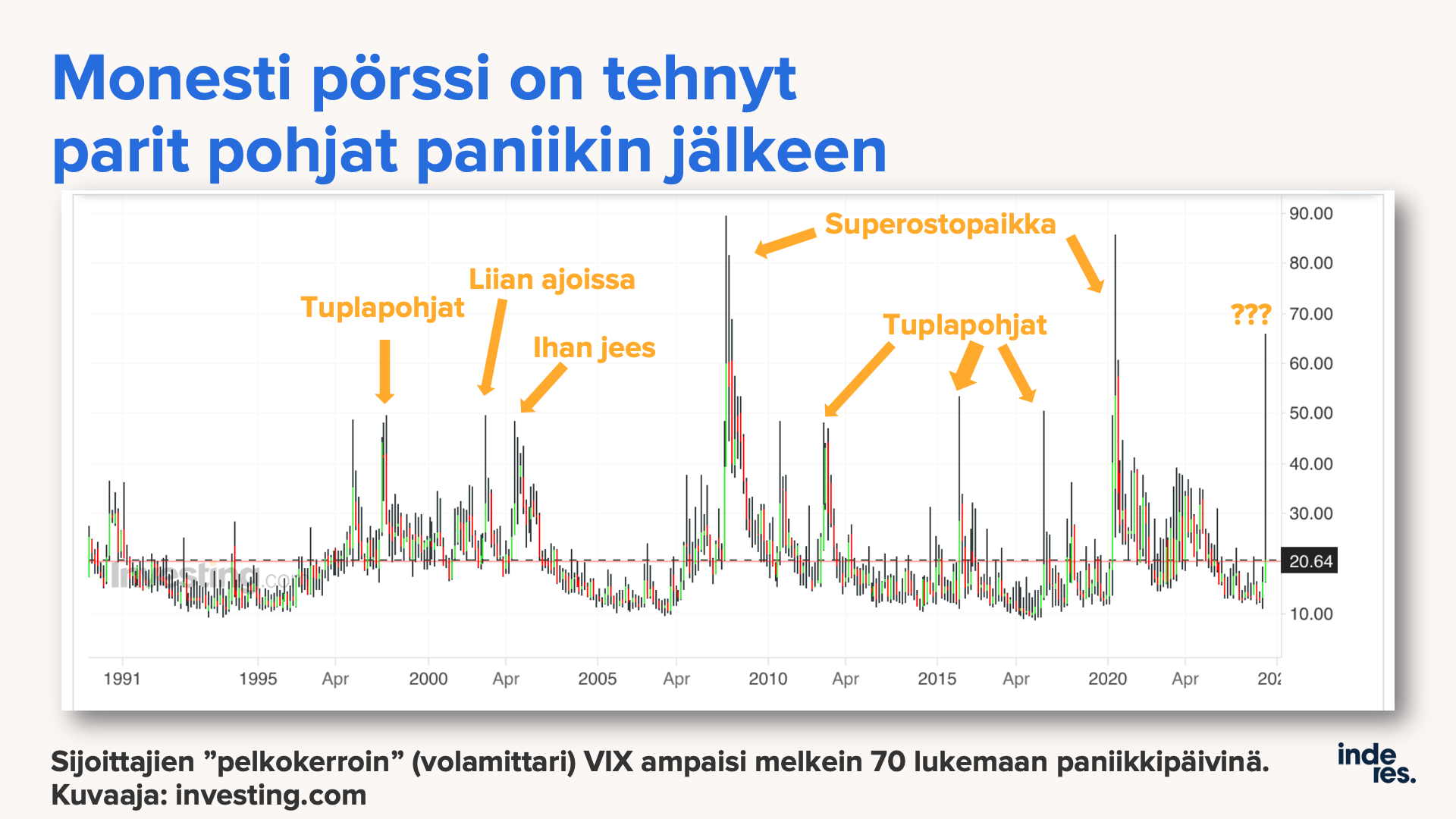
On the other hand, according to BofA’s calculations, 80% of the time when the VIX has risen above the 45 level, the S&P 500 has risen by an average of 14% over the following year. Time will tell how it goes this time.
Despite the minor tumble, stocks haven’t become much cheaper, at least for my taste. The S&P 500’s forward P/E is still hovering around the 21x range. Mag8 28x. Note: the Yardeni data ends on Aug 1st, but stocks are practically at the same level as at the beginning of August, and forecasts don’t change quickly.