Recession cancelled for this quarter in Germany.
47 Likes
Yes, it will probably start sometime, if we wait patiently enough.
2 Likes
As a reminder, even though a rapid decline in inflation is now expected, it has often taken years, and even more years from such high levels.
https://twitter.com/jessefelder/status/1585743383128965120?s=21&t=1Qxtb1YicE3EPtichBECfg
23 Likes
Here are Germany’s inflation figures, released at three o’clock Finnish time. Yesterday’s ECB (European Central Bank) chatter immediately went down the drain. Or rather, we’re taking the backdoor, meaning we won’t do as I thought because of the data.

USA’s daily catch a moment ago:
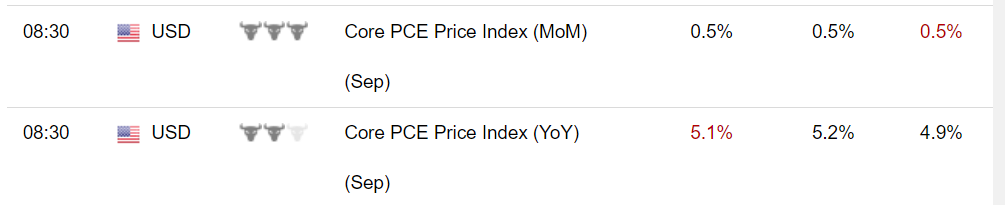
Forecasters are improving their pace, but the real interest rate is still negative, so now it’s worthwhile for individuals and companies to buy everything they can afford - on credit. (meaning what’s needed during the year, not stocks)
And so the figures go: first, the realized figure, in the middle the forecast, and on the right the previous figure.
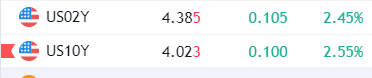
And also US interest rates, going up again, though they fell yesterday:
7 Likes
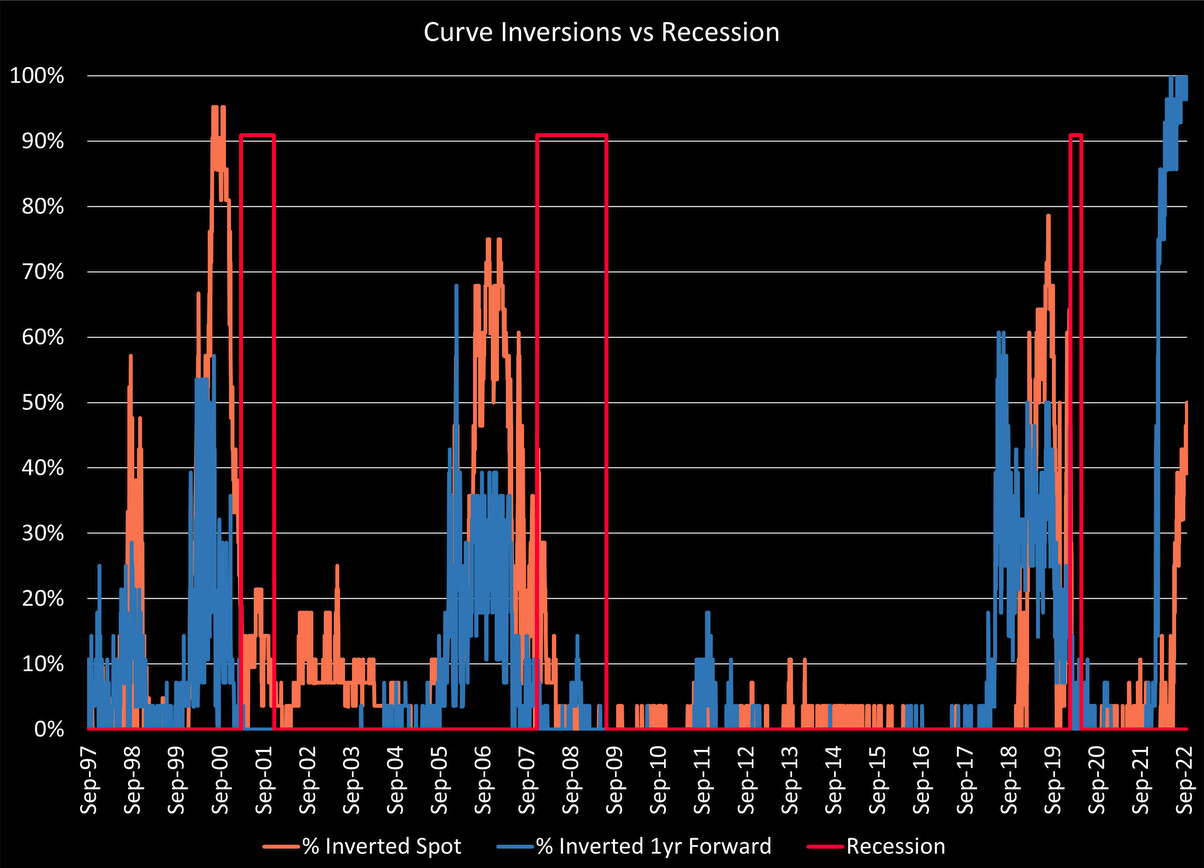
Since I enjoy following interest rate curves, I came across this good picture. There’s always room for a little bearishness even on such strong up days. 
5 Likes
https://twitter.com/jasonfurman/status/1585997983979642882?s=46&t=0gdBw7eJ19spw0Q1GEoLJA
This is an interesting point too.
41 Likes
Juurikki (a user) previously wondered what kind of calculations the “transitory” forecast was based on. Is there any information on whether it was based on calculations at all, or perhaps on an interpretation of the “spirit of the times”? An analogy to the rapid rise in stock prices from the COVID-19 dip? Calming efforts by officials to dilute any potential panic?
5 Likes
An interview with Lyn Alden published the day before yesterday, where she shares her views on macroeconomics and markets.

Timestamps:
00:00 Introduction
19:54 What Will Cause The Fed To Pivot?
26:21 The Treasury Market Is Not In Full Panic Mode Yet
33:45 Recession Risk
35:24 Asset Allocation
38:26 The Dollar and Emerging Markets
45:45 Energy
53:49 When Will The Dollar Stop Rising?
01:01:54 The Long-Term Debt Cycle
Absolutely recommended viewing for the weekend!
9 Likes
That was some really good stuff again. Lyn has been predicting for several years that the end result of this debt frenzy will be a deliberate inflation of the debt burden in the style of the 1940s.
It gave me a real fright when we’re at the point where I could read the same story in Helsingin Sanomat (Hesari):
https://twitter.com/AkiKangasharju/status/1586215639395586048?t=M2I7nHS8yHKpBOXy9d_O-g&s=19
Verneri also seemed to quote the same Napier interview in his recent fifteen-minute segment.
At the moment, at least I’m racking my brain trying to figure out how to best get a piece of these billions pulled out of thin air..

If only there was a way to leverage debt while managing risks 

17 Likes
Napier has been predicting this for a long time.
11 Likes
Pretty well predicted, this is what the ECB is doing now.
3 Likes
The problem is the already depreciated euro, and at the same time, the fertilizer and other essential industries in Europe are stagnant due to high energy prices. If there’s one thing the Eurozone should hope for, it’s a weakening of the dollar against the euro, because with a weakened euro, we will be forced to buy essentials in a few months. But perhaps that’s not realistic.
My guess is that the ECB will have to raise its key interest rate higher than the Fed.
In Germany, food prices are rising at a record pace, and the same is ahead for all of us.
https://twitter.com/schuldensuehner/status/1586247250224721920?s=46&t=G3ZqnmnHMjZuVvEqL2clkw
4 Likes
There isn’t much new in this Salkunrakentaja article if you’ve been following this thread. Interest rate hikes are discussed in this article as well, and it quotes the thoughts of Nordea analysts Lauri Vepsäläinen and Antti Koskivuo.
According to Nordea’s Vepsäläinen and Koskivuo, the central bank’s dovish (kyyhkymäiset) guidelines support the expectation that the pace of hikes will slow to 50 basis points (korkopisteeseen) in December, and one more 25 basis point (korkopisteen) hike will be seen in February next year.
2 Likes
https://twitter.com/financialjuice/status/1586729083148304387
Towards Wednesday…
23 Likes
Indeed.
- The emperor above all other indices: S&P 500
- Fancy clothes, finest silk and velvet: 2023 EPS $230 as a starting point for future earnings growth
Normalized S&P 500 EPS for this year $150 and for next year $160?
Below is a summary of what we have learned from history, and what is very boldly assumed to be different this time if it is claimed that normal EPS is $230 or anything close to that.
The full impact of Trump’s massive corporate tax cut benefiting customers may still take years…
… but otherwise, all the abnormal temporary fundamentals that contributed to the earnings bubble are slowly eroding.
Robert Shiller became interested in the history of the US stock market in the 70s.
The S&P 500 was established in 1957. Shiller constructed a comparable market cap-weighted counterpart going back to 1871.
What struck Shiller was the significantly strong fluctuation of the markets.
(I am correcting the index figures here so that they are all in September 2022 dollars.)
From the beginning of 1871 to the beginning of 2013, the index fluctuated as follows:
106 – 80 – 335 – 110 – 537 – 104 – 381 – 173 – 890 – 333 – 2551 – 1056 – 1908.
Shiller was interested in how the stock market anticipated long-term fundamentals.
The large cap businesses of 1871 had very little to do with the businesses of the last decades of the 20th century.
The question was how markets anticipated fundamentals over several decades. The value of businesses is all their future dividends discounted to the present moment.
The stock market succeeded in its task the better it saw:
- The future of the US economy
and - The global economy
- The future position of the current US large cap scene in the US and global economies
- The future changes in businesses and their impact on dividend streams
The rest of the fluctuations — that which did not reflect future fundamentals — was the fluctuation of expected returns.
The results were surprising. The market’s ability to anticipate long-term fundamentals was rather negligible. Perhaps better expressed: fundamentals were astonishingly stable at the market level, and changes in outlook did not justify any significant fluctuation.
When considering trades for an individual company’s stock, investors usually emphasize changes in outlook more than changes in their required rate of return.
But then, when these individual companies are aggregated into Corporate America, the whole thing doesn’t add up at all.
The index fluctuates wildly, investors imagine they understand and emphasize fundamentals; however, at the index level, practically only the required rates of return change, nothing else essential.
It doesn’t matter how much businesses change. Future dividends determine the outcome, not how seemingly business operations are revolutionized.
The national economy and competition ultimately set the framework and the merciless phenomenon of regression to the mean.
At the market level, very optimistic and very pessimistic narratives alike ultimately prove empty. They may be built with an irresistibly credible appearance, but that is deceptive.
Secular peaks of the index have on several occasions been associated with a mega cap glamour bubble. That is, the glamour sector exceptionally detaches from the rest of the large cap scene.
This happened in 1906, 1929, 1972, 2000, and 2021.
Each time, the culmination of these mega cap glamour bubbles has been preceded by an intense speculative phase by retail investors in the shares of smaller companies.
That bubble burst, but stock investing still remained fashionable. Therefore, the focus shifted: quality at any price.
Each time, these mega cap glamour bubbles have been followed by a situation where stock investing in general has been much less fashionable and valuations broadly much lower.
Typically, it takes at least two to three years, perhaps even more, from the most intense speculative phase of retail investors until valuations normalize at the market level.
And so, it takes at least a couple of years from the culmination of the mega cap glamour bubble for valuations to normalize.
Everything has gone according to script and on schedule so far.
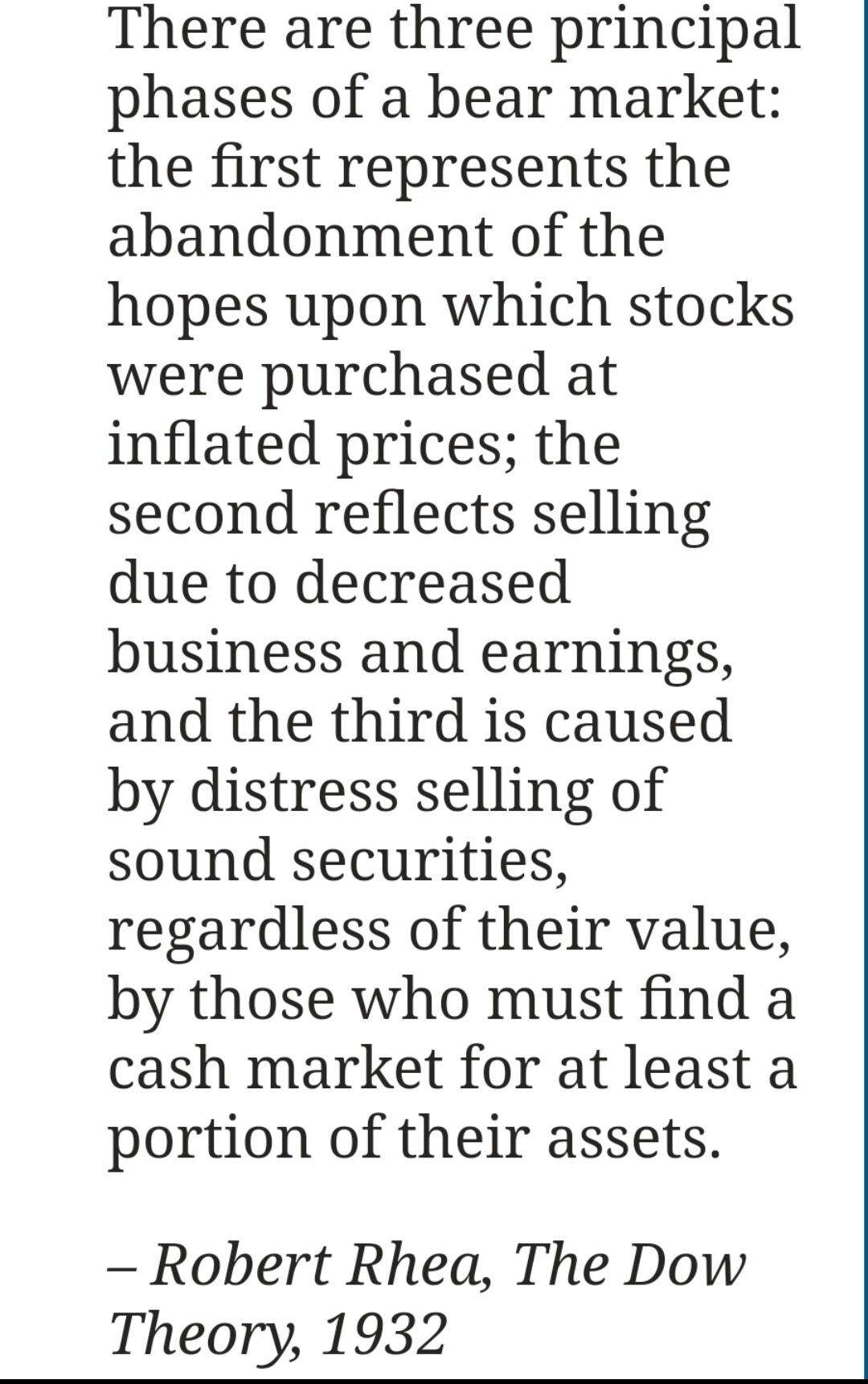
The past week brought the very first glimpses of phase two. After phase two, there might be a phase three, or not.
53 Likes
https://twitter.com/LiveSquawk/status/1586976436648349703
Consumers in Germany also say “not today” to those anticipating a recession.
57 Likes
Are these always in euros? I mean, have prices gone up and thus a positive sign, then I guess a smaller amount is enough if prices have been raised enough?
If food prices in Germany, for example, have risen a lot, and petrol and others, is that strong or weak?
Edit @Jarnis, so it’s a relatively strong result then.
1 Like
Yes, I understand that retail sales figures are inflation-adjusted (and inflation can then be wondered at from consumer price indices).
And petrol and cars have been removed from that. And the NSA figure is not-seasonally-adjusted.
German Retail Sales measures the change in the total value of inflation-adjusted sales at the retail level, excluding automobiles and gas stations. It is the primary indicator of consumer spending, which accounts for the majority of economic activity.
5 Likes
Regarding Germany, a significant difference from before is Oktoberfest, which was not held in the last two years and will certainly be reflected in the retail sales figures. It will be visible in the October figures in addition to September.
10 Likes
On the other hand, the timing of Oktoberfest was also known to forecasters; the forecast was more than one percentage point “better” than the previous one, but now it actually turned out to be clearly even better than that.

25 Likes