Alla on tviitti siitä, miten Larry Ellisonin omistus Oraclesta on noussut 24 prosentista yli 40 prosenttiin yhtiön omien osakkeiden takaisinostojen ansiosta. Osakemäärä on puolittunut vuodesta 2004 lähtien.


Mizuhon analyysin mukaan Oraclella on vahva asema tekoälymarkkinoilla, mikä tukee kuulemma nopeaa liikevaihdon ja tuloksen kasvua tulevina vuosina.
Tavoitehinta nostettiin 300 dollariin.


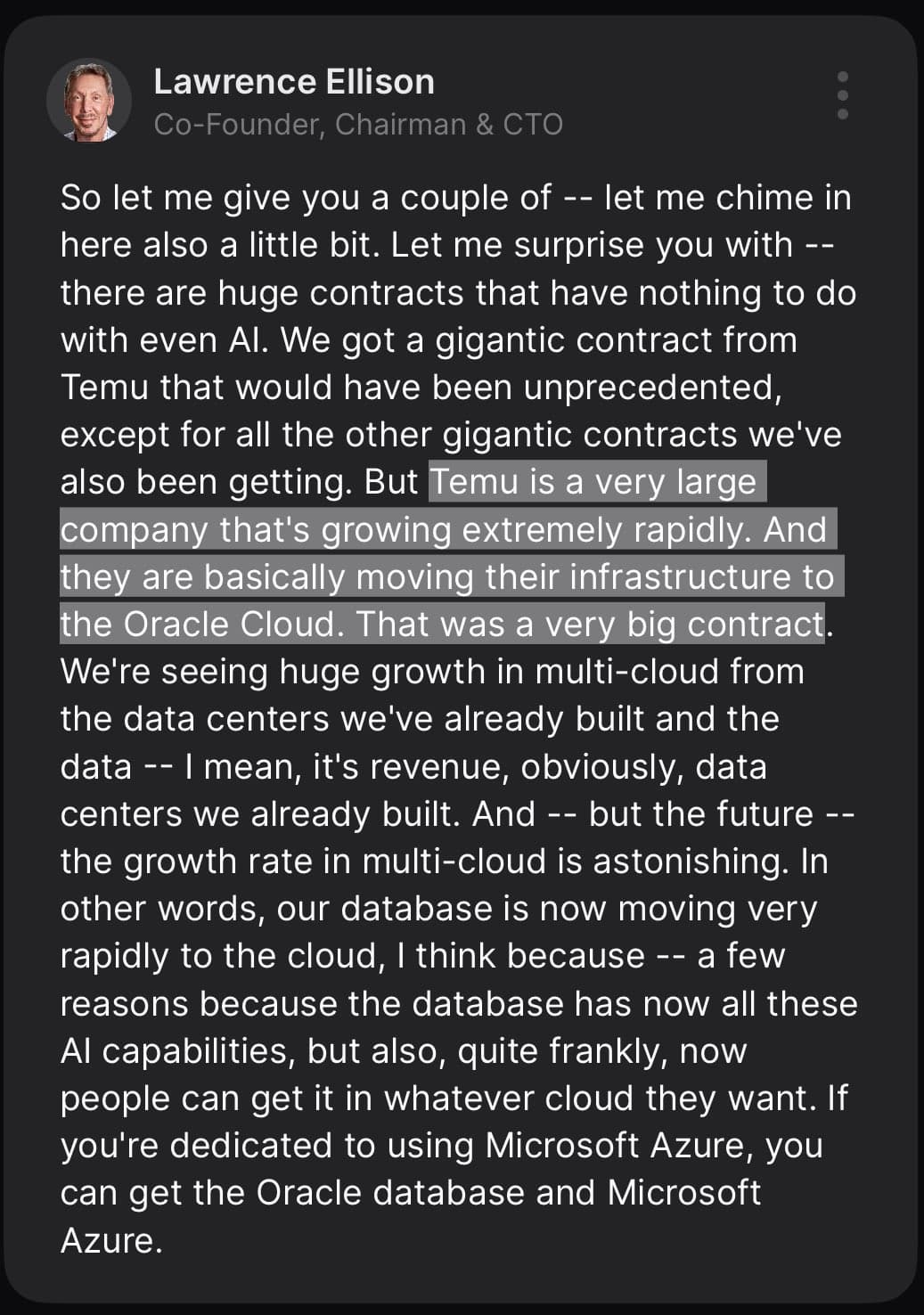
Larry Ellison kertoi, että Temu on hyvin suuri ja nopeasti kasvava yhtiö, joka siirtää käytännössä koko infrastruktuurinsa Oracle Cloudiin. Tämä oli merkittävä sopimus hänen yhtiölleen.
Hän painotti, että monipilvipalveluiden kysyntä kasvaa vauhdilla, koska Oracle-tietokantoja voi nykyään käyttää myös eri pilvialustoilla, kuten Microsoft Azuren kautta, mikä lisää shoukuttelevuutta entisestään.

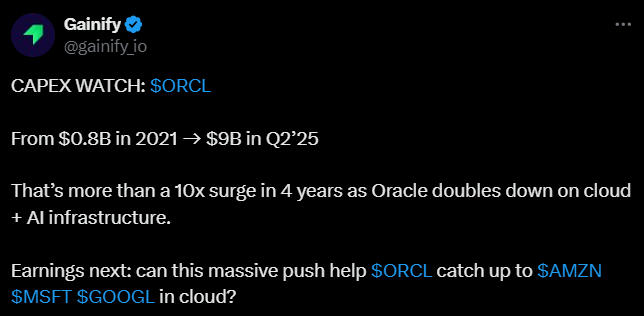
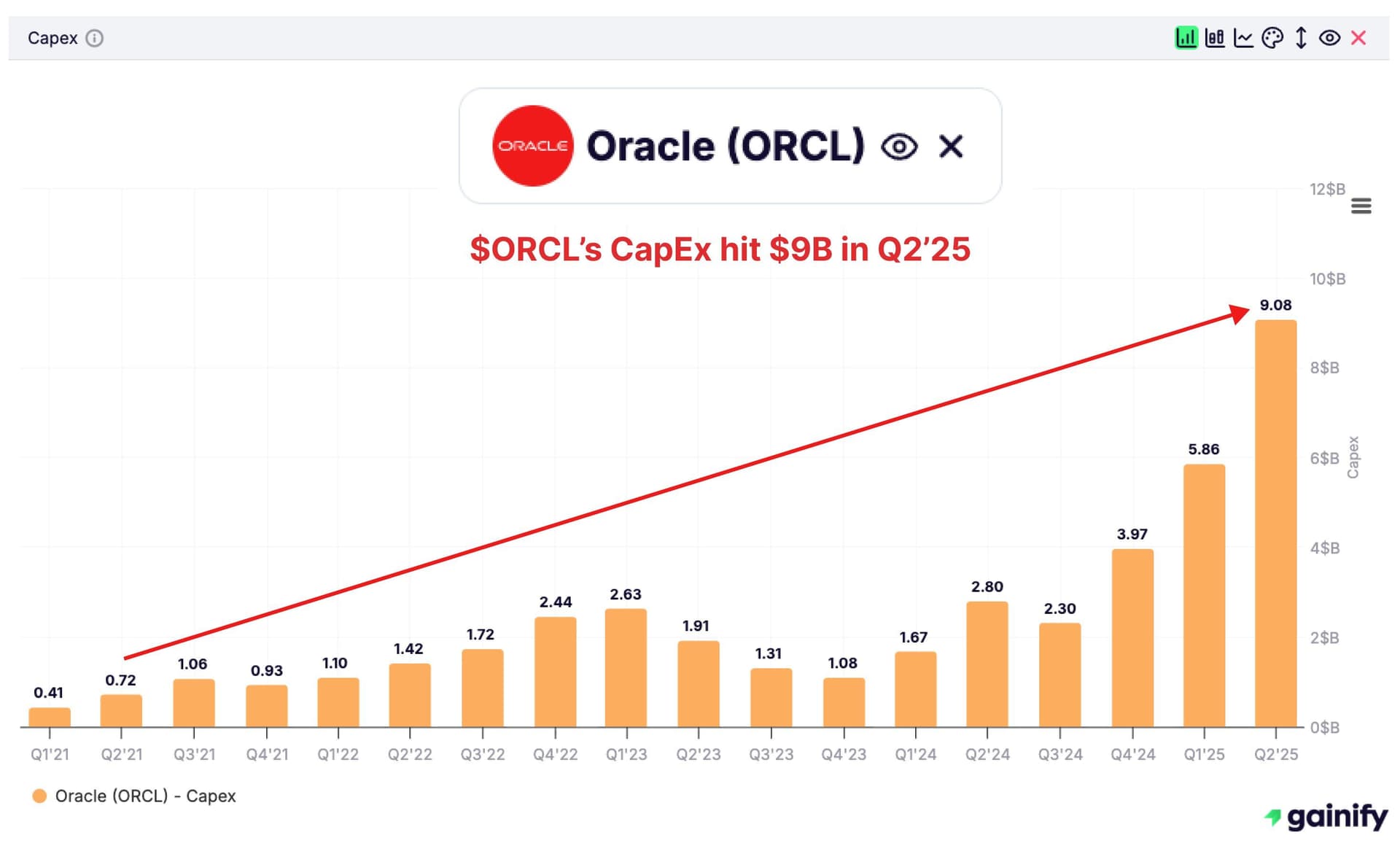
Oracle on kasvattanut investointejaan pilvi- ja AI-infraan hurjasti vuoden 2021 0,8 miljardista dollarista peräti 9 miljardiin (Q2/2025).
Yhtiö pyrkii haastamaan Amazonin, Microsoftin ja Googlen pilvimarkkinoilla.
https://x.com/gainify_io/status/1965063867853144079
2 tykkäystä
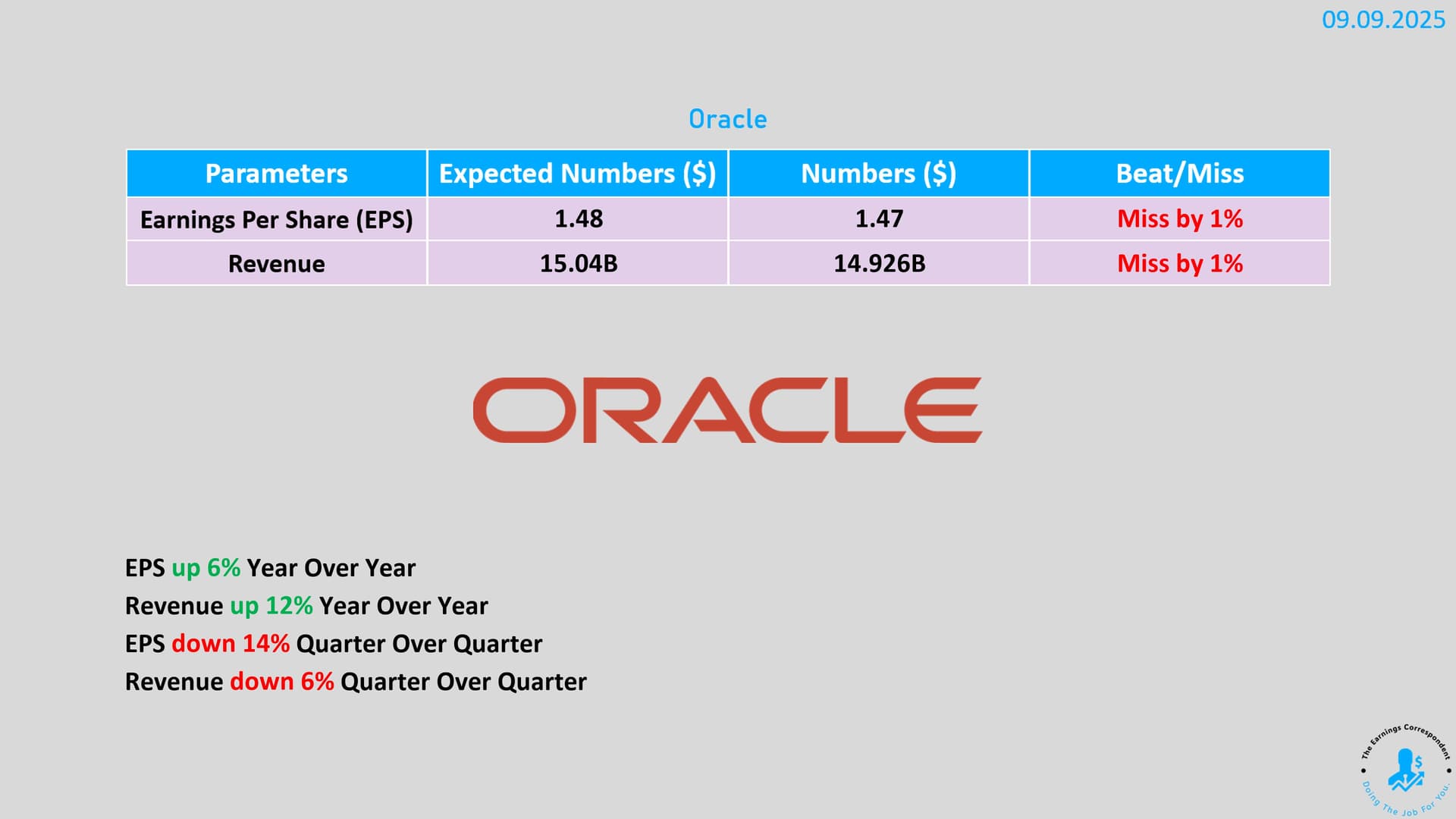
Tämän illan tulosjulkistus on todella mielenkiintoinen. Analyytikkojen odotukset EPS $1.15 ja liikevaihto $15.0 miljardia. Arvelen että nämä tullaan todennäköisesti ylittämään, mutta mitä kerrotaan tulevasta päättää varmaankin sen mihin kurssi suuntaa - niin kuin yleensä.
1 tykkäys
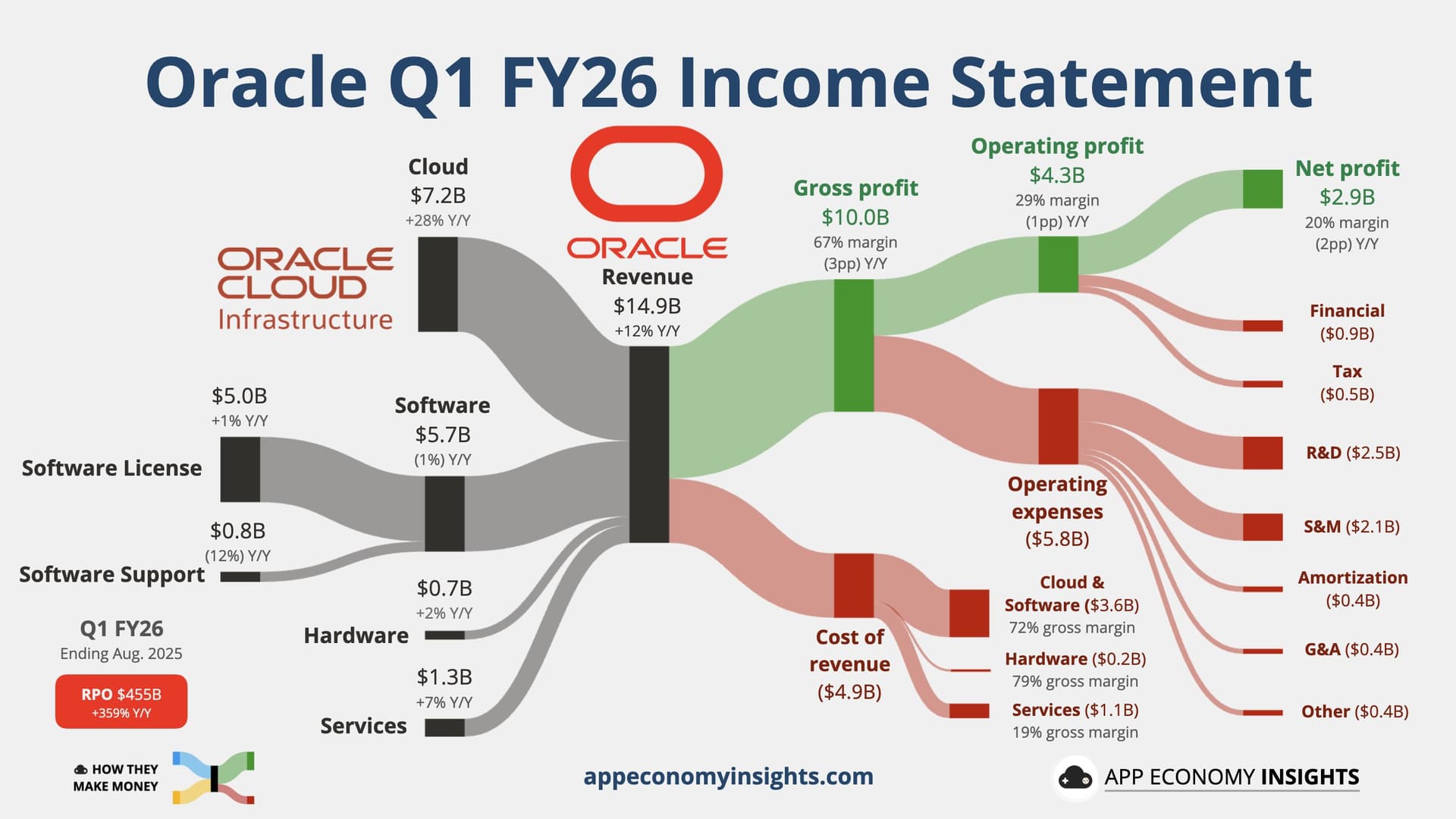
Oracle raportoi vahvasta kasvusta pilvipalveluissa, vaikka perinteisellä puolella oli vaisumpaa. Pilvipohjainen infrastruktuuri ja sovellukset vetivät erityisen hyvin, lisäksi yhtiön sopimuskanta paisui historiallisen suureksi.
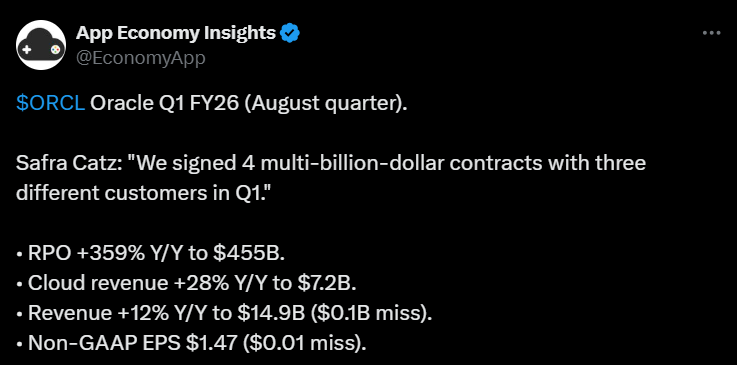
Toimitusjohtaja Safra Catz kertoi suurten sopparien vauhdittaneen kehitystä ja ennakoi, että pilvipalvelujen kysyntä jatkaa nousuaan lähivuosina.
Teknologiajohtaja Larry Ellison puolestaan korosti monipilviratkaisujen nopeaa kasvua yhteistyössä suurimpien pilvipalvelutoimijoiden kanssa. Oracle valmistautuu esittelemään uuden AI Database -palvelun, joka tuo suurten kielimallien voiman suoraan itse asiakasdataan. Ellisonin mukaan tekoäly tulee mullistamaan pilvipalvelujen kysynnän ja luomaan yhtiön liiketoiminnalle pitkän aikavälin kasvunäkymiä.
https://x.com/earnings_guy/status/1965506846875062745

Yhtiön omat materiaalit
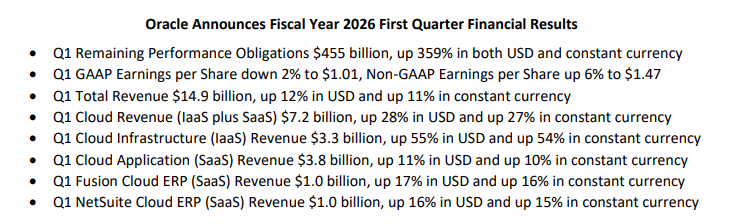
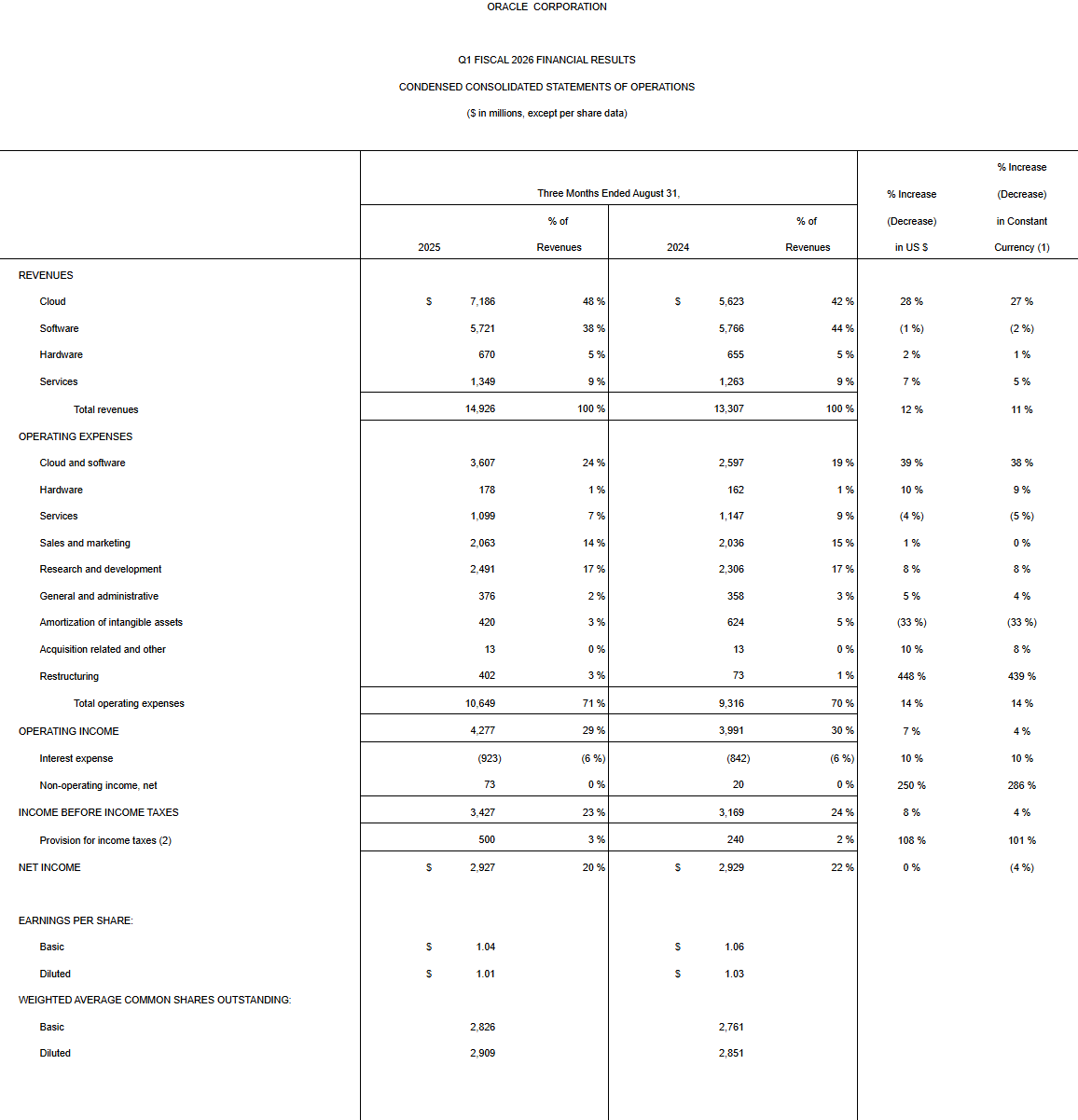
Laitetaan vähän silmille fantsua visualisointia 
https://x.com/EconomyApp/status/1965515100552585362
3 tykkäystä
Komea nousu osakkeeseen jälkilöylyissä. Yhtiö odottaa käytännössä massiivista kasvua pilvessä, jonka liikevaihdon odotetaan tänä vuonna olevan 18 miljardia dollaria, mutta 144 miljardia dollaria 2030! 
Oracle (ORCL) stock jumped more than 25% in after-hours trading Tuesday as the software giant said its AI-fueled cloud revenue is set to jump to $144 billion by its 2030 fiscal year — a massive leap from the company’s projection of less than $20 billion for the business in its current fiscal year.
“We expect Oracle Cloud Infrastructure revenue to grow 77% to $18 billion this fiscal year — and then increase to $32 billion, $73 billion, $114 billion, and $144 billion over the subsequent four years,” said CEO Safra Catz in a statement Tuesday.
Tämä AI-kysynnän aiheuttama pilvikapasiteetin kysynnän kasvu on niin looginen lopputulema, mutta kas kun tätä ei heti tullut ajatelleeksi kun ChatGPT julkaistiin 2022.
6 tykkäystä
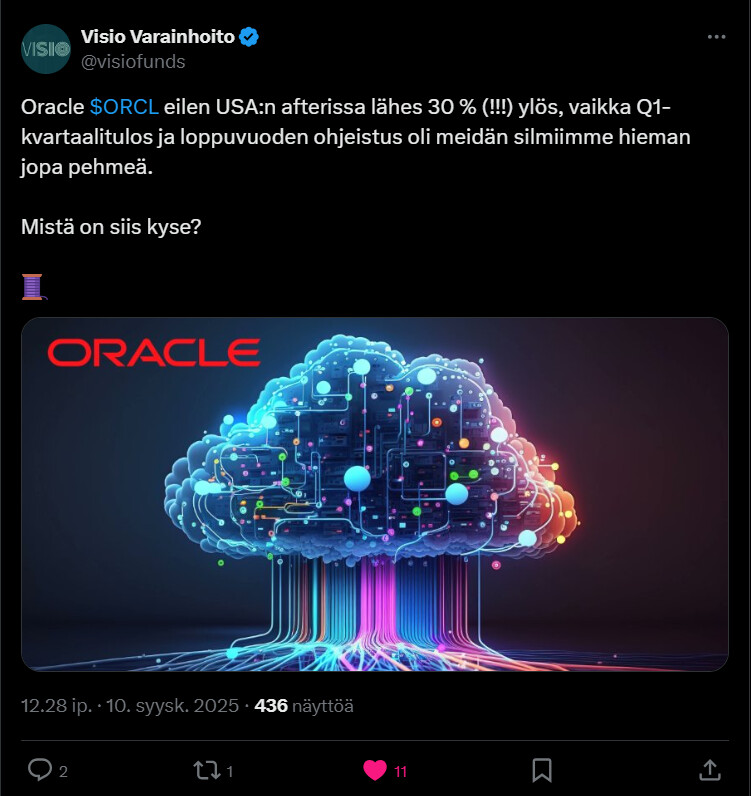
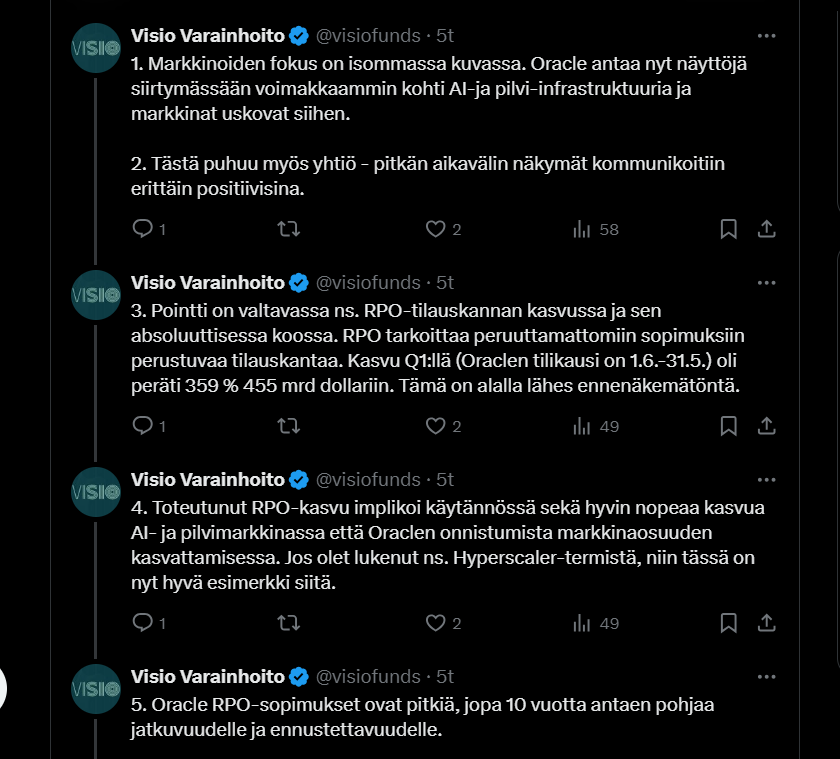
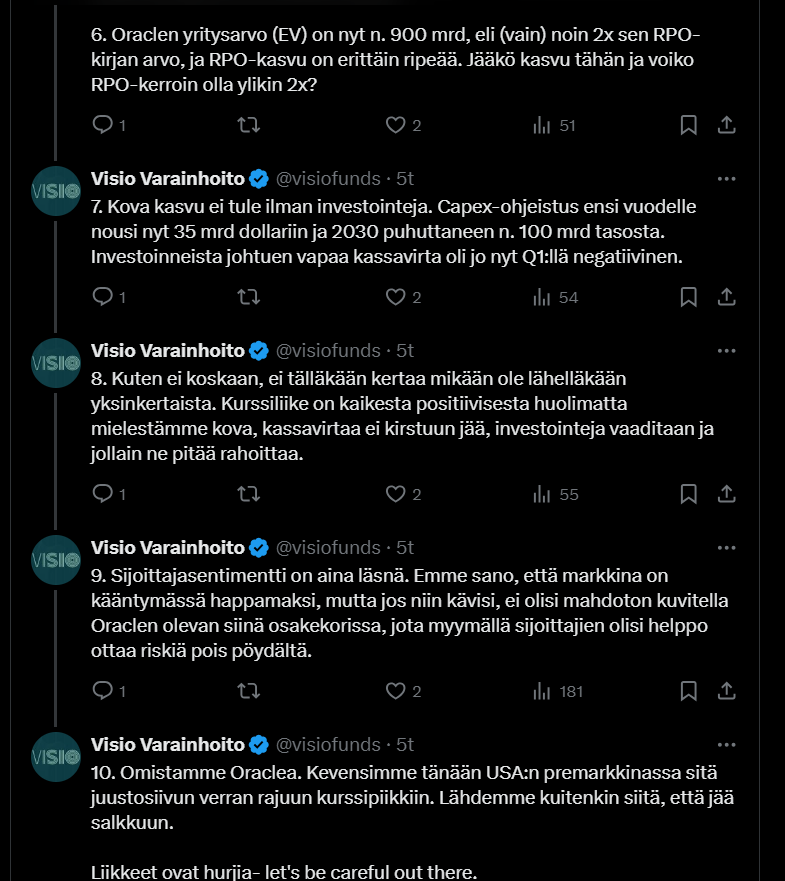
Tässä on tuore tviittiketju Oraclesta Visio Varainhoidon tapaan. 
Ketjussa mietitään Oraclen hurjaa kurssinousua ja mm. sitä, että mistä se johtuu ja miltä näyttää yhtiön tulevaisuus.
1 tykkäys
Tässä on SalkunRakentajan juttua siitä, miten Oraclen osake raketoi hurjasti ja Larrysta tuli maailman rikkain ihminen. Jutussa käsitellään toki myös vähän yhtiön kuulumisia ja Larrya.
Teknologia-alan kilpailu on koventunut erityisesti pilvipalveluissa ja tekoälyratkaisuissa. Oracle on onnistunut kehittämään monipilvistrategian, jonka ansiosta yritys voi palvella asiakkaita joustavasti Amazonin AWS:n, Googlen ja Microsoftin alustojen rinnalla.
Yhtiön monipilvilisenssien myynti on kasvanut vuoden aikana huimat 100 prosenttia, ja liikevaihto näistä palveluista nousi yli 1 500 prosenttia ensimmäisen vuosineljänneksen aikana.
1 tykkäys
Ei nuolaista, ennen kuin tipahtaa.
WSJ:n artikkelin alku tiivistää mahdollisen ongelman hyvin:
OpenAI in the past nine months has committed to spend around $60 billion a year for computing from Oracle ORCL -4.17%decrease; red down pointing triangle, shell out $18 billion on a data-center venture, build a new mass-market AI-hardware device and purchase $10 billion of customized chips.
The biggest unknown for the world’s most valuable startup: how it will pay for such outsize ambitions.
OpenAI loses billions of dollars a year and has told investors it is on pace to make $13 billion in revenue this year, according to a person familiar with the matter.
Less than three years since the launch of ChatGPT, OpenAI is tying its fate to a belief that companies and consumers will increase their spending on artificial intelligence at explosive rates for years to come, as the company is now on the hook to pay hundreds of billions of dollars over the next decade.
OpenAI:n osuus Oraclen ylläritilauskannasta on valtava, noin 300 miljardia dollaria seuraavalle viidelle vuodelle. Mutta OpenAI polttaa rahaa tällä hetkellä ja käyttäjien maksuhalukkuus ei ole kehittynyt odotetun nopeasti.
Tämä koskee muitakin megateknoja. Nyt investoidaan satoja, satoja ja taas satoja miljardeja sillä oletuksella että tekoälyboteista ollaan valmiita maksamaan todella paljon lähivuosina. Mitä jos ei ollakaan?
Lisäys. Artikkeli löytyy ilmaiseksi täältä.
5 tykkäystä
Mä tulen tänne taas posaroimaan.
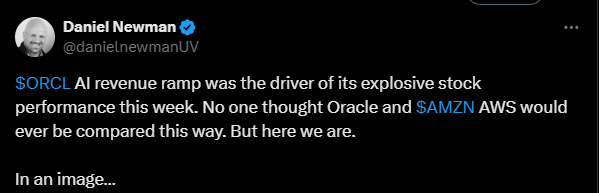
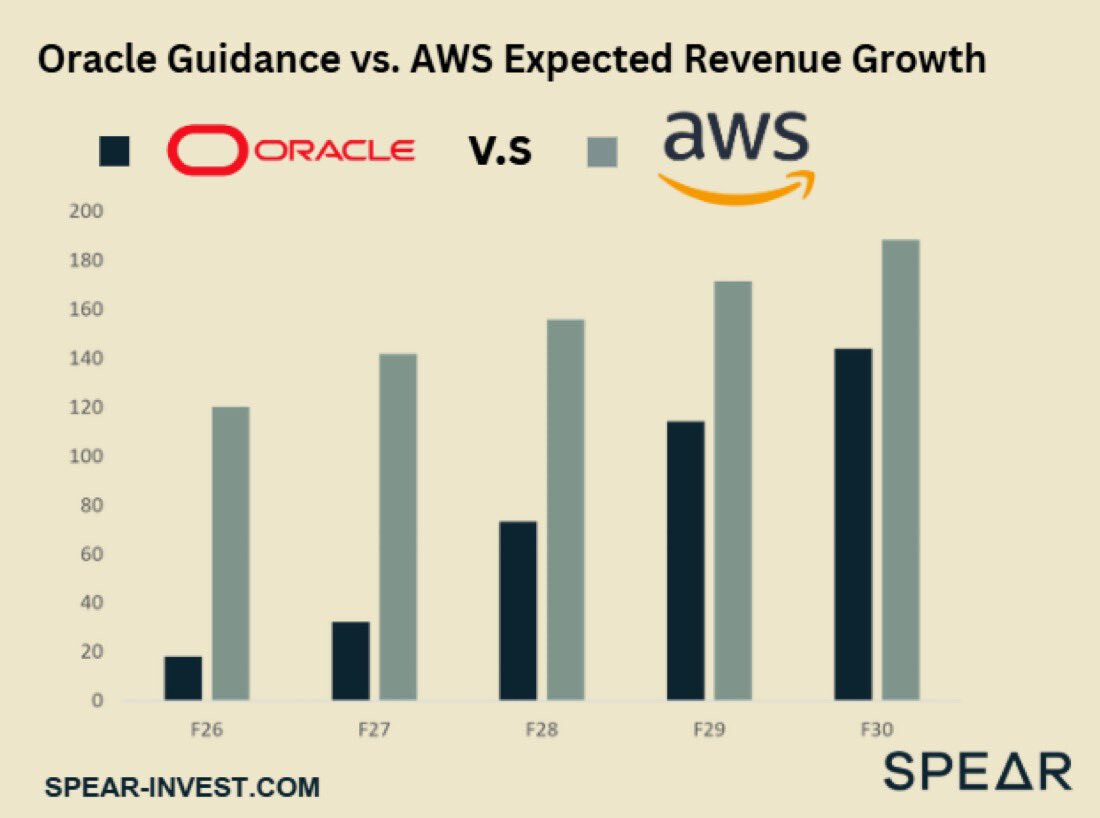
Tviitissä on kutkuttava vertailu Oraclen ja AWS:n tulevaisuuden menosta.
Lisäksi tviitin alla olevissa kommenteissa pohdittiin Amazonin RTO -päätöksen (Return to office) seurauksia, kun kokeneita työntekijöitä siirtyi Oraclelle. Yllättävää on ollut kuitenkin Oraclen vauhdikas nousu - jopa alan seuraajille.
https://x.com/danielnewmanUV/status/1966905729555816495
3 tykkäystä
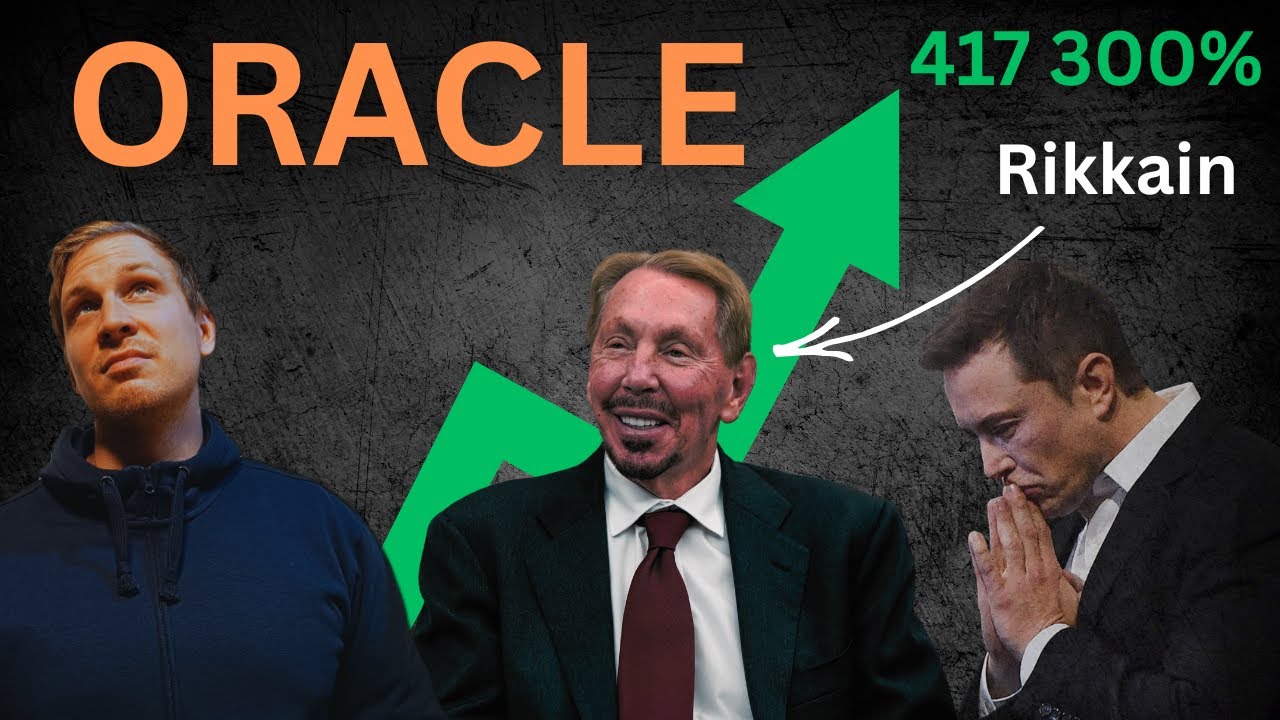
Jussi Halme on tehnyt juuri videon Oraclesta.
Syyskuu 2025 jää pörssihistoriaan hetkenä, jolloin Oracle nousi uudelleen maailman keskiöön. Yhtiö, joka tunnetaan tietokantajärjestelmien pioneerina, on onnistunut kääntämään asemansa tekoälyn ja pilvipalveluiden jättiläiseksi. Samalla sen perustaja Larry Ellison nousi hetkeksi maailman rikkaimmaksi ihmiseksi lähes 400 miljardin dollarin omaisuudellaan. Mutta mikä Oracle oikeastaan on? Miksi sen osake on noussut historiallisen rajusti, ja mitä sen jättimäinen OpenAI-diili kertoo koko teknologia-alan voimasuhteista? Entä mitä suomalaisen sijoittajan pitäisi tästä kaikesta ajatella? Tässä videossa sukellamme Oraclen historiaan, sen viimeisimpään käänteeseen tekoälyinfrastruktuurin toimittajana sekä sen mahdollisuuksiin ja riskeihin sijoituskohteena. Onko Oracle uuden aikakauden voittaja – vai kupla, joka voi puhjeta yhtä nopeasti kuin nousikin?
Luottoluokittaja Moodys liputtaa myös OpenAI:n riskeistä.
2 tykkäystä
Oraclen osake nousi, kun Valkoinen talo vahvisti yhtiön olevan mukana konsortiossa, joka ottaa hallintaansa TikTokin Yhdysvaltain toiminnot. Uudessa yhteisyrityksessä amerikkalaisilla sijoittajilla on enemmistöomistus ja ByteDancella alle 20 prosenttia. Oracle vastaa tietoturvasta ja algoritmin siirrosta Yhdysvaltain valvontaan.
Tänään Oracle ilmoitti myös johdon muutoksista: pitkäaikainen toimitusjohtaja Safra Catz siirtyy hallituksen varapuheenjohtajaksi ja hänen tilalleen nimitetään kaksi uutta toimitusjohtajaa Clay Magouyrk ja Mike Sicilia.
Ainakin analyytikoiden mukaan TikTok-yhteistyö vahvistaa Oraclen asemaa pilvipalveluissa.
Analysts have told Yahoo Finance that Oracle’s involvement in such a deal is seen as a positive for the software company because it allows it to continue its partnership with TikTok, storing the app’s American user data. That deal accounted for 5% of the revenue seen by OCI in its 2025 fiscal year, MorningStar analyst Luke Yang estimated.
1 tykkäys
NVIDIA investoi 100 miljardia OpenAI:hin jotta sillä on varaa rakentaa hervoton datakeskus.
Aiemmin nostamani riski OpenAI:n maksukyvykkyydestä ei tietenkään voi realisoitua, jos megateknot itse rahoittavat sitä ostamaan korttinsa (NVIDIAn tapauksessa) ja datakeskuskapasiteettiaan (esim. Microsoftin ja Oraclen tapauksessa, joskin Oracle ei ole käsittääkseni sijoittanut OpenAI:hin).
7 tykkäystä
Luottoluokittajat pitivät arviot Oraclesta vakaalla tasolla, vaikka yhtiö panostaa rajusti tekoälyinfrastruktuuriin. S&P varoittaa mm. velkaantumisen kasvusta, sillä investoinnit voivat nousta yli 60 miljardiin dollariin vuoteen 2028 mennessä.
Moody’s ja Fitch muistuttavat Oraclen vahvasta markkina-asemasta, mutta näkevät riskinä heikon kassavirran ja korkean velkavivun. 300 miljardin dollarin AI-sopimukset voivat kuitenkin pitkällä aikavälillä kääntää suunnan, ehkä.
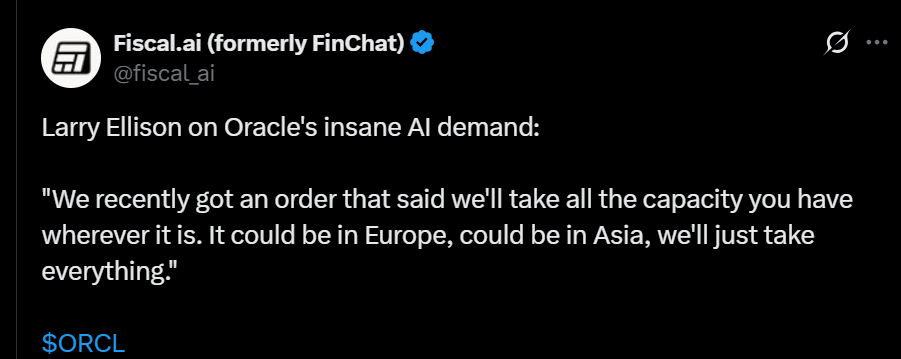
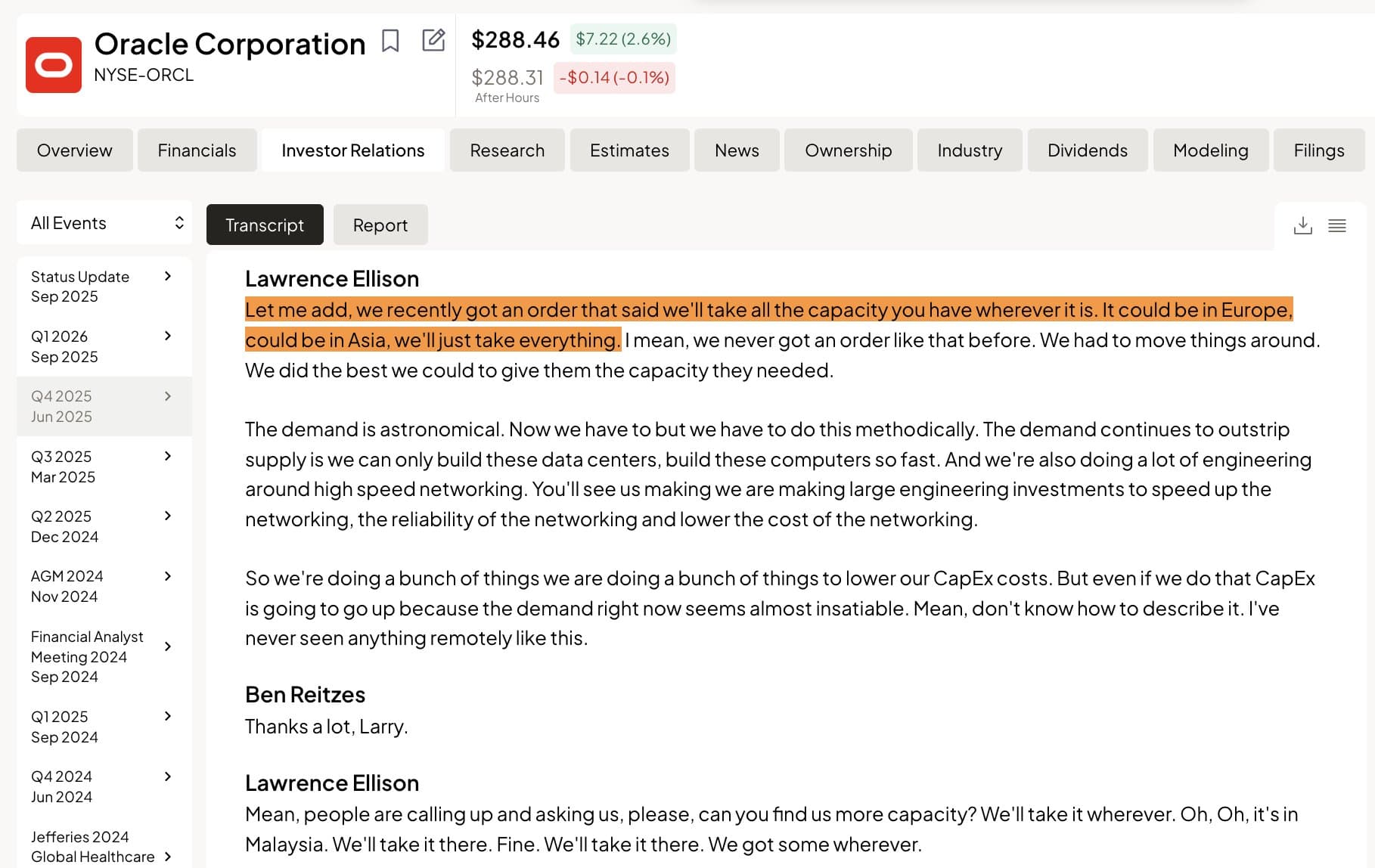
Tviitin pääsanoma on kai se, että Oraclella on valtava kysyntä tekoälypalveluille.
Larry Ellisonin mukaan yhtiö sai tilauksen, jossa asiakas haluaa kaiken kapasiteetin mitä vain löytyy, sijainnista riippumatta. Tilaus kuvannee tekoälybuumin ennennäkemätöntä vauhtia.
Alla olevassa tviitissä on enemmän asiasta.
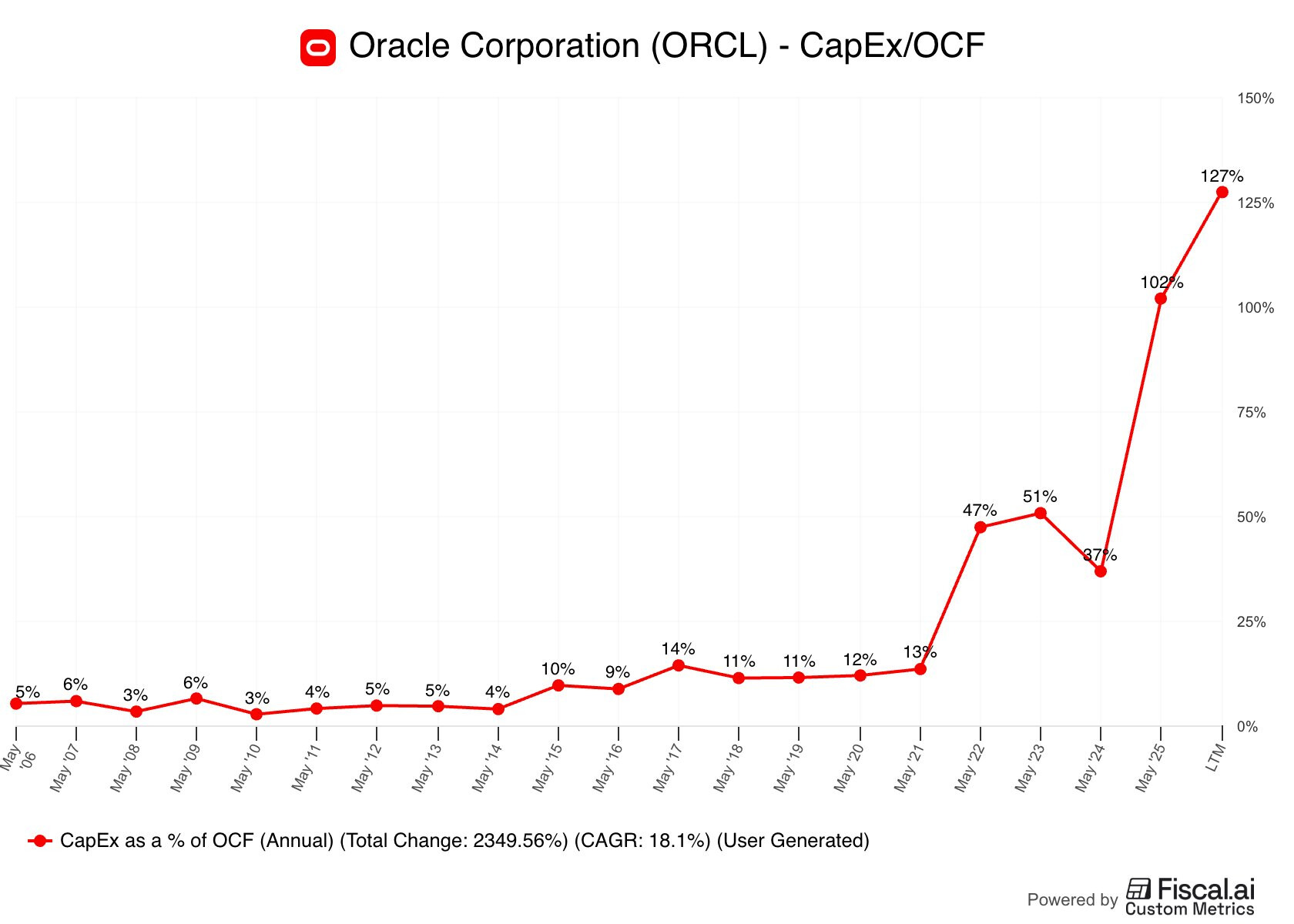
https://x.com/fiscal_ai/status/1974112259644486083
Laitetaan tämäkin tähän:
https://x.com/fiscal_ai/status/1974897398985211967

1 tykkäys
Nvidian pomo Jensen Huang ei ollut huolissaan uutisesta, jonka mukaan Oracle tienaa vähän vuokratessaan Nvidian siruja asiakkaille.
Hänen mielestään uudet teknologiat voivat aluksi olla tappiollisia, mutta pitkällä aikavälillä ne tuottavat hyvin tai niin hän väittää. Huang sanoi myös, että tekoälyä pyörittävät datakeskukset ovat valtavan monimutkaisia ja että Oraclella riittää kysyntää.
3 tykkäystä

Baird arvioi, että Oracle on vahvoilla, kun tekoäly, data ja pilvipalvelut valtaavat alaa.
Yhtiö on heidän mielestään keskellä isoa teknologista murrosta ja pystyy hyödyntämään sen tarjoamat mahdollisuudet (ja ongelmat) paremmin kuin moni kilpailija.
Oraclen pilvipalvelut kasvavat vauhdilla ja liikevaihdon odotetaan nousevan yli viidenneksen jopa vuodessa. Silti riskinä ovat kovat investoinnit datakeskuksiin ja tietysti kiristyvä kilpailu muiden teknologiajättien kanssa.