In the four days following its June 5 launch, the Nintendo Switch™ 2 game system sold more than 3.5 million units worldwide*, becoming the fastest-selling Nintendo game system ever.
7 Likes
I was really positively surprised by how almost every Switch game I own (~50 pcs, mostly first & second party) received day one patches that improved the experience on Switch 2.
In many old games, the resolution has increased, and above all, the frame rate now meets the targets that couldn’t be achieved on Switch 1. For example, Zelda: A Link’s Awakening & Zelda: Echoes of Wisdom now run really well; both were left unfinished by me back then due to performance issues.
Currently, the value of Switch 2 is clearly greatest for those who already have a game library from the first Switch but haven’t fully played through it for one reason or another. Mario Kart World is, of course, a fun game, especially for multiplayer on the same couch, but the launch lineup this time was personally a disappointment compared to its predecessor (Super Mario Odyssey & Zelda: Breath of the Wild). On the other hand, if you look at Nintendo’s IR pages’ list of best-selling games, it’s clear why Mario Kart got the spotlight: 68.2 million games sold, more than double the two aforementioned titles.
6 Likes
It’s not surprising at all that the device has sold tremendously. It’s highly probable that more devices were available at launch than for any other game console ever. Furthermore, people in this generation have learned that console prices are more likely to rise than fall in the future. There’s no benefit in delaying the purchase.
The Switch’s launch lineup was Zelda and mostly some smaller games. Mario only came out at the end of the year. So, the launch of the new device was quite typical for Nintendo. It will be easier to assess the release year’s calendar once Nintendo announces what’s coming later in the year.
4 Likes
Nintendo released a new Switch 2 gaming console this month, which, according to the article below, has gained immense popularity: the device sold 3.5 million units in just four days.
The console’s hybrid form factor (can be used traditionally with a TV or ‘on the go’, meaning played anywhere) and familiar game series, such as Super Mario and Zelda, attract buyers. The new product is expected to exceed the company’s projected sales figures.
"Key Points
- Nintendo shares have rallied 46% this year, adding more than $39 billion to the stock’s value.
- The surge has been driven by strong demand for the newly released Switch 2 console.
- Nintendo this month said it sold 3.5 million units of the Switch 2 in the four days following its launch."
https://www.cnbc.com/2025/06/18/nintendo-switch-2-has-powered-stock-rally-this-year.html
2 Likes
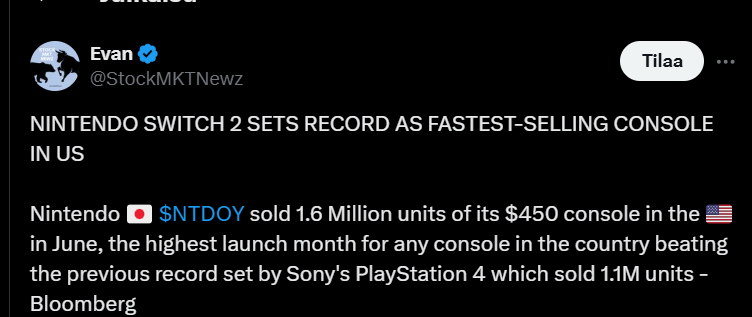
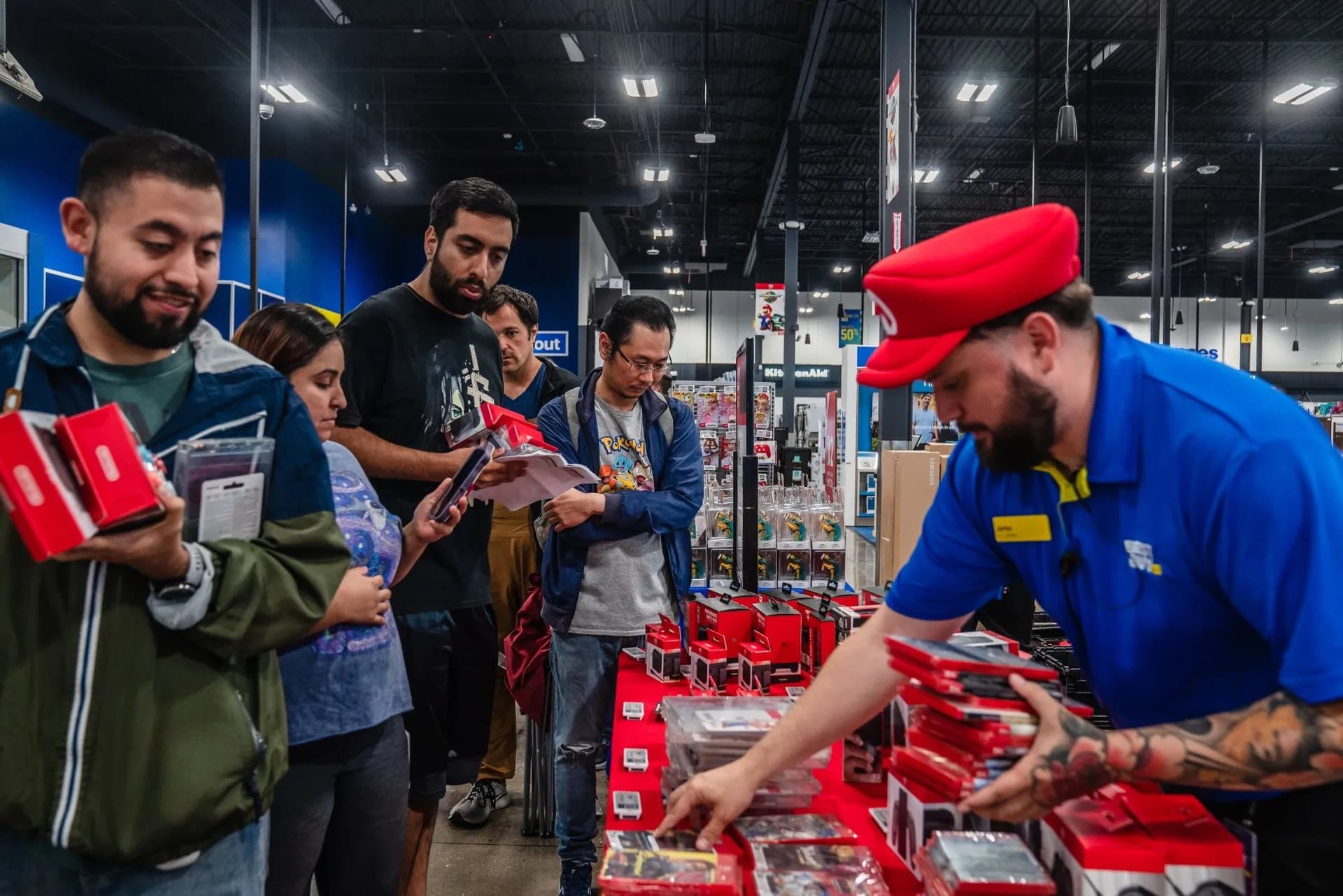
Nintendo Switch 2 sold 1.6 million units in the United States in June, making it the fastest-selling game console in the country’s history - surpassing PlayStation 4’s previous record.
3 Likes
How this trick was done: The desired hardware was released with a sufficiently large pre-manufactured batch of goods. All other recent console and PC hardware releases have consistently been such that “for the first 3-6 months, mainly scalpers are able to offer the goods and everything that goes on sale disappears to scalpers’ bots in seconds”. Nintendo manufactured so much hardware for this release into stock that scalpers quickly ran out of purchasing power. Only in the very first week was there a shortage of goods in places, and even that only in some countries.
In Finland, there was never any shortage of devices, but here the ‘additional tax’ added to the price by the Nordic wholesaler had an impact, which led many to order from Central Europe.
5 Likes
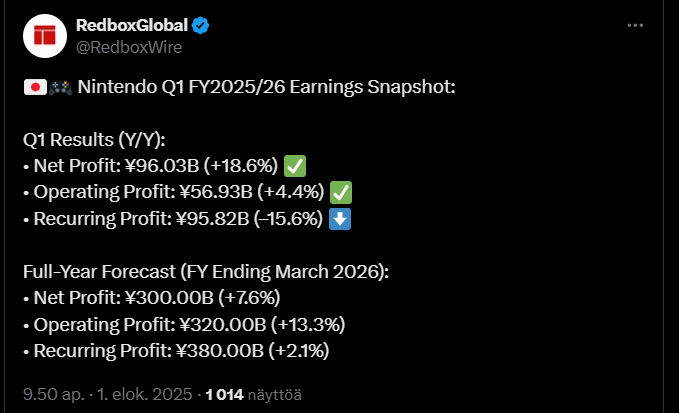
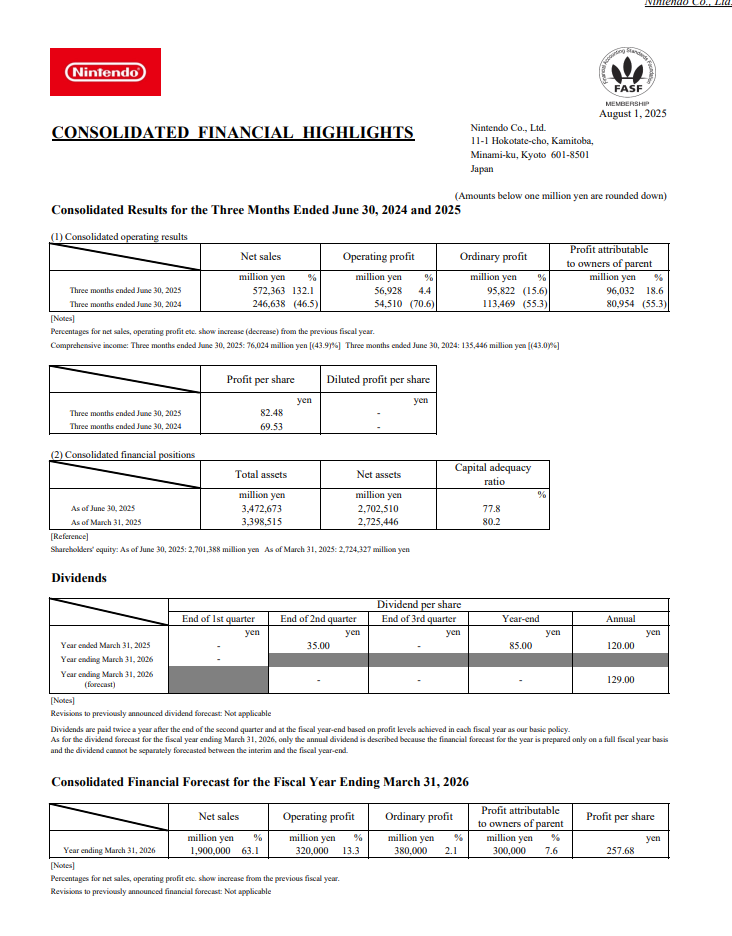
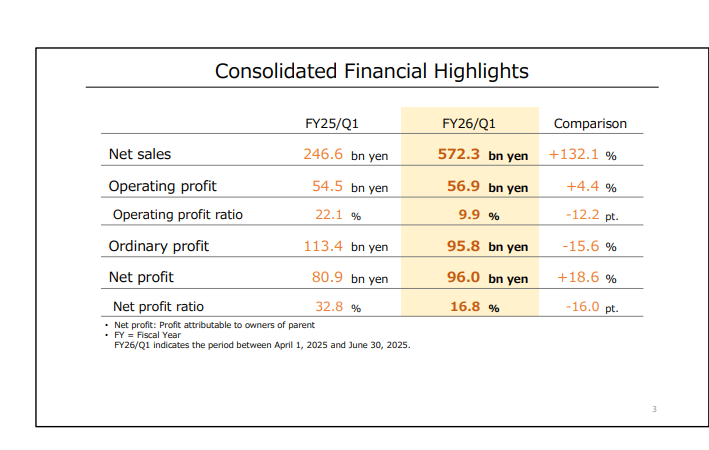
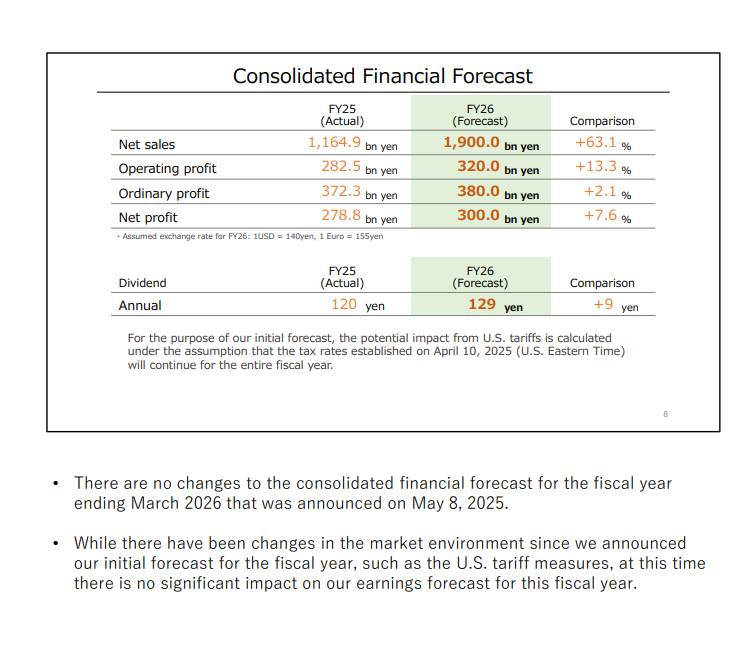
Nintendo doubled its revenue in the second quarter, as the much-discussed Switch 2 already sold 5.8 million units. The company maintained its annual sales target at 15 million, although analysts believe it will still be exceeded. Film revenues decreased.
Nintendo is expected to benefit in the future from growing demand for games, an expanding user base, and, of course, from additional releases of the Switch 2.
https://x.com/RedboxWire/status/1951173610204250367
Company’s Own Materials
4 Likes
I just had to rent a movie called Tetris, which tells the story of the legendary game’s origin. I played it a lot in my youth in the 90s, and playing it has even been useful. If it looks like items won’t fit into a cupboard, you just need to activate your inner Tetris mode, and after a bit of twisting and turning, things will start to fit 
 I can recommend watching the movie if you like films based on true events. It was interesting, entertaining, and beautifully told the story of Tetris’s birth in the Soviet Union and how it eventually conquered the whole world, even though the communist system tried every means to prevent its spread to the West.
For me, Tetris, along with Snake, is one of the finest gaming memories from the 90s, so I just had to share a bit of Tetris history with you too 
In 1984, Soviet programmer Aleksei Pazhitnov created Tetris at his workplace, the Computer Center of the Academy of Sciences of the USSR in Moscow. He was inspired by tetrominoes: shapes made of four squares, which he had utilized in his logic games. The name “Tetris” was born from a combination of tetra- (four) and Pazhitnov’s favorite sport, tennis.
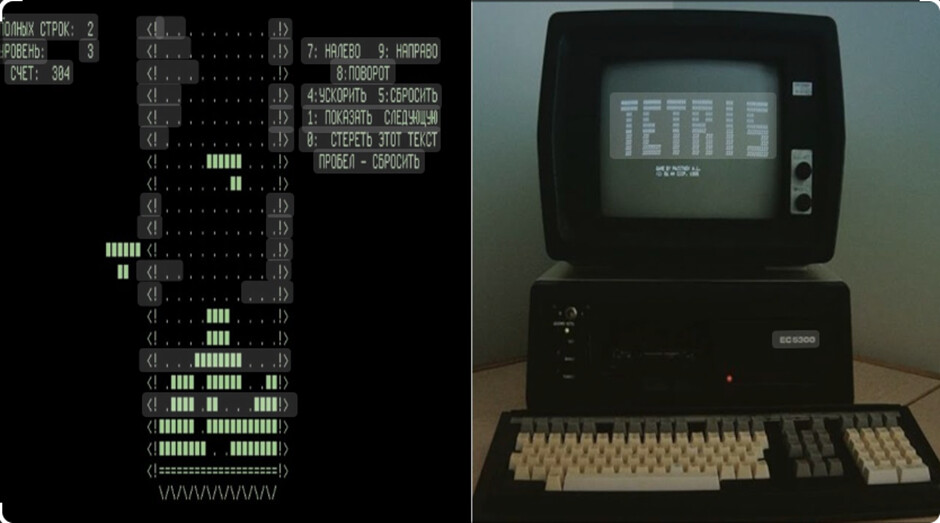
The game first spread among researchers in the Soviet Union and proved so addictive that in some institutions, playing had to be restricted because employees spent more time playing than working.
Eventually, the game made its way to the West via Hungary. In the late 1980s, a complex licensing battle over Tetris ensued, involving British, American, and Japanese companies. At the heart of it all was the Soviet state-owned enterprise Elorg, which controlled the rights.
So, where did the battle for Tetris licensing rights begin?
At that time, American Henk Rogers, owner of the game company Bullet-Proof Software, living in Japan, traveled to Las Vegas for the Consumer Electronics Show (CES) to look for games he could publish in Japan. There, he first saw the PC version of Tetris, which Western publisher Spectrum Holobyte had brought to the fair. He played it for a while and realized that this ingeniously simple and addictive game could conquer all generations, from babies to grandfathers. He had connections to Nintendo and introduced Tetris to its management. They became interested, and Henk began working to secure the publishing rights for Tetris.
The problem was that the rights to Tetris were a complete mess.
Henk Rogers tried to clarify and buy the rights to Tetris for Japanese publication, first through Mirrorsoft, which had acquired the rights from Robert Stein. Stein, in turn, had distributed Tetris to Mirrorsoft and Spectrum Holobyte without proper permission. When Rogers realized that no Western intermediary actually owned the console rights, he saw an opportunity to spread Tetris worldwide and went to Moscow in the Soviet Union himself.
This involved significant risks, as during the Cold War, it was by no means simple for a Westerner to travel to the Soviet Union, let alone try to buy and take its property abroad. However, he managed to negotiate with Elorg, but it was not straightforward as officials were suspicious of him and considered it possible that he was just another swindler from the West.
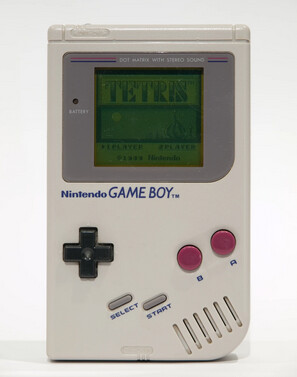
Henk eventually convinced the Soviets, but at the same time, Stein and Mirrorsoft had noticed Tetris’s potential as a cash cow and were also trying to get the rights for themselves, this time by actually buying them. Finally, through dramatic twists and turns, Henk succeeded, and Nintendo released its new handheld console, the Game Boy, in 1989, bundled with Tetris.
Henk also got to meet Tetris creator Aleksei Pazhitnov, who did not receive royalties in the early years nor benefit from the game’s enormous international success, because private business in the Soviet Union was practically impossible due to communism. All Tetris profits went to the state-owned company Elorg. Henk and Aleksei later became friends.

The Game Boy became a huge success, selling out in many places immediately after its release. Today, Tetris has sold over 500 million copies in various versions. According to Guinness World Records, Tetris has been played on over 65 different platforms, more than any other game.
After the dissolution of the Soviet Union, Aleksei Pazhitnov moved to the United States in 1991. He worked at Microsoft for several years as a game developer (Microsoft Game Studios). In 1996, he and Rogers founded The Tetris Company, which manages all Tetris rights. This was the first time Pazhitnov himself began to earn properly from his game.
The Tetris Company’s revenue stream is based on licensing fees and royalty income. If an investor wants to “own a piece of Tetris,” in practice, it happens by buying Nintendo shares. (Not an investment recommendation)
 From Tetris, we can learn that from an investment perspective, sometimes it’s worth owning intellectual property (IP), not just production.
 Bonus information:
- Tetris’s theme music, the Russian folk tune Korobeiniki, is still one of the world’s most recognizable game melodies.
- Psychologists speak of the “Tetris effect”: seeing blocks in dreams or everyday life.
14 Likes
The article states that OpenAI’s new Sora app allows people to create videos of Nintendo characters, such as Pokémon.
This could be a risk if characters are used without permission, as Nintendo is known for its strict copyright policy. On the other hand, if Nintendo turns the AI phenomenon to its advantage, it could lead to a new cash cow and more fans. 
" Key Points
- Users are posting AI-generated videos of popular brands and animated characters on OpenAI’s new Sora app.
- CNBC has seen videos of characters from shows like “SpongeBob SquarePants” on the platform and was able to independently generate other characters.
- “You can imagine why Taylor Swift wouldn’t want … videos of her purporting to say things she doesn’t say,” Stanford Law School professor Mark Lemley said."
1 Like
The stock is trending downwards, are tariffs the only reason? A new console is selling, big movies are coming out, so one would think the future would be bright?
1 Like
According to the article below, Nintendo has asked its suppliers to manufacture 25 million Switch 2 consoles by March next year.
The company aims for record sales and has doubled its marketing budget to maintain demand.
4 Likes
The article below reports that Nintendo raised its sales forecast for the Switch 2 console from 15 million to 19 million units due to strong demand.
The console’s June release accelerated revenue and profit to strong growth, and new hit games are also keeping the momentum going. 
https://www.cnbc.com/2025/11/04/nintendo-raises-switch-2-sales-forecast-to-19-million-units.html
4 Likes
Adding (to my position) has been interesting now, but difficult to justify when the P/E has already climbed over 40 and the dividend % is around 1%… I bought it back then when those metrics were much more attractive…
Switch 2 is a success in my opinion, and I even put one in the gift box now… With the “buy the stock of what you use” logic, it found use now with Donkey Kong Bananza. It also happens that the family’s soon-to-be 5-year-old child is reaching an age where we dare to show them a bit of gaming.
In my opinion, Nintendo has a strong future as a child-friendly media company produced by real people. A strong anti-AI stance in the right areas is a good attitude for a media company. AI should definitely be used, but humans must have the final touch… I hope Nintendo takes the right approach in these matters.
But a P/E of 40 is a tough one… I bought Alphabet in the spring when it was like under 20 P/E and it doubled now… while Nintendo has been flat for 6 months… Nintendo is probably not some giga-growth company that would justify a P/E of 40… but for some reason, I don’t want to sell either… it feels like the next quarterly report will be strong and maybe a return to a larger dividend is also near?
6 Likes
I’d be tempted to add Nintendo, but the company’s future makes me a bit concerned. The Asus ROG Ally X sold like hotcakes, which proved that there is a strong demand for handheld gaming on the PC side. Steamdeck and others have, of course, echoed this sentiment.
In the long run, it’s not hard to see Steam being the biggest threat to Nintendo when it comes to gaming, if the company can only get its hardware on sale at a competitive price. This will be seen in January when Frame and Gabecube go on sale. A new Steamdeck seems to be in the pipeline for 2027.
The problem for Nintendo is that its value rests on its IP. The company is very stingy when releasing new Marios, Zeldas, Metroids, etc. The development cycle is artificially prolonged, which might make the company irrelevant in the eyes of younger players at some point. And if Steam can reach these players on its own platform, Nintendo’s brand could be threatened. Not to mention the company’s extremely hostile attitude towards players and competitors, as well as incomprehensible patent applications that would have threatened all game development (case Palworld).
I don’t know. Having played Nintendo in the 90s, it’s hard to take off the nostalgia glasses, but it might be that the matter should be viewed from the perspective of ten-year-olds, who will later grow into players with purchasing power.
2 Likes
Let’s remember the facts: Switch 1 sales 153 million and Steam Deck sales less than 4 million. From that, you can then figure out how strong a challenger one is to the other. Hint: the more successful one is the only one that can play Nintendo games. That is the gaming world’s strongest trump card.
4 Likes
Indeed. It’s easy to sell when there’s no clear competition. I’d guess that there isn’t much margin in hardware sales due to really tight component prices. Unless one wants to price the product too high.
But the point was whether Nintendo can keep Mario and others relevant to the buying public. Especially at the 80-euro price tag that games are demanding. Those who grew up with these are living through such busy years that there’s hardly any time left for gaming. And young people’s gaming seems to be limited to mobile phones and Fortnite/Rocket League etc. In the wish lists for Santa from children in my immediate circle, Switch 2 hasn’t really appeared, but I recognize this as a perspective bias.
Time will tell. And indeed, I’m referring to a timeframe of about 5-10 years now.
2 Likes
Switch 2’s first-day sales were the best in console history. Almost as much as the Steam Deck’s entire lifetime sales. They don’t even play in the same league. The Steam Deck’s significance for competition is completely negligible.
3 Likes
Nintendo thrives on its own game series. Few people buy a Switch unless they specifically want to play Nintendo’s games. Mario, DK, Zelda, Metroid, Pokemon “main series”, etc. I have a gaming PC and used to have other consoles. Nowadays, I have a PC and Switch 1 + 2, on which I mostly play Nintendo games with my kids. The fact that other games run on them is a bonus. I don’t even consider the Steam Deck a competitor to Nintendo. As long as Nintendo doesn’t bring its games to other devices and they maintain their quality and popularity, there will be no competition.
4 Likes
I’ve also been thinking the same things, that in a way, the Steam Deck is technically a competent competitor, and I completely fell for Valve’s new upcoming products. From there, the Steam Frame will finally be bought to replace my existing 5-year-old VR set. The Steam Machine will come to the living room as a compact stream box + an emulator time capsule for the child as well.
However, I’m not buying a Steam Deck myself yet, but I bought a Switch 2 now. Because Nintendo has nostalgic IP that feels nice to teach to the offspring as well, as they approach the age when I myself once got an 8-bit Nintendo.
With Nintendo, I see that the focus on quality, avoiding AI slop, strong first-party games, these support a good reputation. It’s a console for families that will surely get memorable and unique games.
In my opinion, the Steam Deck can coexist. It can then be used for gaming among the family, or for parents’ gaming when the kids eventually monopolize the TV. Such freely movable gaming in the house feels like a nice idea for someone with a family.
And those reminders about the scale of sales are good, and also, in my opinion, that selling console hardware doesn’t seem to be a high-margin business even nowadays. I also think a big part of Nintendo’s increased valuation is the rapidly expanding use of its IP, such as movies, theme parks, etc. It’s a matter of taste whether one would value Nintendo with the valuation of console game companies, or even with Disney’s valuation. Disney’s P/E has fluctuated within 3 years between 40, over 100, and now 20 as things cool down. In my opinion, Nintendo has a tailwind in everything where Disney has stumbled.
1 Like
Apparently, the rising price of memory cards threatens Nintendo’s hardware profitability. Its stock has been a strong performer this year with a +30% rise, even though it has lagged behind the Helsinki Stock Exchange… 
3 Likes