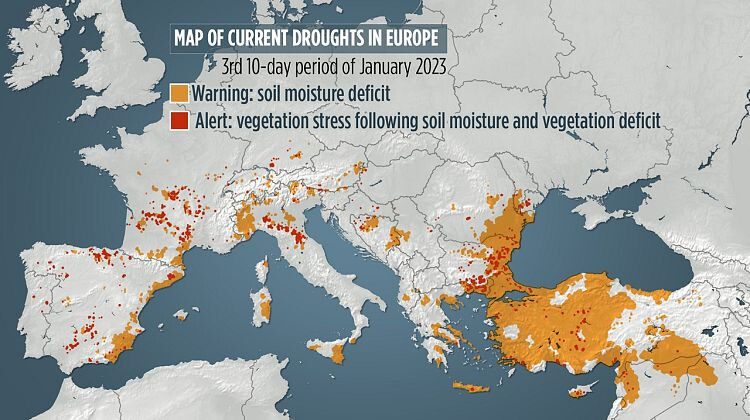
The other day I came across a headline about the drought threatening Europe. According to the news, it hasn’t rained (properly) in France for a month and Venice’s canals are drying up because the Alps have received significantly less snow than normal. Spain and Southeast Europe are also suffering from drought. Normally, this kind of drought only occurs during the hot summer months.
One news article listed potential impacts on at least the following:
- Energy (cooling of nuclear power plants / hydropower)
- Agriculture
- Clean water
In this context, I thought I’d ask about clean water; the whole theme is quite new to me, so the questions might be a bit basic. However, I would greatly appreciate it if @Mikaeli could shed some light on Lamor’s water treatment business at some point. At a quick glance, the discussion has mainly revolved around oil spill response and chemical recycling of plastics.
Of course, comments from others are welcome too!
Currently, I’m wondering about:
- What kind of offering does Lamor have for a situation where traditional drinking water sources are depleted? Reverse osmosis was mentioned earlier in this thread, are there other technologies?
- How quickly can Lamor react if drinking water is genuinely at risk of running out, e.g., the delivery of a reverse osmosis plant?
- How large a part of Lamor’s business is related to water treatment?
- How is that business distributed geographically?