I don’t think taxes themselves are a problem for many. Rather, it’s how they are used. Everyone likely understands the connection between taxes and running a welfare state.
“On these plains at the edge of the limelight / nothing tastes bitter / when the taste is masked by malt.”
Tax return filed and I’m feeling as light as a heifer in the spring. It helps that the taxman took a favorable view of my finances. Some quite nice refunds are waiting to enter the interesting world of securities this autumn.
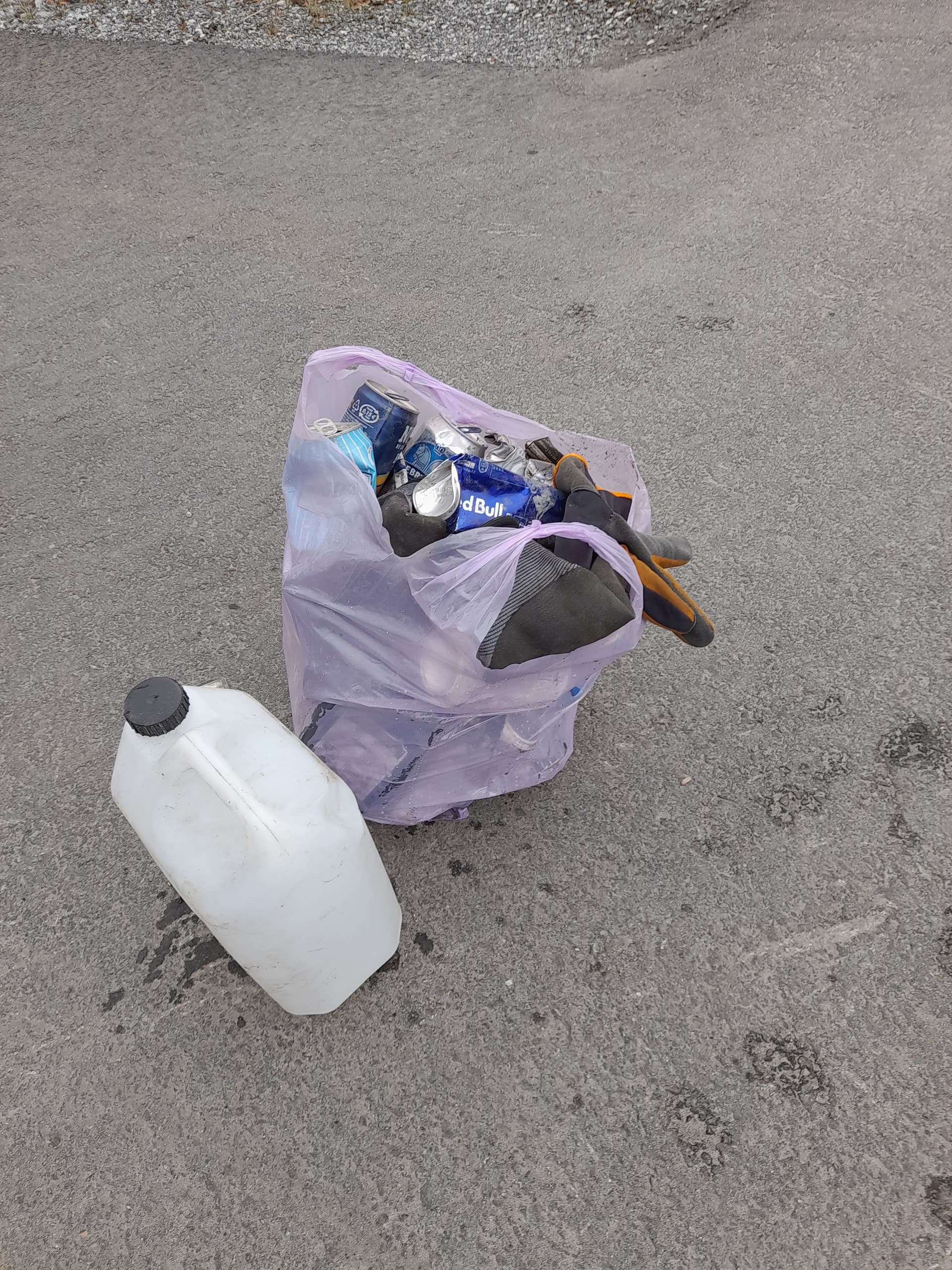
The #miljoonaroskapussia (one million trash bags) challenge is completed on my part. I challenge all stock market players, traders, those who bought the corona dip, dividend millionaires, index investors, and the rest of the common folk
70% of the trash was cigarette packs, Mynthon packs, cans, and chocolate bar wrappers. The rest was all sorts of random crap.
There was surprisingly little trash over the 1.5km distance, and that’s a good thing.
True. It’s nice to drop all kinds of things out of the car window. It wouldn’t be much effort to put a small plastic bag on the gear stick, for example, and put the trash in there. People are just idiots. Not all of them, though.
Welcome to the Inderes forum. I hope you’ve had a chance to read the forum rules:
You have taken a rather challenging tone in the messages you’ve written so far, and I would like to point out that, especially here in the Coffee Room (Kahvihuone), we value a more relaxed conversation instead of constant bickering to maintain the good spirit of the forum. I wish you a very happy May Day and plenty of green in your portfolio for next week
Here is an article from Salkunrakentaja covering the Confederation of Finnish Industries’ (EK) April business cycle barometer.
”In Finland, companies assess that the economic situation has remained weak during the spring. Although economic expectations are no longer as pessimistic as they were in the winter, economic growth is not yet on a sustainable footing. We are moving towards a traditional business cycle where construction and industry weaken first, while services still manage to hold their ground somehow,” states EK Director Sami Pakarinen.
This is a bit surprising, how it wasn’t taken into account more and earlier. It will likely slow down/hinder some of the planned projects, or could it be that the pace of production growth caught them by surprise, like the first snow catches drivers in December.
In this day and age, there’s too much apologizing and fear of potentially offending someone. I appreciate that Pyysing has maintained his writing style!
True enough, he has his own style, which he is perfectly entitled to on his own site, as long as he stays within the law.
It is remarkably contradictory that while a professional tone of discussion is constantly called for on the Inderes forum, links to such low-brow writings are shared here—and by the same person, no less.
If I were @Mikael_Rautanen, I would have a serious talk with an employee who, by posting such links, indirectly insults my key staff in an unprofessional manner—staff who are already under quite a bit of pressure as it is.
I believe Verneri used that title for himself. It was his title on the forum for a long time.
Fortunately, no forum member has the veto power to decide which articles are censored. Not even Hapzu. You don’t have to read them yourself, but wanting to impose censorship just because you’re annoyed—well, too bad. There would be better arguments, like Aki ruining the youth by encouraging them to use language creatively. A creative person doesn’t make a good engineer.
I’ve recently been discussing serial acquirers with a few people, which reminded me to give this podcast another listen.
I’m posting this here as a reminder for others too.
Topics:
00:00 Intro
00:25 Definition of a serial acquirer
02:07 What types of serial acquirers are there?
09:30 Capital allocation and value creation
26:55 Most typical acquisitions
35:11 Why is a serial acquirer an attractive owner?
51:05 Valuation methods
One thing that has significantly slowed down Fingrid’s construction and preparedness is, for example, the permit processing required for building new power lines. A few years back, you could get an expropriation permit for a power line in 6–9 months; now, you might have to wait over two years. So, if investment plans have been made assuming that new lines can be built in year X, but in the worst-case scenario you have to add two more years to that, it inevitably creates a bottleneck. And the industry is really overheated right now in other ways too. Wind turbines are popping up like mushrooms after rain, at least along the west coast.
So I guess it’s partly a slowdown caused by regulations, and also a case of being “caught with their pants down.”





 neat to be able to watch the NHL playoffs at 7 AM
