I came across the following contact in social media, should I join in since only a couple of spots are left, all the lucky ones will become millionaires in an instant.
We offer a strategic investment opportunity in LA CRYPTO, a company whose purpose is to create sustainable growth, attractive returns, and significant impact in the quarterly sector. We needed 5 new partners, and we have found three, so two spots are still available.
The returns are as follows:
300 euro investment = 7500 euro income.
every week
600 € investment = 14500 € income per week.
900 euro investment = 25500 euro income weekly.
1200 euro investment = 40,000 euro weekly income.
2200 euro investment = 50500 euro income every week.
If you are lucky, you will become a millionaire in an instant.
Dear xxx xxx, please reply to this message immediately, you have read it.
Many thanks.
Aiforia is churning out press releases at such a pace that I feel sorry for @Antti_Luiro. Luckily, the weekend is ahead. Whether that means overtime or time off.
Yes. And despite everything, I have to tip my hat to a man like Hellman, for example, who clearly suffers from severe stage fright but still enters the fight. And of course, it’s a bit more questionable to make fun of these than of “let’s leave the EU”-Seppo or Eila, who herself has offered to communicate in French. They are both quite likeable in their own way. Never mind their ideologies and values, as we are not in a politics thread now.
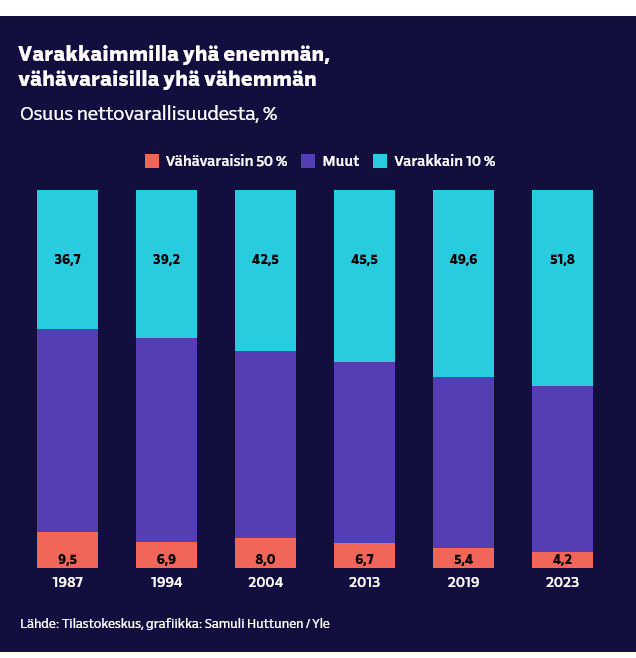
An interesting article from Yle. Finland has often been advertised as a society with the smallest wealth disparities in the world. This may well be true, and looking at the image below, what does it mean for countries around the world?
This is a natural trend on a global scale, that wealth concentrates. The smartest accumulate it through their energy and intelligence, and the luckiest are born into intelligent families. However, it has significance for the stability of society. The less fortunate are either born into families without opportunities or understanding to support their studies, and the even less fortunate struggle to cope with modern society and its demands.
Finland is in a good situation in that we – as in all Nordic countries – have strived to create equality of opportunity, where even people starting from weaker backgrounds have the chance to achieve their potential in society. This has enabled people from all levels to work and has benefited society immeasurably. Additionally, after World War II, Finland was a very poor country as a whole, where very few had much property. Oligarchs with excessive power over state decision-making could not emerge here. I don’t know about today, but that might be breaking down. Do large corporations with their lobbyists have too much power over state decision-making?
When Finns are divided into ten equal parts according to wealth, the wealthiest tenth owns, for the first time, over half of all wealth in Finland.
In contrast, the five least wealthy tenths, i.e., 50 percent of Finns, own only four percent of all wealth.
The gap has steadily grown, with the share of property owned by the least wealthy decreasing and that of the wealthiest increasing.
However, as wealth concentrates into fewer and fewer hands and the proportion of those with little or nothing in society grows, support for extremist movements rises in such societies. People always compare themselves to their surroundings, and even if the poorest have food, housing, clothes, and basic needs met, they feel a sense of injustice towards society when they have less than so many others around them.
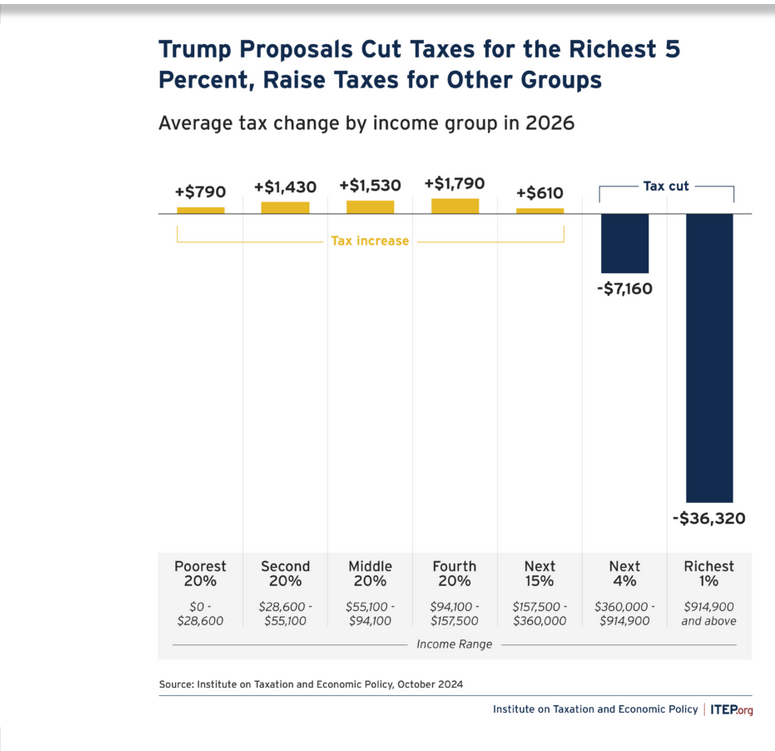
At the same time, as wealth concentrates among fewer people, their influence on society’s politics grows, and they can easily start promoting values and laws that give them more and worsen the position of the poorest. This is very clearly visible in the United States today.
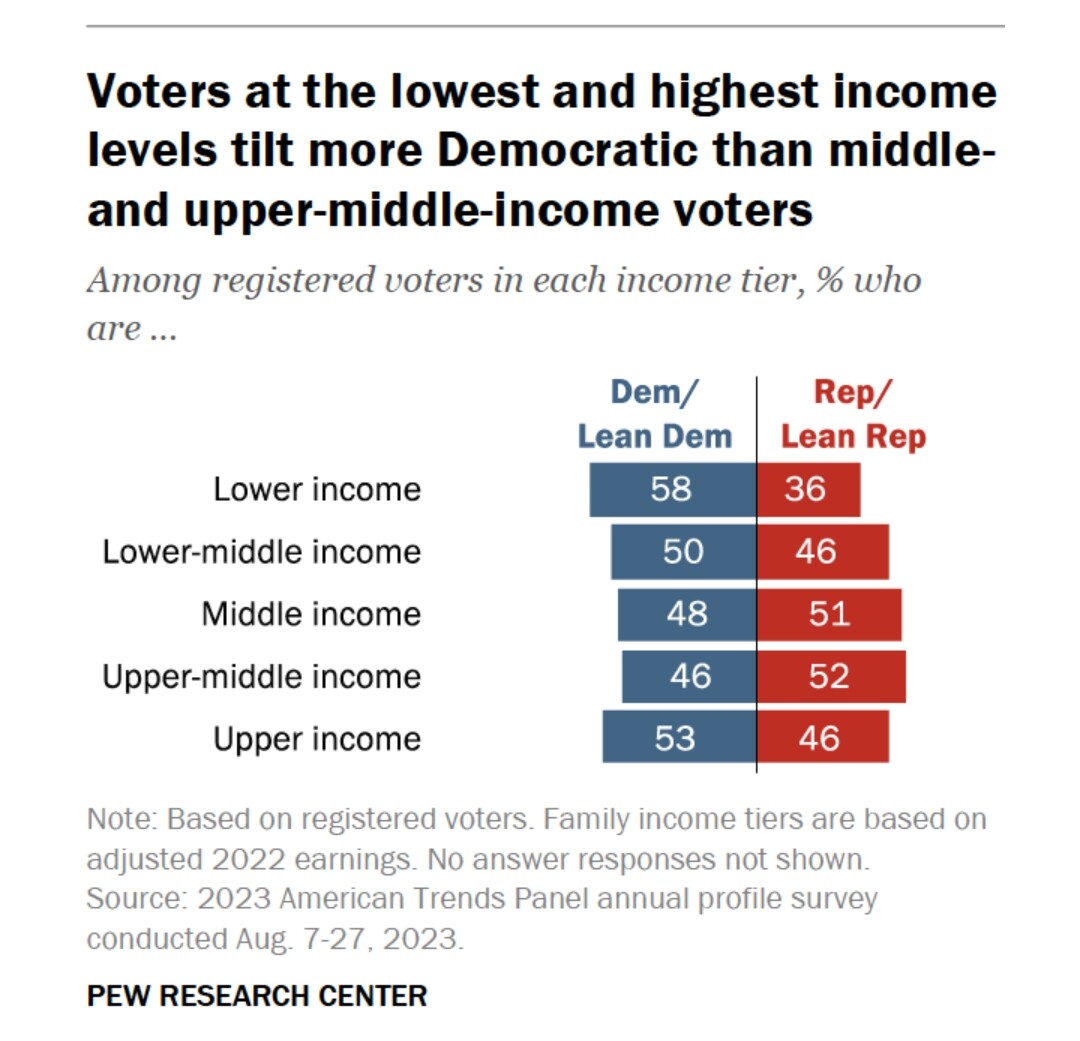
The majority of Republican voters are low-income people who, for some reason, still vote Republican. This is certainly linked to the tribalism of the two-party system and the one-sidedness of the media, where impartial news reporting can be difficult to find. Some large media houses even spew anti-truth propaganda to promote one party’s agenda, and many walk a difficult line when reporting, for example, on the actions of the current administration, trying to appear impartial but ending up doing “sanewashing” either out of fear of revenge or for other reasons.
Finland is not yet in this situation. Yle is trusted, and although Helsingin Sanomat (Hesari) is often criticized, it is not considered a source of disinformation, unlike, for example, Magneettimedia, which is still a very marginal part of the Finnish information landscape.
However, such alternative media are good at finding feelings of hatred in readers stemming from societal inequality and seek to feed them by offering a target for the reader’s experienced anger. Usually, those in power and current policies. Within the media, there are real news mixed with false propaganda.
So far, we have had a good life in Finland, but we must be careful, because when extremist movements gain a foothold among the poorest by fueling hatred but offering no real solutions, we may face an even deeper societal division than before.
What is the solution? I don’t know. The rich cannot be forbidden from getting richer. The poor cannot be forced to make better long-term decisions for themselves. Freedom of opinion cannot be restricted, but perhaps the spread of disinformation can be prevented? Creating jobs in municipalities with high unemployment can help. When a person has a decently paid job and a family to support, they are not so easily inclined to start a revolution.
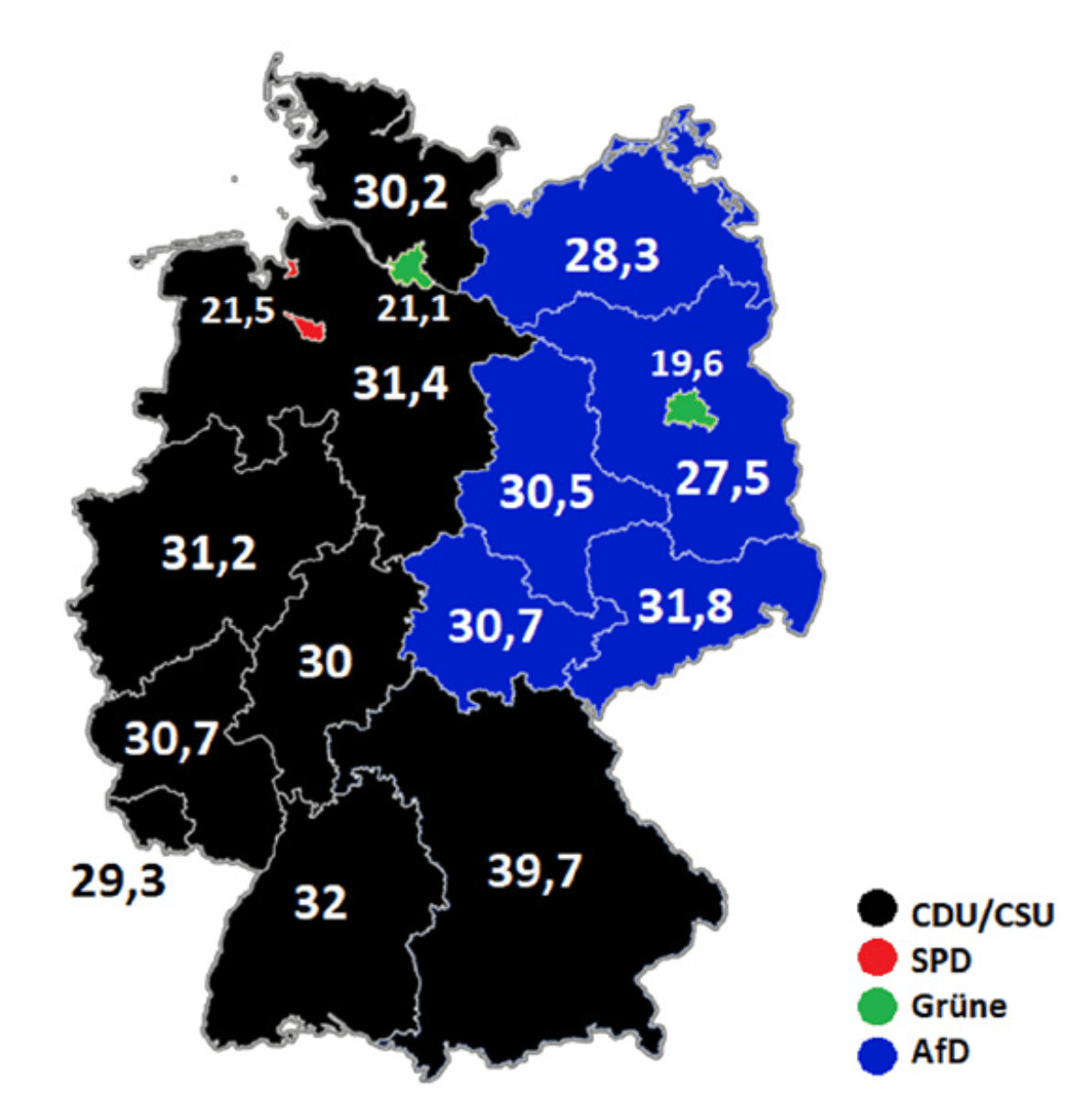
Finland now faces truly difficult times socially, as the state’s – albeit necessary – austerity measures affect the poorest significantly, and this could destabilize society in the coming years. We do not want to end up in a situation like in Germany, where the former East German region has economically lagged far behind the development of the West German region, and the AfD has risen as a powerful channel for discontent, even though it cannot offer real solutions to its supporters.
The municipal and regional elections are coming up on April 13, 2025. Even if it doesn’t feel very sexy or particularly relevant to you, please go and vote. Look for a candidate who suits you.
And, if you are in a position where you can make decisions at the municipal, regional, or even national level, remember that Finland is a good place to live only as long as there isn’t a large group of people here who are having a really difficult time living.
In the latest Markkinaraati, discussing were Elo’s Allocation Director Kari Vatanen, OP’s Chief Analyst Antti Saari, and Aktia’s Head of Equity Investments Andreas Bergman.
The host was Katja Boxberg.
The video clip lasts 12 minutes. The article can be read in a couple of minutes. No paywall yet.
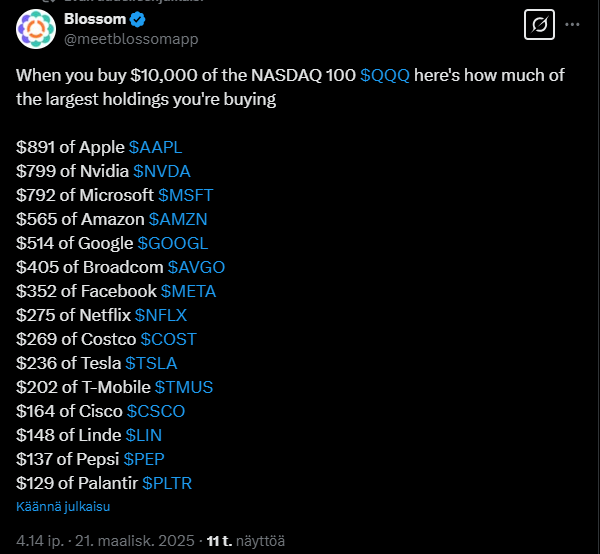
Stocks have been falling for about a month, as President Trump’s speeches and actions in the United States have caused concern. For example, the technology-heavy Nasdaq has fallen by about seven percent since mid-February.
”The best rule of thumb for small investors too is to buy when there is concern in the market”, saysOP’sChief AnalystAntti Saari.