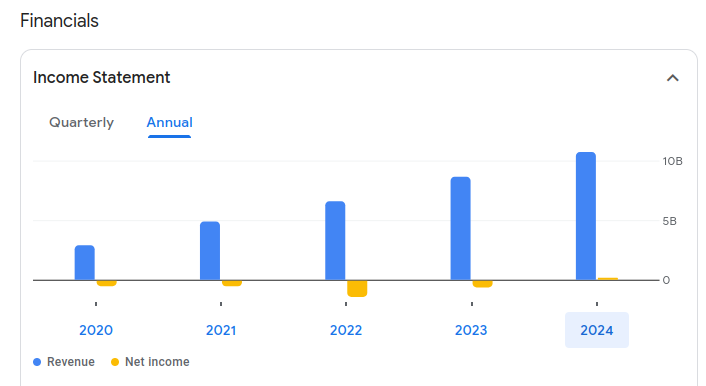
Is there some trick here where money flows out of the country to the parent company (DoorDash), resulting in losses here in Finland (high corporate taxation) while profits are generated in some other country with a lower tax rate? Or is this just one of those modern firms where investor money is burned to grow the user base and the pool of couriers?
Furthermore, it remains unclear how this can ever make money. Most users are extremely price-sensitive. If a 15-euro meal gets a five-euro delivery fee on top, we’re already at the limit of whether people are willing to pay. And I don’t really understand how that five euros covers the costs, let alone generates a profit. There isn’t even a glimmer of hope that it could be, say, doubled; nobody is going to pay a tenner for hauling 15 euros worth of food.
I’ve “abused” this a bit myself through Wolt+ when the weather has been such that you don’t feel like sticking your nose out, and this makes the whole thing even weirder mathematically. 8 euros a month makes deliveries free, assuming the place you want is in the program and close enough. 8 euros covers the delivery costs of at most two orders. I understand the logic behind monthly subscription systems – you hope a huge number of people subscribe and then forget the subscription is running even if they don’t use the service, but if you actually use the service – say, order 2-3 times a week – you get 8-12 deliveries a month, leaving the firm with less than a euro per delivery. Yeah, Wolt also takes a cut of the meal price itself from the restaurant, but there isn’t much to be taken from there either if we’re talking about a 15-20 euro meal.
Maybe this is all some kind of new mathematics.
I understand the system working much better when Wolt carries purchases from, for example, Verkkokauppa.com. In these cases, the delivery fee is a tenner, which likely already offers a bit of profit per delivery, especially if Wolt also gets some commission from Verkkokauppa for the purchase itself; and when you order a gadget worth several hundred euros, a tenner is completely irrelevant and often cheaper than equivalent shipping. However, the delivery distance in these cases is often longer, which probably eats into the margin since couriers, as I understand it, are paid based on the distance.
Well, the show goes on for now. If the shop is bust in a few years, then we’ll know the math didn’t work and the investors’ money ran out. If the journey continues, then we just didn’t know how to calculate how this business works