Here’s about tweet monetization: theory vs. reality or something like that 
https://x.com/BrianFeroldi/status/1969356266288877742
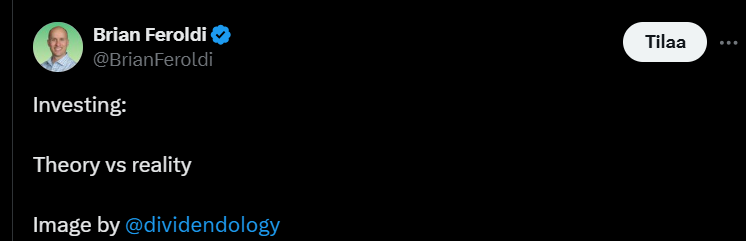

Here’s about tweet monetization: theory vs. reality or something like that
https://x.com/BrianFeroldi/status/1969356266288877742
Hah :D, ei mee ees viittäsataa… ei mihinkään.
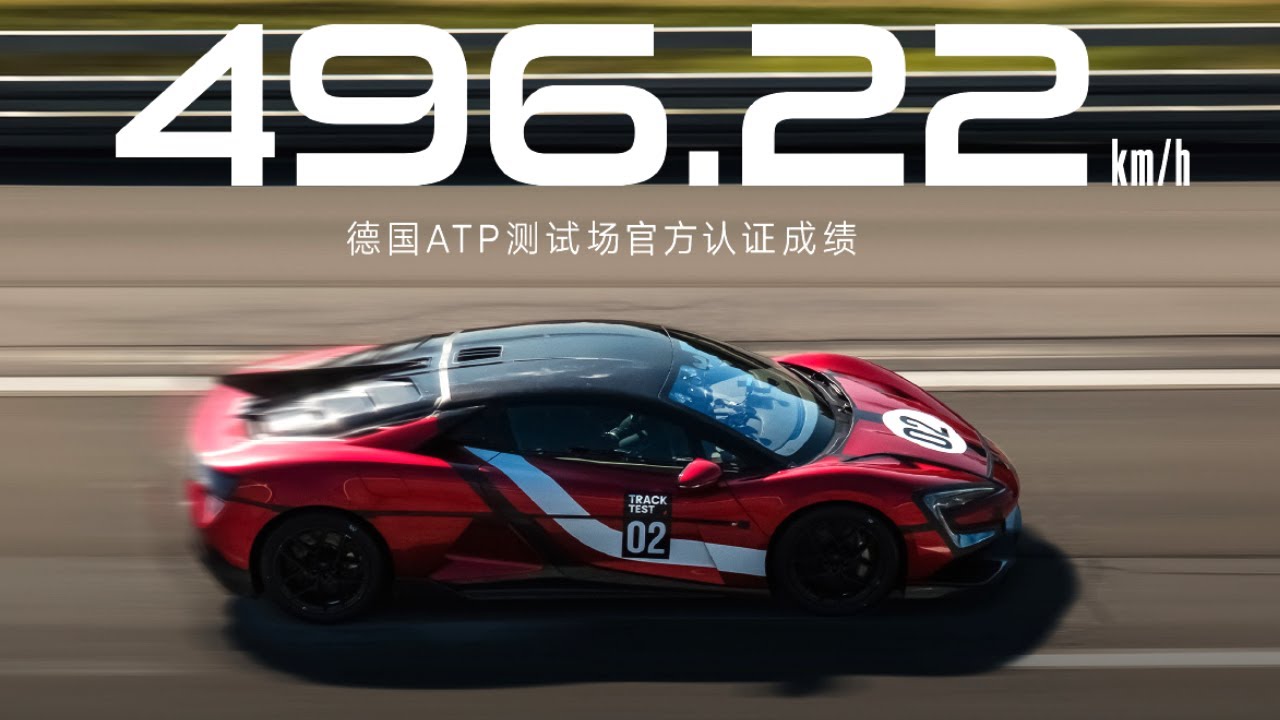
The 3000 horsepower BYD Yangwang U9 Xtreme 02 has just delivered one of the most shocking performance feats in the history of electric cars. In its latest run, this EV supercar reached a staggering 496.22 km/h, pushing the limits of what battery-powered performance can achieve.
With four high-output electric motors and advanced aerodynamics, the U9 Xtreme 02 shows how engineering precision and raw electric power can combine to create a true record-breaking machine. Stability, thermal management, and a carefully tuned chassis all played a role in allowing this supercar to sustain nearly 500 km/h.
This run follows the earlier 472.41 km/h record by the Track Edition, proving how quickly BYD is advancing in its quest to dominate the world of extreme performance. The Xtreme 02 is not just about numbers — it is a statement that electric power is redefining speed itself.
Make sure to like, comment, and subscribe so you never miss the latest in groundbreaking EV performance.
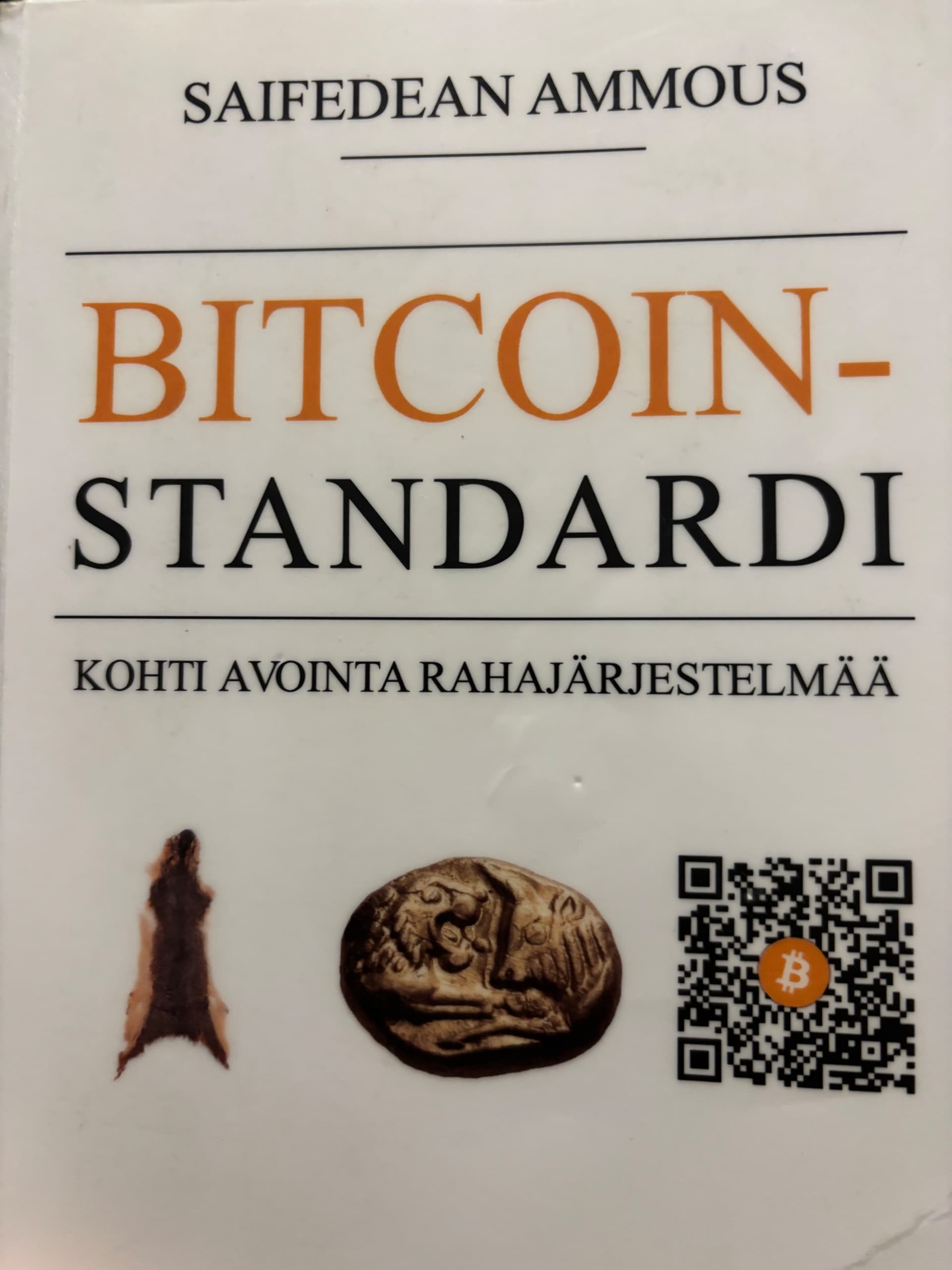
The book nook has moved on to reading about money.
Rai stones, that ancient bitcoin, are indeed a bewildering historical medium of exchange - the book seems comprehensive and interesting 
Crypto-imperialism obliges
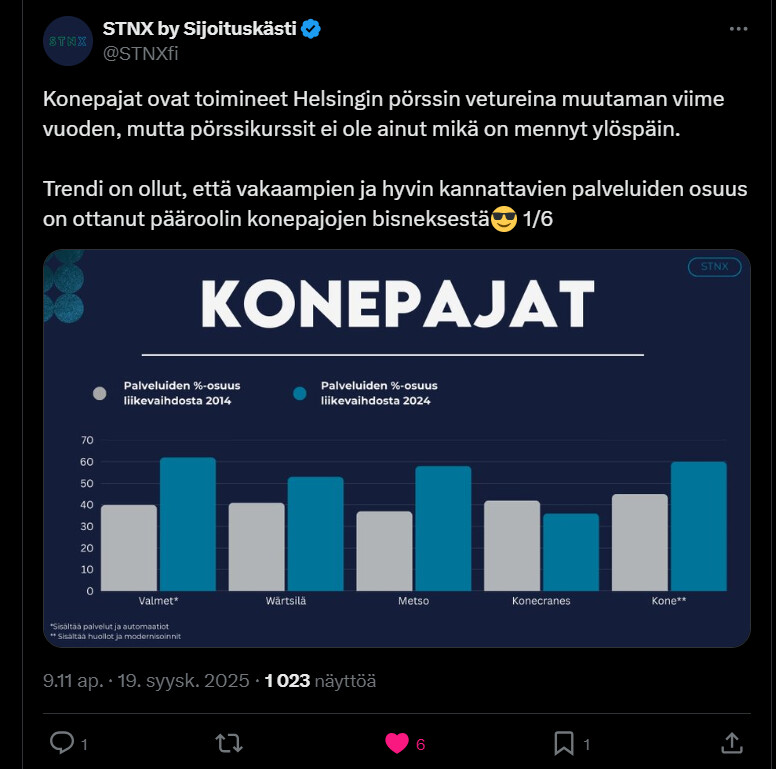
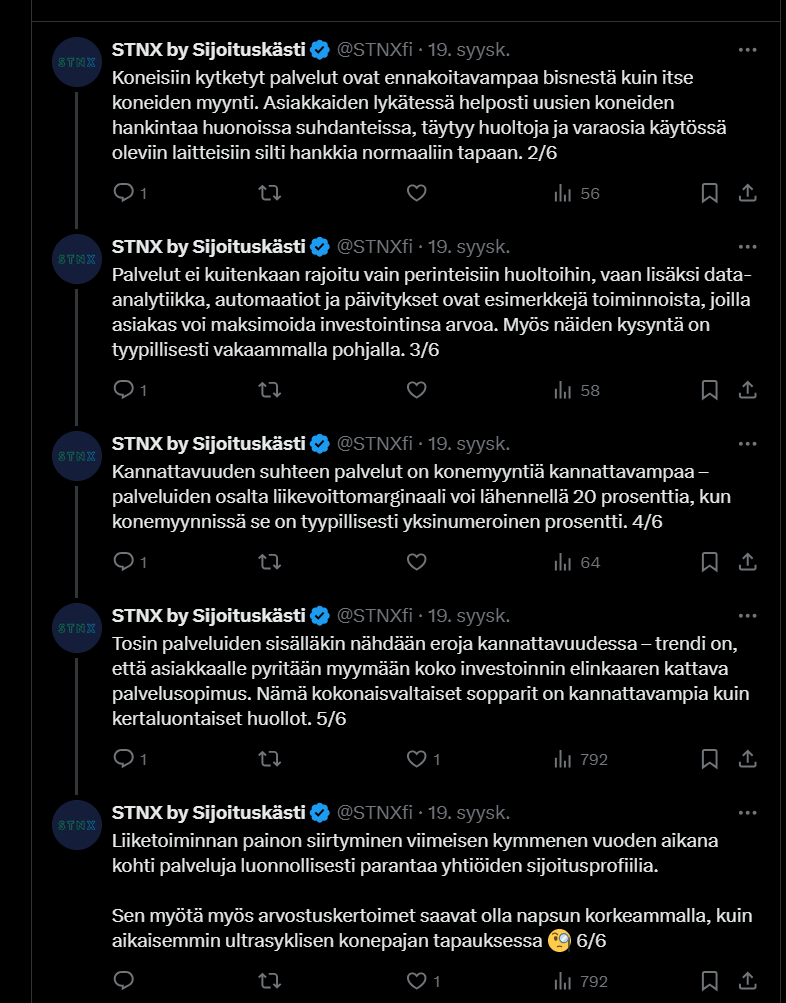
Here is Sijoituskästi’s good and concise tweet thread about engineering companies
https://x.com/STNXfi/status/1968920846031831264
Here is an article by SalkunRakentaja about Howard Marks.
For Howard Marks, the ultimate goal of investing is long-term outperformance. In his opinion, a successful investing career requires only a few very large winning investments. The magic of good returns is to find those few highly profitable investment targets and – what’s even more important – to hold onto them.
An investor, therefore, does not make money by buying and selling, but by owning. According to Marks, investment success is defined by how holdings develop over a 5-10 year timeframe.
You can think about it altruistically, that no one else can own the KH shares you own. Thus, you prevent others from making the same mistake and free up their money for, for example, American technology stocks.
In recent years, the stock market has admittedly been a somewhat two-sided playing field, but there have still been several winning sectors available. A few highlights that have offered hundreds of percent increases over ~5 years.
-American big tech companies
-European banks
-European defense stocks
-Helsinki Stock Exchange’s large engineering companies
Addition. I have brought up these sectors from time to time in Vartit, but apart from a brief ownership of Wärtsilä, I naturally haven’t touched those winners myself.  And Wärtsilä should have been kept in the portfolio, at least for now.
Do I own directly  /
 :
-American big tech companies
-European banks
-European defense stocks
-Large engineering companies on the Helsinki Stock Exchange
-Others’ money successfully freed up for these:
“KH Group: A veil of uncertainty settled over the story”
I see this as positive news. I infer that the consistently poor performance is now, therefore, uncertain going forward.
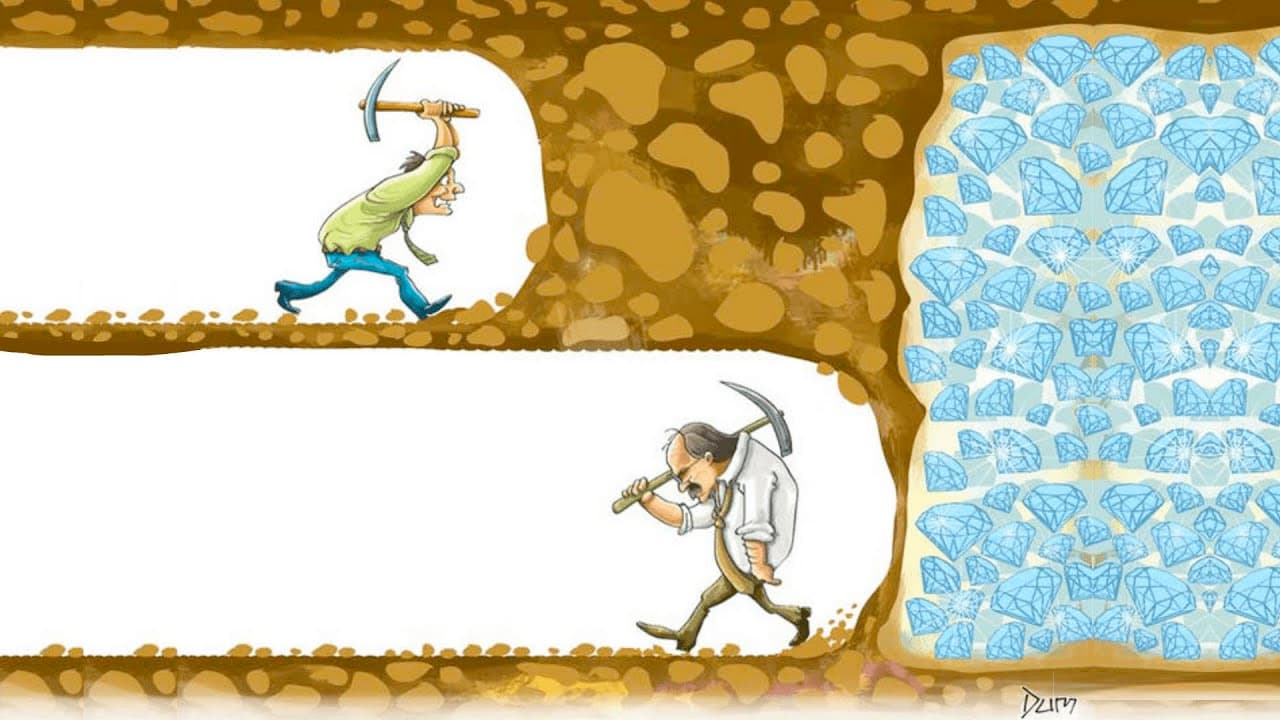
Who am I to criticize a legendary investment guru, especially when I myself am looking for those individual big winning investments, but those tips always remind me of the guys who post this picture unironically:
Many investors follow that advice literally, creating huge expectations of fabulous riches for their favorite stock and holding on to it stubbornly, so as not to give up too early. Of course, when every dip is a buying opportunity, the result is easily too large a position in a stock that should have been sold years ago, and letting go of it is mentally impossible, having spent so much time, effort, and emotional resources on it.
The longer you own a stock, the less likely it is to outperform the market. If you own a stock for a day or two, outperformance is very likely. With ownership of a year or two, the probabilities drop, but are still quite tolerable. With ten years of stubborn holding, making an outperformance becomes extremely unlikely and would require fabulous stock-picking skills to pick just these megawinners.
Of course, someone always occasionally hits upon a company that year after year generates fabulous growth and results over the cycle, allowing them to sweetly boast about their returns and stock-picking skills on internet forums, but it’s not you who finds that stock, but someone else, so there’s no point dreaming about it. For the same reason, playing the lottery generally doesn’t pay off, even though someone always wins that jackpot too.
I would argue that if one is not an iron-willed guru-level professional like Marks, it would be more sensible to own stocks in one’s portfolio that have positive momentum and whose business is visibly doing well now and in the near future. Then sell those stocks when the positive price development and news end and sentiment and business turn negative. People are talking a lot about vibe coding now, but I have personally witnessed how many acquaintances have made significantly greater outperformance with vibe investing than their technical investment skills would justify.
This is purely based on my gut feeling and experience, but I believe that such an investment style would work better for the average investor than trying to find those 100x megawinners for the portfolio with long-term ownership, because the end result is that you have a portfolio full of something like Kempower, Hyzon, or Voxtur. Of course, no matter what you do, the best result would probably still come from index investing 
Not a week goes by without the media having a new expert-backed theory on why Finland is ruined
Henri Huovinen has written an interesting article about the US healthcare sector.
One significant reason for the difficulties in healthcare has been political uncertainty. Changes to legislation related to, for example, drug pricing have been prepared in Washington, which has created pressure on the entire sector. Furthermore, changes in the operations of authorities like the FDA, CDC, and NIH have increased uncertainty.
The combined effect of these factors has led to a decrease in valuation multiples and driven investors away from sector stocks.
Subheadings:
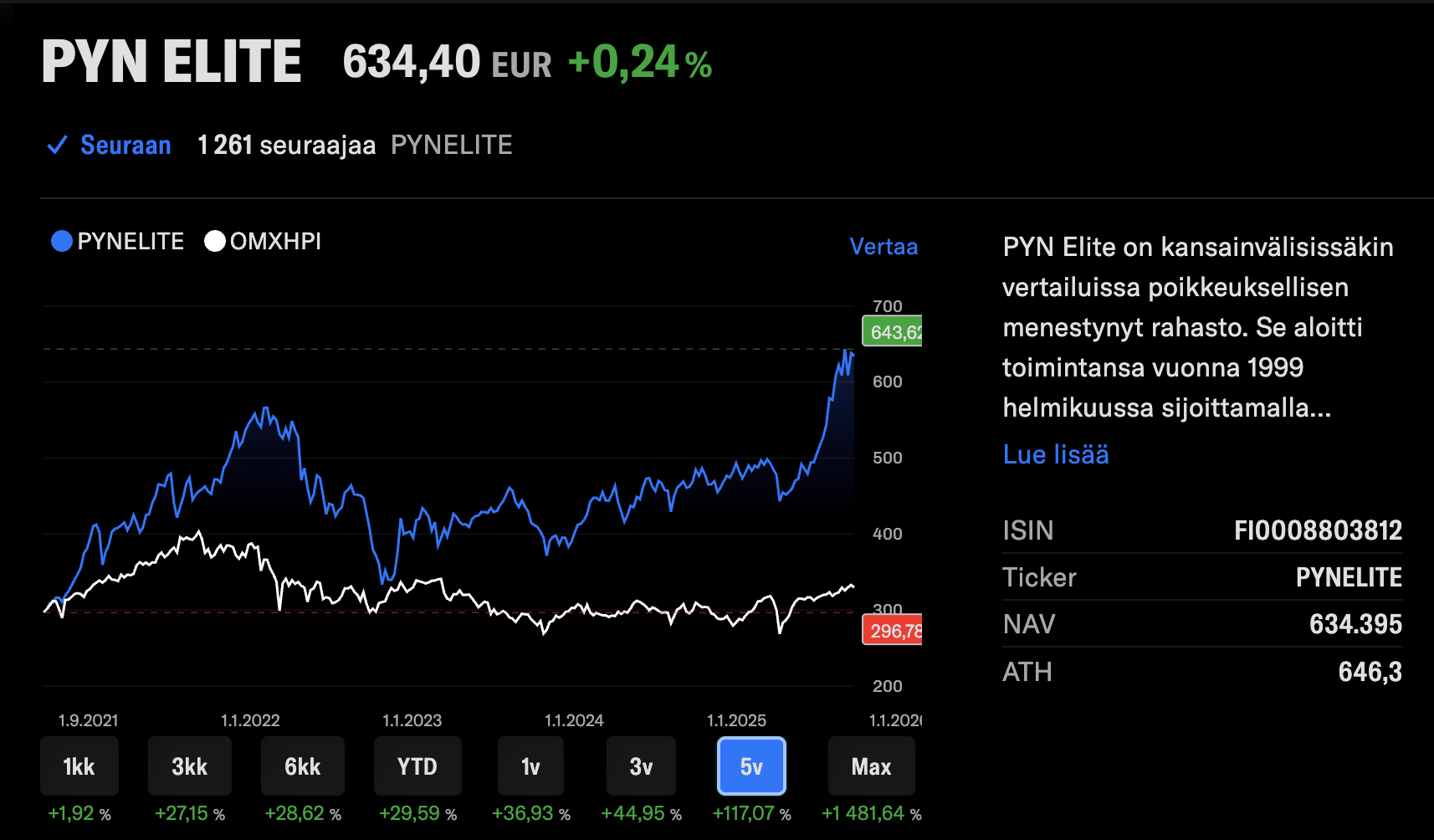
For the sluggish performance of Finnish companies, I can offer a couple of consolations. The legendary PYN Elite, which publishes on the Inderes platform and invests in Vietnam, was sluggish for years after 2021. On Inderes.fi, there have been active writings from PYN about how cheap Vietnam is. How many fund owners have given up along the way? Now, the underperformance has been corrected in a few months, and the 5-year return is +117%. That’s almost the same as the much-hyped Nasdaq100 index’s 124% return over the same period!
So, I’m not saying that a turnaround will happen immediately, here and now, but when it does, it can be sharp.
Then, a word of caution. For example, in the European banking sector, the turnaround took 15 years, and we are still below the early 2000s peaks, even though it has risen +300% from the lows in 5 years.
What if people this time skipped buying those buckets and spent the money on Hesburger instead, you’d get good stuff for cheap
I blame the tax authorities, who create perverse incentives for long-term ownership with the 10-year deemed acquisition cost presumption. A Finn is even willing to lose money on the stock market for the chance to pay less tax in the unlikely scenario that they would have owned a winning stock for 10 years.
Fortunately, however, in recent years this psychological flaw was remedied with the equity savings account, with which every Finn who doesn’t admit to belonging to the dividend cult can be their own life’s momentum trader.
Regards,
The third member of the Others’ money freed into winning stocks party
Edit: For clarity, it should be noted that the writing was done tongue-in-cheek
The chairman of the Own Buy-Back Party should take a firm stance on this and other similar heresies that have recently spread on the forum, and instruct the moderators to get to work.
This looks like a baseless counter-attack campaign orchestrated by the Dividend Party.
The weakest link is not Finnish consumers. The weakest link is the state administration, which communicates misery and cuts. Finns save for a rainy day. We are smart.
When other developed economies increase their indebtedness, so should Finland. And drastically. Belief in a better future is the only path to growth.
“Don’t just lie there in the fire!”
Despite its effectiveness, the Piper Perri Gambit is often seen as representing a so-called “dirty” playing style, and the move has never really managed to cement itself as a classic.
Yep, for years there have been announcements of impending doom, gloom, cuts, and savings, so it’s no wonder that consumers are cautious or tighten their belts.
I’d be tempted to say that the three biggest reasons for the gloom are Putin, Putin, and Putin. Even Solteq’s CEO mentioned this in an Inderes interview related to the IT sector, but why is even Poland’s stock index rising..
The article seems incomplete from my perspective here in Finland.
It’s quite difficult to respond argument by argument..
But yes, large investments and GPU lifecycle are a concern. If the IREN + DELL (+others) leasing arrangements are not familiar, it’s worth checking out the CEO’s latest interview on the McNallie money podcast, or on the company’s website, or on X, where the topic has been discussed under the title ‘Colocation 2.0’.
I didn’t want to spam this (too) into the company thread, but it can be moved there if Alokas is in the mood 
The leasing arrangement also has the aspect that if the GPU is not redeemed, Dell, for example, has an ‘aftermarket’ for it.