Financial sector as an investment

The apartments in ÅB’s housing fund belong to a niche market where the trade involves new or at least good-condition studios and one-bedroom apartments located in growth centers. In terms of price per square meter, they represent the most expensive housing stock in Finland. The apartments of other open-ended housing funds, as well as closed-end housing funds and many other professional investors, largely belong to this same market segment.

Finland is home to 5.6 million people. People change jobs, get married, grow older, retire, get rich, get poor, move into and out of the country, get divorced, children arrive and leave, and some move just for the joy of moving.

These life changes are often associated with selling or buying a home. In these transactions, the motive is typically something other than commercial. Often, an old home is sold and a new one is bought, in which case it is not about the absolute value or price level of the apartment, but about the price difference (väliraha).

In 2024, approximately 52,000 housing transactions were made in Finland, including all housing types. A1 could not say how many transactions were made for studios and one-bedroom apartments in apartment buildings.

Based on the figures above, I would guess that the commercial housing market, where apartments are bought or sold for rental purposes, is quite thin. If we narrow the group down to apartments that are relatively new or in good condition, studios and one-bedroom apartments, or located in growth centers, we are perhaps talking about a few thousand apartments per year. The price level of these apartments relative to the value of the rest of the housing stock does not exactly facilitate sales in a recession-hit Finland either.

ÅB’s housing fund currently has 3,000 apartments. OP’s fund has over 4,000… and so on. On top of that, there are closed-end funds, private real estate investors, other professional real estate investors, etc.

If, for example, ÅB needs to sell 20% of the fund’s apartments, the sale probably cannot be carried out in any reasonable time by peddling a few dozen apartments at a time. Hundreds must be put up for sale. The same, of course, applies to other similar players.

In hindsight, it is obviously easier to say what should or should not have been done. In real-time, however, the portfolio manager has always faced the question: is the fire sale of apartments into a very thin market in the interest of those remaining in the fund?

4 Likes

I’ll respond to Sauli’s message with another post, as the perspective here is quite different.

There are over a million rental apartments in Finland. There are 340,000 private landlords.

All of them were in a similar situation as interest rates rose. In hindsight, it is easy to state that rental apartments should have been sold by H2 2022 at the latest. Apparently, very few did sell, however.

Large housing funds were in an even more difficult position than many others. They also had a responsibility to those remaining in the fund. Large-scale apartment sales by large funds would have also driven price levels down even further.

A very large portion of rental property owners acted just like open-ended housing funds. They considered it the best way to operate. They felt that the apartment they owned was more valuable than what they could have gotten for it on the market.

the small group of shareholders in open-ended housing funds, whose redemptions remain unpaid and whose fate has caused outrage, have not suffered any greater loss than others who were in the rental housing market.

But is their loss unjust? If so, it is a matter of events prior to the crisis caused by rising interest rates. Either the risks weren’t communicated properly, or the recipient didn’t understand that there can be risks in the housing market as well. I wouldn’t blame the portfolio management once the crisis escalated. Hundreds of thousands of landlords acted the same way.

I suppose this is mostly about the fact that banks changed the rules of the game on somewhat questionable grounds. Grounds that hold less and less water by the day. What an individual investor does with their properties really has nothing to do with this problem.

If a bank screws up its own solvency and changes your current account into a fixed-term deposit account with negative interest and recurring account management fees, and still charges a monthly fee for your Visa with no end date—is what the neighbor’s grandmother does with the cash she keeps in a glass jar in the kitchen relevant to this situation, or does it comfort you if another bank customer’s fixed-term account remains a fixed-term account?

Investments carry risks, and those risks materialized through the decline in property values and, consequently, the value of these funds. If someone chooses to hold onto the fund, it will show as a loss in their bank account until they eventually sell or the fund returns to the black. Those who redeemed their investments in an OPEN-ended fund according to the fund’s rules deserve to get their remaining money out of them.

2 Likes

Apparently a larger real estate deal / deals near the airport / warehouse & light industrial worth 120 million euros.
I didn’t bother checking if there are any stuck funds involved in these deals, but some kind of recovery.
Basically, the early bird catches the worm when the most urgent / long-waiting sellers finally find buyers.

Stendörren Fastigheter AB (publ) has today entered into an agreement to acquire 14 properties in the Helsinki region with an agreed property value of SEK 1.3 billion. The portfolio is fully leased and the average remaining lease period is just over three years. The annual net operating income is approximately SEK 96 million

Acquired properties

Sulankaari 36, Hiekkamäentie 5, Högberginhaara 1, 3, 5 & Haarakaari 48, Louhostie 5, Palkkikuja 3 – 6 & 8, Amerintie 50, Haarakaari 45 A & B, Sulantie 11, Sulankuja 4 A & B, Sulantie 20, Isonkivenkuja 4 in Tuusula, and Kuriiritie 17 & 19, Kiitoradantie 3, Tiilipojanlenkki 4, Nilsaksentie 1 in Vantaa.

Stendörren acquires a strategic property portfolio in Helsinki for SEK 1.3 billion and presents earnings capacity as per year end – Stendörren Stendörren acquires a strategic property portfolio in Helsinki for SEK 1.3 billion and presents earnings capacity as per year end – Stendörren

2 Likes

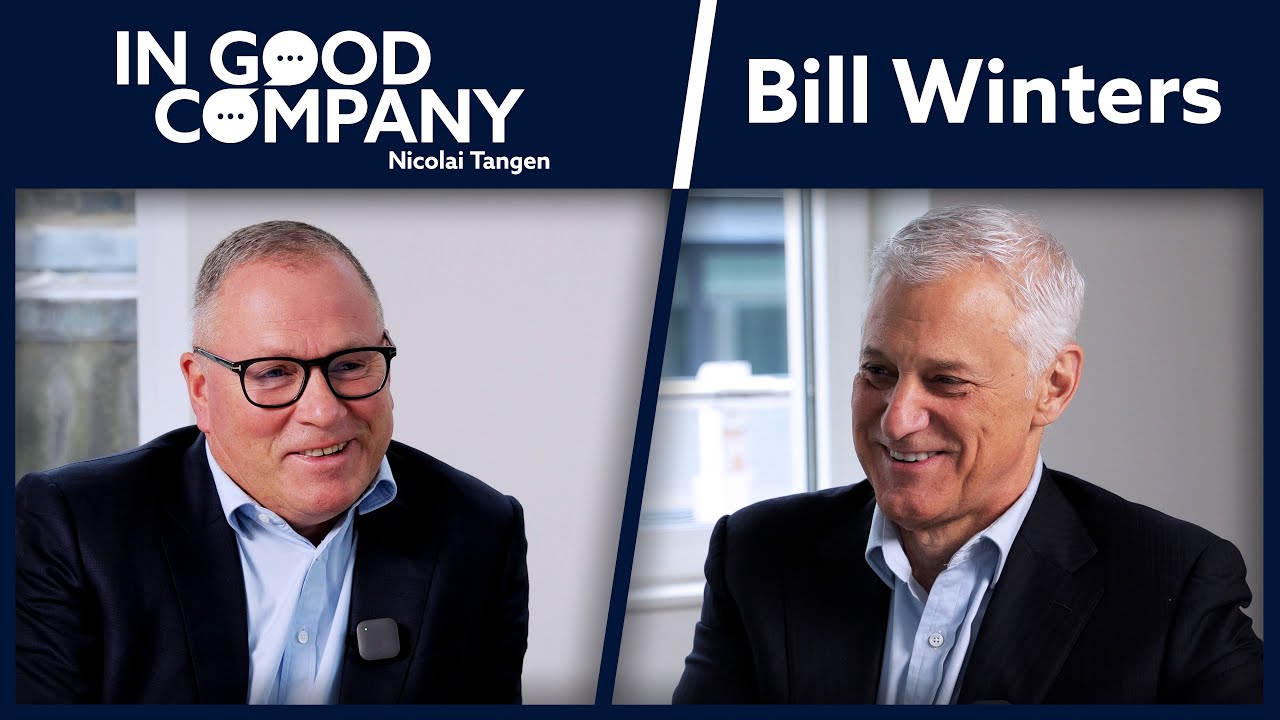
Standard Chartered CEO Bill Winters being interviewed by Nicolai Tangen of the Norwegian Oil Fund.

Standard Chartered is a bank headquartered in the UK, but the majority of its business is in Asia, the Middle East, and Africa. The company’s largest single market is Hong Kong, and it also has business in Mainland China, Singapore, the United Arab Emirates, and South Africa, among others. The company’s market capitalization is currently approx. £41 billion. Interview duration 45 min.

4 Likes

Valtava kauppa pk-seudulla: Norjalainen Storebrand ostaa Ilmariselta 999 asuntoa | Kauppalehti real estate transactions just keep picking up pace.

Norwegian real estate company Storebrand Real Estate is buying 999 apartments in the Helsinki region from pension company Ilmarinen. The apartments are being acquired for the Storebrand Nordic Real Estate Fund II, or SNRE II.

The deal includes 22 residential buildings across 13 owned properties. The total leasable area is 54,100 square meters. Commercial premises account for less than one percent of the deal, and the real estate portfolio changing hands focuses on apartments. The average completion year of the buildings is 2007.

One would think that our specialized investment funds would also slowly get to sell assets in larger quantities. It’s worth remembering here that Ilmarinen isn’t selling out of necessity; they surely believed they got a good price. Many specialized funds, on the other hand, have complained that the market isn’t working/the price level is wrong. That argument is starting to lose its credibility.

35 Likes

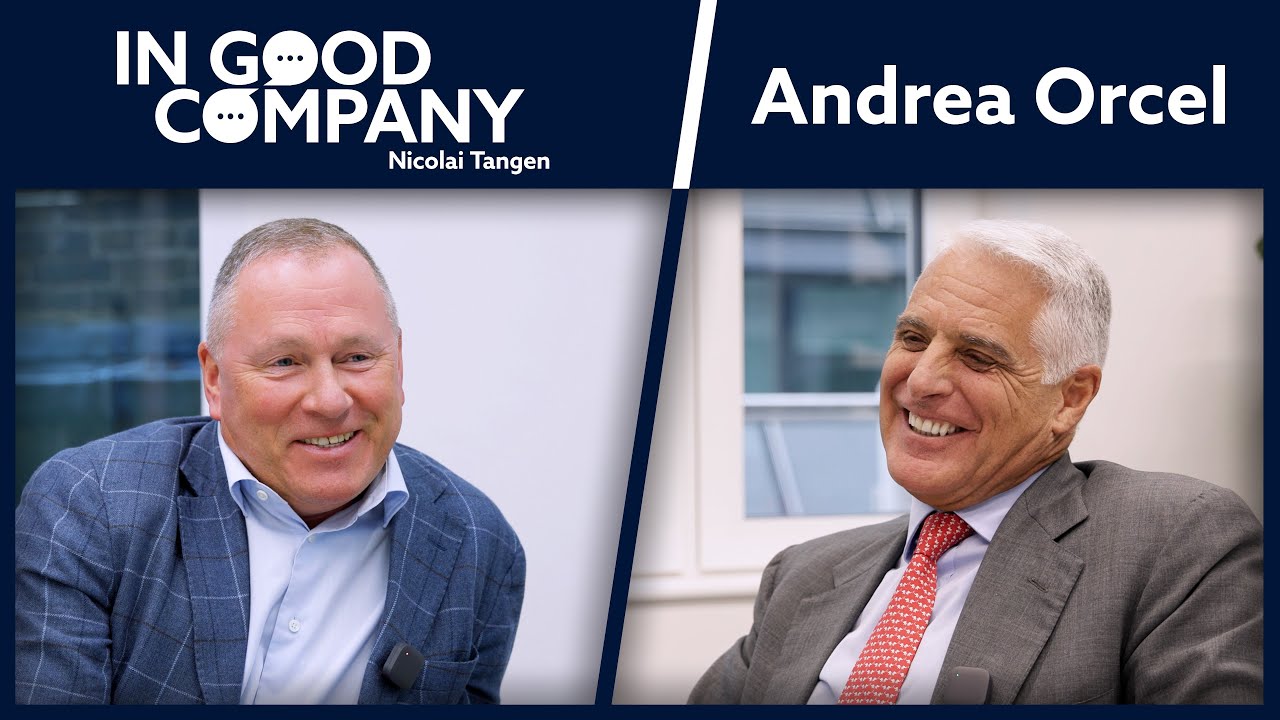
UniCredit CEO Andrea Orcel interviewed by Nicolai Tangen of the Norwegian Oil Fund. Depending on the calculation method, UniCredit is Italy’s largest or second-largest bank, market cap approx. €120 billion. Interview duration 1h 3 min.

1 Like

Kassu’s and Sale’s comments on the performance of domestic investment funds in January. :slight_smile:

According to the Fund Report published by Investment Research Finland (Suomen Sijoitustutkimus), net subscriptions of over one billion euros were made to domestic investment funds in January. Sales were driven especially by bond funds. For the past 12 months, net subscriptions are now over 6 billion euros in the black, which is an excellent level and reflects the market’s upbeat sentiment. Value changes were also positive in January, and as a result, fund assets climbed to a new record of 205 billion euros.

AI company Altruist has released a new version of its Hazel tool, which automates the tasks of investment advisors/wealth managers. The new version is capable of tax planning, for example.

You can see what kind of tool it is on Hazel’s homepage:

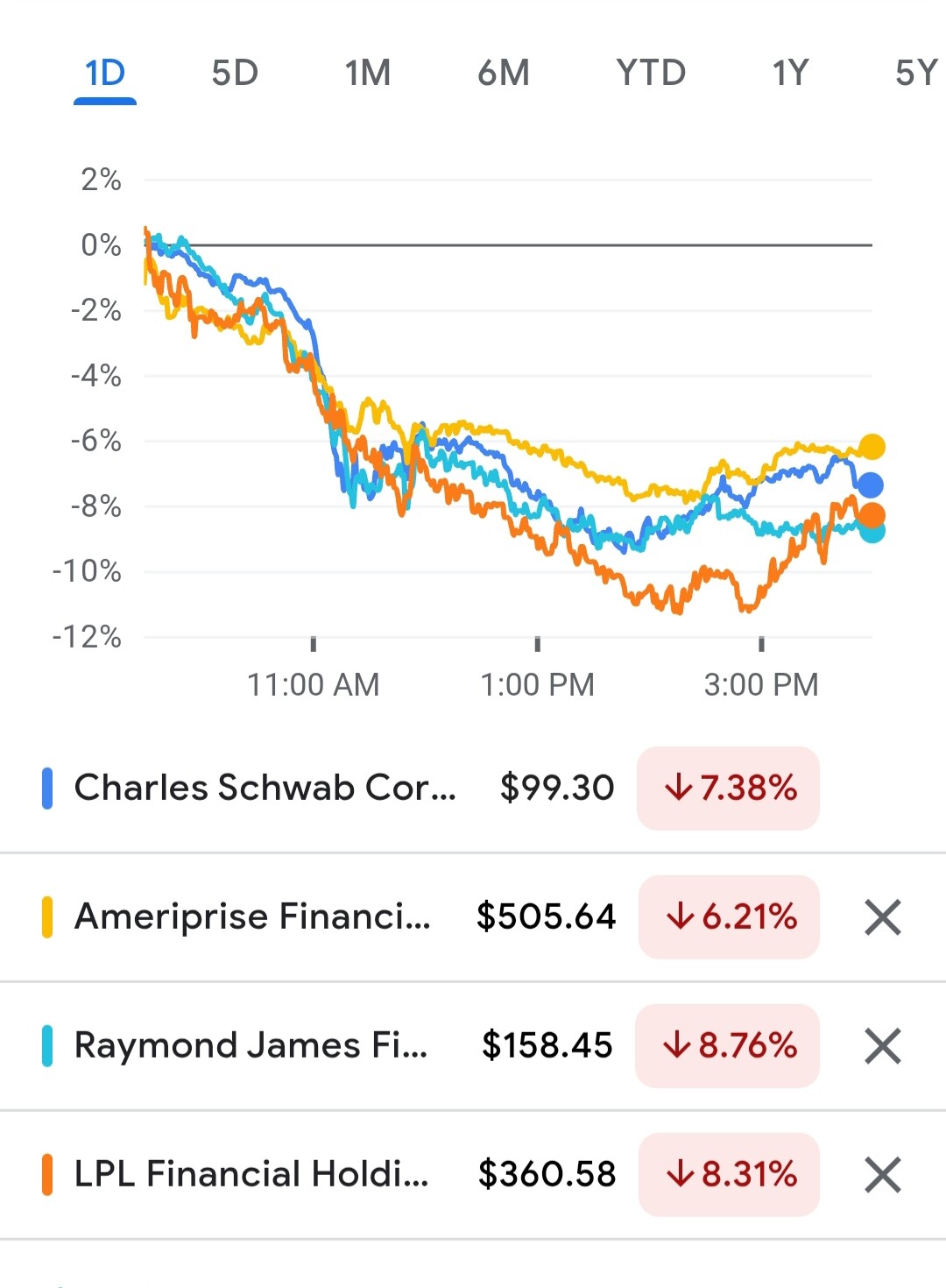
Stock prices of American wealth managers were collectively spooked. Bloomberg has an article on the subject: https://www.bloomberg.com/news/articles/2026-02-10/wealth-manager-stocks-sink-as-new-ai-tool-sparks-disruption-fear (paywall)

1 Like