Financial sector as an investment

Indeed, a good article. Mainly, I was still wondering about the idea that the ultimate decision-making power and responsibility for valuations would lie with real estate appraisers. I don’t disagree that this is how it should be, but according to current regulation (i.e., the EU directive), outsourced valuations come with such stringent responsibility that no appraiser wants/is able to bear it. Or then the price of real estate appraisal would be something entirely different than it is today. Of course, the article’s point was also that regulation should be changed, but in this respect, it doesn’t seem to be even in the hands of the parliament, unlike, for example, the real estate fund act, from which, as I understand it, the dividend payment obligation comes.

And due to costs, I would not, in principle, mandate commissioning several parallel valuations. Instead, mandatory rotation would be very welcome; many fund companies probably already do this, but certainly not all.

1 Like

And about closed-end funds.

An essential characteristic of a closed-end fund is that the investment is called in only when the money goes to work. This means that, on the one hand, the investor should be prepared for future capital calls, and on the other hand, the fund should also be able to trust that the money will arrive within approximately 10 banking days when called – neither of which, in my opinion, holds water. If the entire investment were paid immediately, the return would be poor, as a large portion of the capital would just lie in an account, perhaps for years, before it could be put to work. Of course, there could be some feeder fund-type structure where it would be called immediately and held in liquid assets initially, but then it would no longer truly be a closed-end fund (at least not in the sense a professional investor would view it), but rather very close to these current open-ended funds.

In addition to this, taxation would also be difficult for a private investor, and tax might have to be paid even when no cash flow has come to the investor. At least if we are talking about a domestic limited partnership (Ky) structure (because the Ky’s profit is taxed as the partners’ income), which most domestic closed-end funds primarily are. Of course, by changing laws, a special investment fund form might be made to work, but it would probably have its own challenges as well.

I would not invest. Nor would I, by any means, enable it for anyone other than professional investors. And it’s unlikely that any sensible and responsible fund company would even offer such a thing to the famous “Pihtipudas Grandma” – it could only end badly, or the structure would once again be so expensive and complicated that it would make no sense.

3 Likes

Having played with this problem in my head sometimes, I came to the same conclusion. Although, I suppose even a feeder fund’s investment commitment could be locked in, even if the calls were made immediately upon signing the investment commitment (?)

This taxation issue is not, in itself, merely a hypothetical problem for small investors. The tax treatment of the entire Ky (limited partnership) structure as an investment product would require changes and clarification. Now it seems that the tax authority has its own interpretation of the tax treatment of individual investors, according to which it operates, but in principle, the law would provide the keys to much stricter taxation for individual investors in closed-end funds. On the other hand, the tax treatment of foundations, individual investors, and holding companies is different for all (which is an absolutely ridiculous starting point). So, yes, it would require broader clarification and simplification.

This is perhaps the biggest risk in my opinion; each investor generates quite a lot of work in a closed-end fund, which is why it’s easy to understand why the costs of even open-end funds are quite high.

It’s just a pity for us poor folk that the strategies and returns in closed-end structures are much more attractive; once again, the small investor is left on the sidelines of the fun.

Certainly, but then the end investor wouldn’t get the full benefit from a closed-end structure if the money still had to be deposited into the fund’s account immediately upon making the investment.

1 Like

If it sounds too good to be true, avoid it, meaning the hidden bomb within it. What is that bomb, ask those who invested their money in real estate investments, or perhaps Nordea’s Mermaid investors, who bought funds that invested in highly-rated bonds recommended by internationally trusted rating firms, until it turned out that the international credit rating agencies’ view was completely off, and it wasn’t worth giving over 100% debt to broke Americans, even though the value of housing always rises forever. Doesn’t it? :wink:

Juurikki does not invest in funds, and certainly not in any debt-leveraged financial instruments, which Finnish housing/real estate funds appear to be.

It’s so nice to know you own a certain small share of a company, as is the case with direct stock market investments, and not some schemes concocted by professional money-milkers.

The financial industry makes money from people’s foolishness. Juurikki himself is partly to blame, owning profitable companies in the financial sector. The bank always wins.

Reportedly, in Finland, power is still at least seemingly with the democratically elected Parliament. What if all derivatives and funds were banned by law? EU: no go, no.

Still, the popularity of direct stock ownership should be actively increased before we face a completely predictable major stock market crash. This will be caused by AI-jai and its predecessor, automated stock market trading, and of course, the negative spiral caused by too much fund ownership (= automated rule-based forced selling).

This crash is a thousandth of a second away in stock market terms, but who cares.

5 Likes

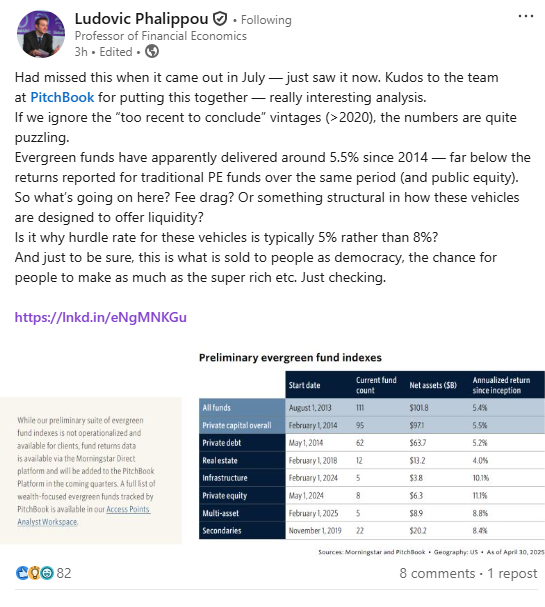
Maailman ehkä tunnetuimmalta PE-kriitikolta tosi kiinnostava havainto PE evergreeneistä:

Tiivistetysti, evergreenien tuotot ovat jääneet tosi laihoiksi ja kauas niistä tasoista mitä PE:t ovat tuottaneet suljetuilla rakenteillaan. Tämä ei mielestäni ole mikään yllätys, koska ei PE-markkina tietenkään ole mikään El Dorado, missä jokainen tuote generoi hurjaa alphaa vs. S&P500 huolimatta kuluista yms.

Linkki linkkaripostaukseen: Had missed this when it came out in July — just saw it now. Kudos to the team at PitchBook for putting this together — really interesting analysis. If we ignore the “too recent to conclude” vintages… | Ludovic Phalippou 22 | Kommentit

Linkki alla olevaan pitchbookin dataan: https://pitchbook.com/news/reports/q2-2025-pitchbook-analyst-note-the-return-of-evergreen-funds

17 Likes

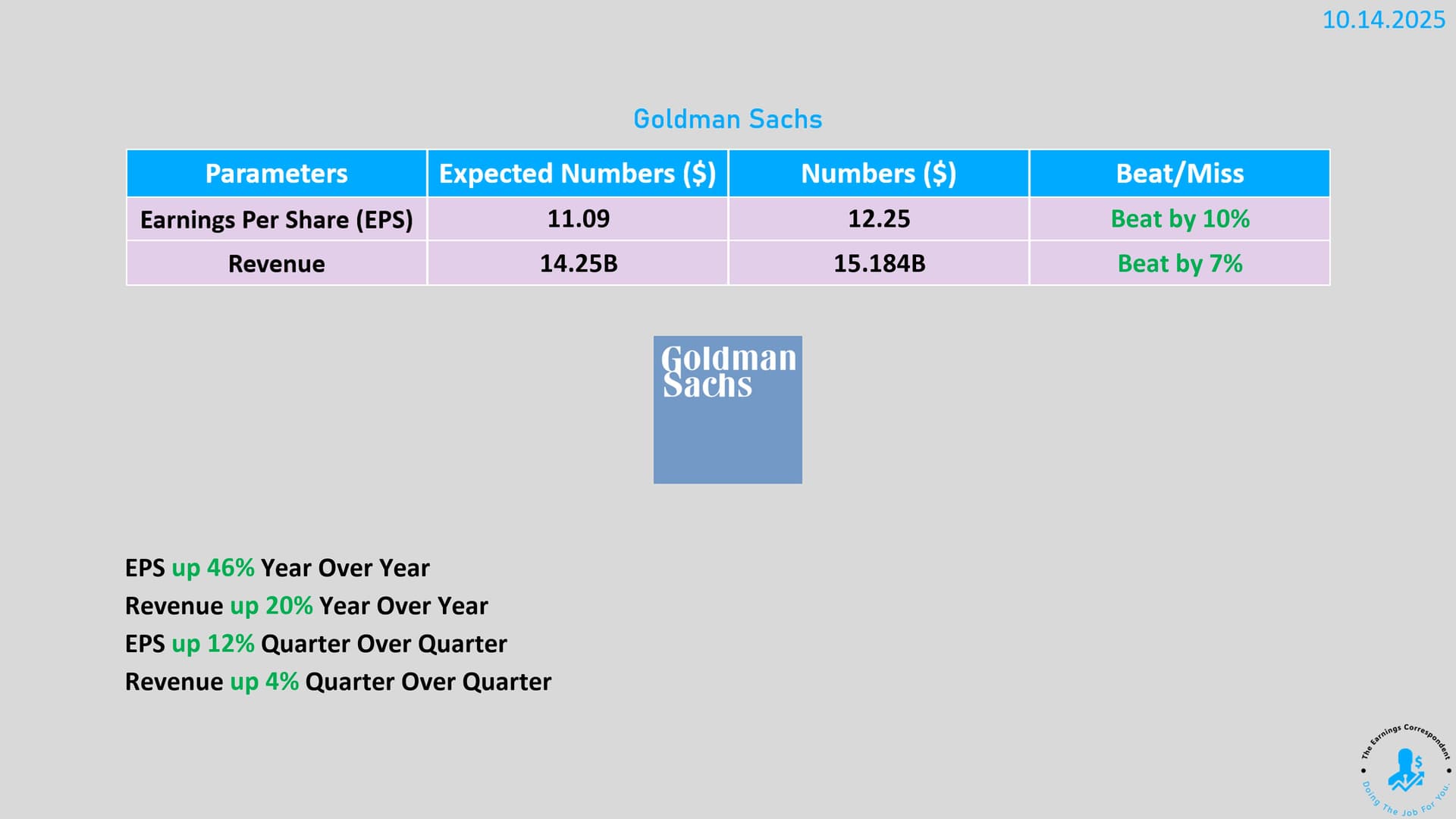
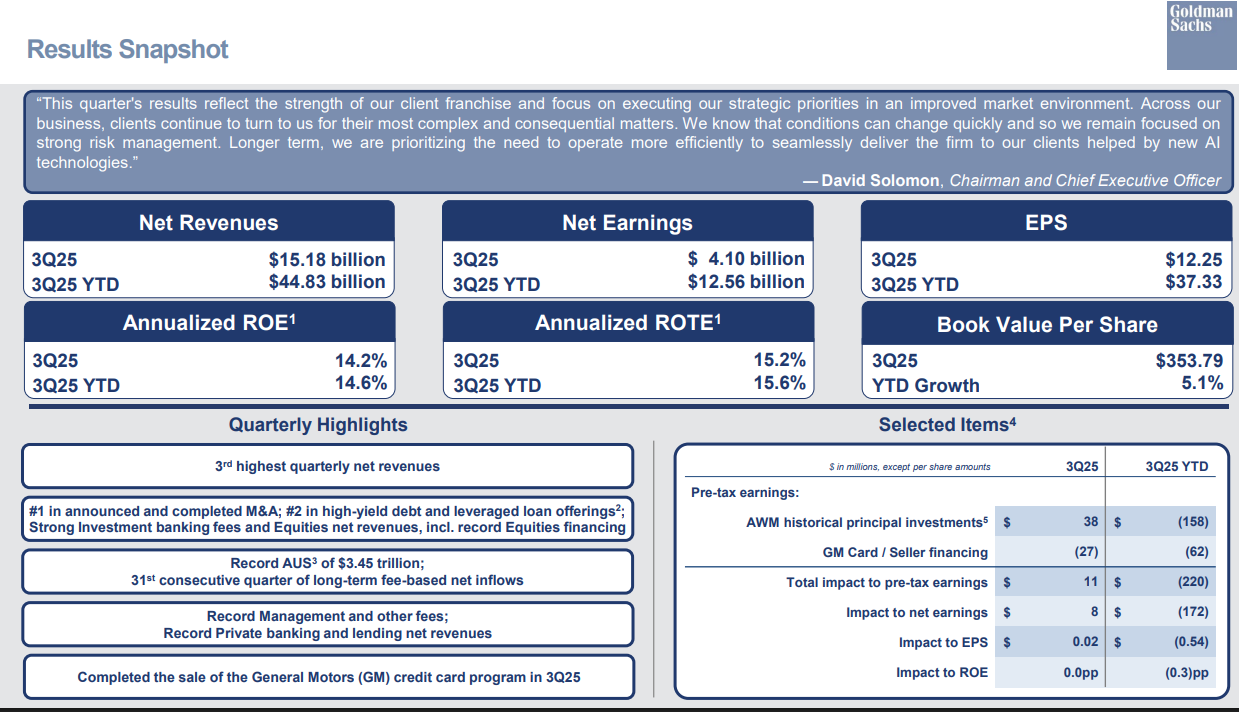
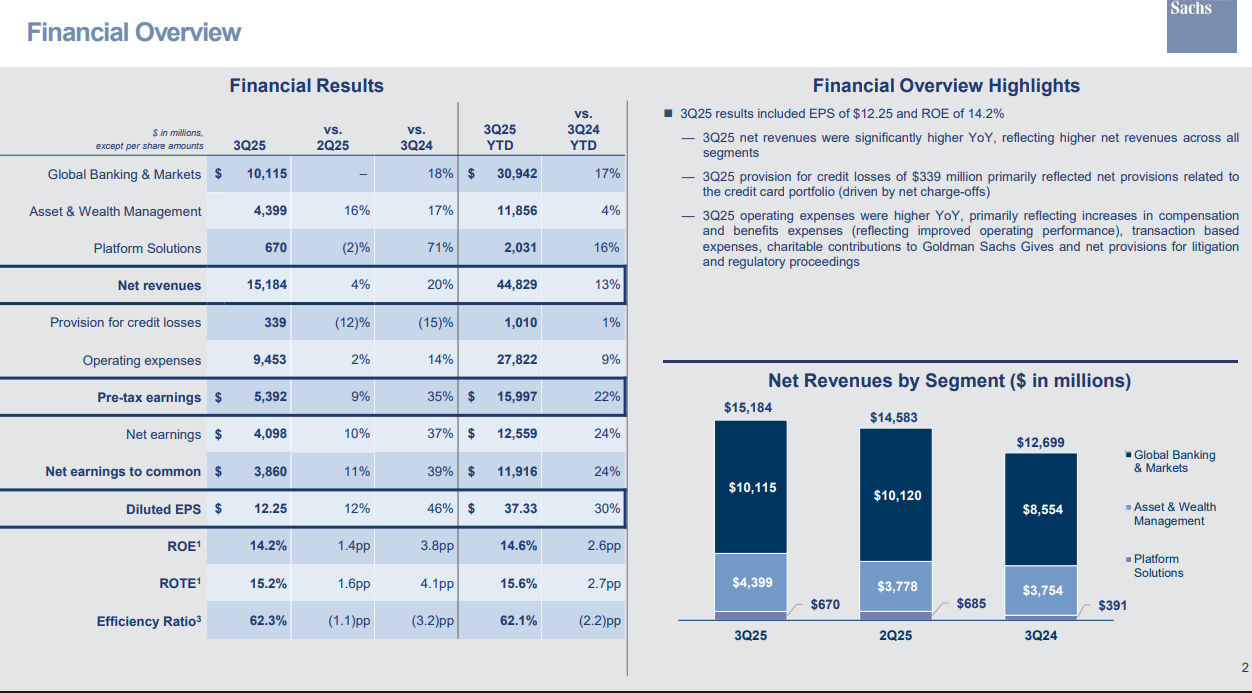
Goldman Sachs reported a strong third quarter, with earnings and revenue exceeding expectations. The bank’s profitability remained good, and return on equity rose higher than before.

CEO David Solomon emphasized client trust, as well as the company’s focus on efficiency and risk management. He also highlighted the role of artificial intelligence in enhancing future services, which JPM Morgan didn’t talk much about. :).

https://x.com/earnings_guy/status/1978059637371867483


Company’s Own Materials


Well, I am at least the second most famous among @Pohjolan_Eka’s critics then.

5 Likes

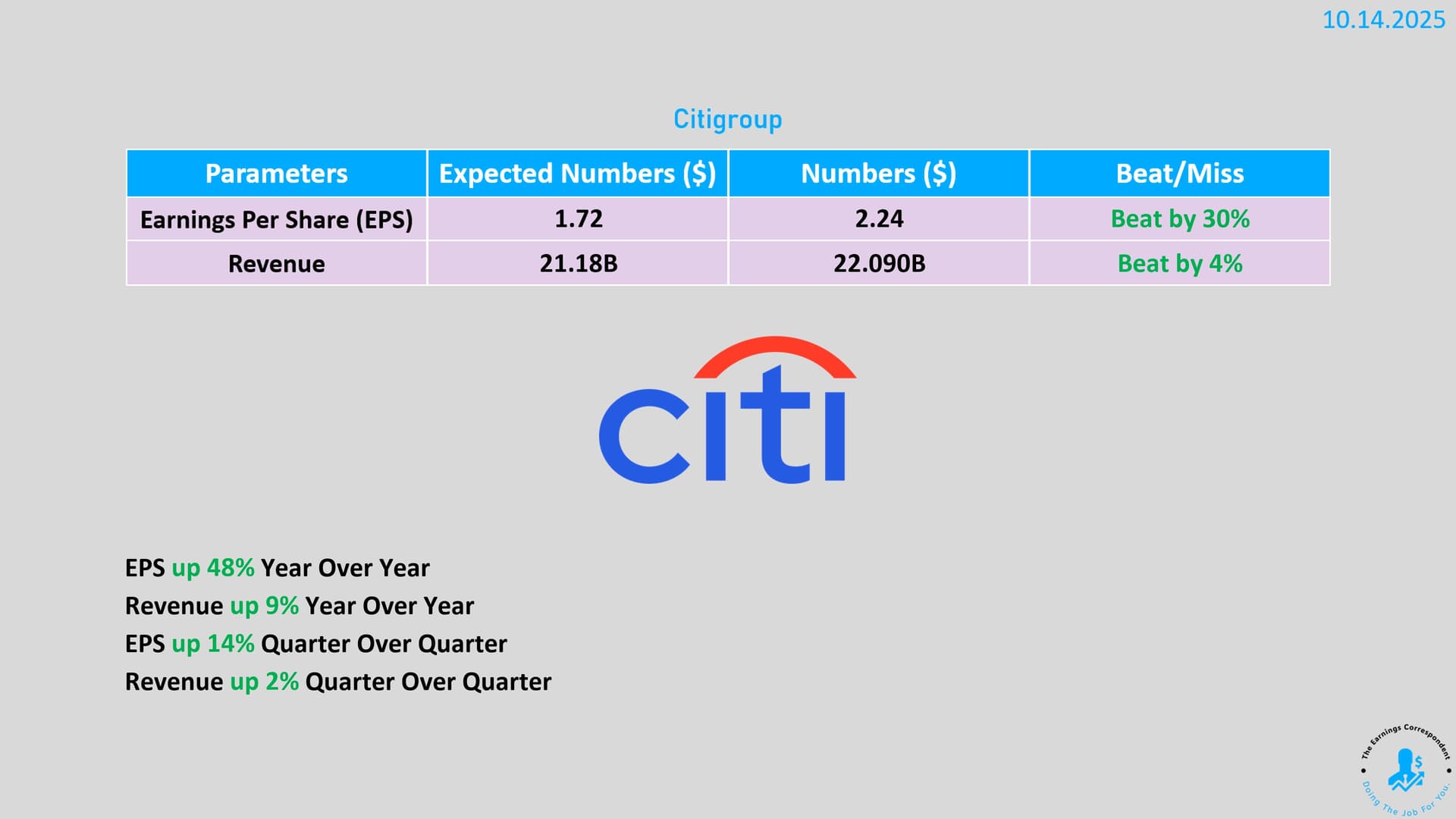
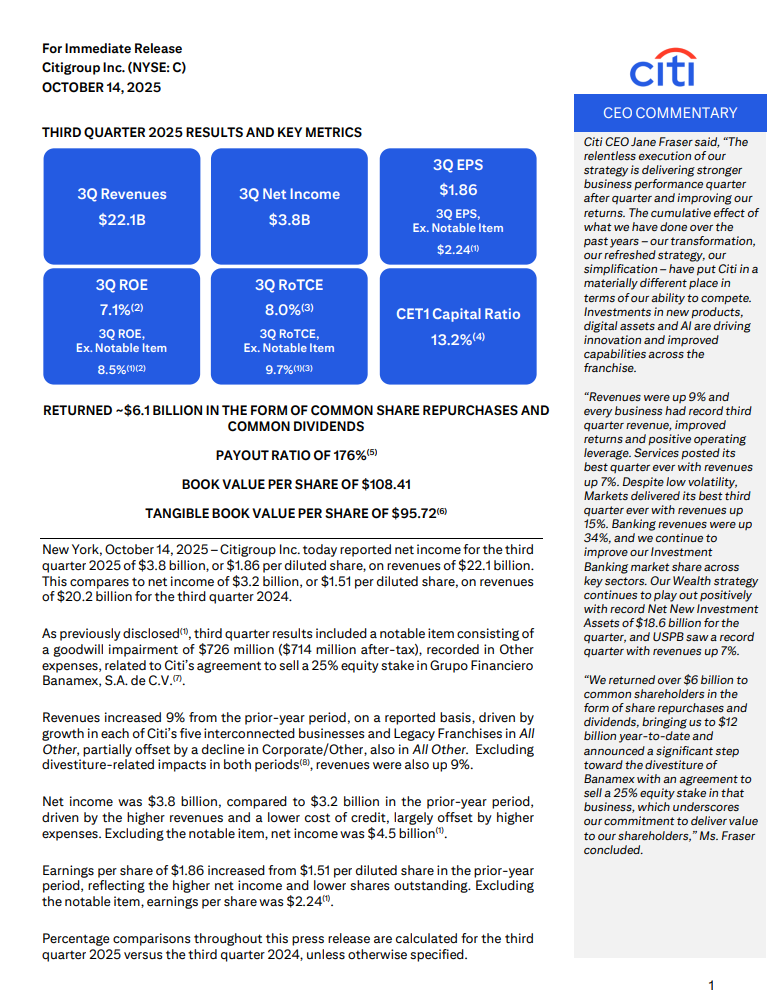
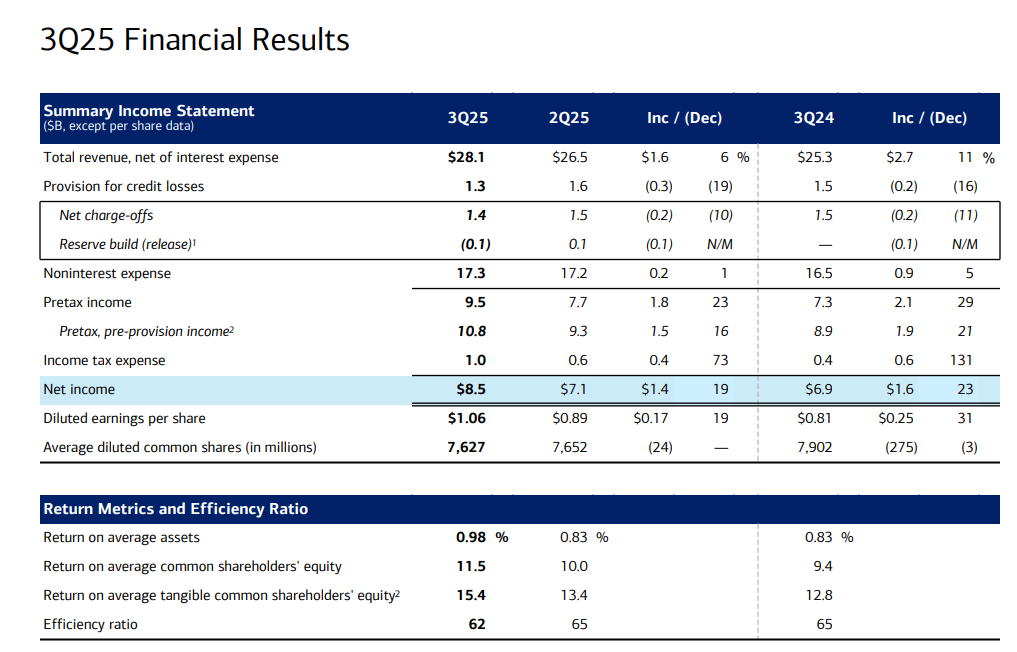
Citigroup reported earnings that exceeded market expectations on almost all metrics.

The bank’s revenue and profit grew, and trading and interest income strengthened particularly.

Provisions for credit losses were eased and expenses remained under control, which in turn supported the earnings.

https://x.com/earnings_guy/status/1978068794607112309


Company’s Materials


image

3 Likes

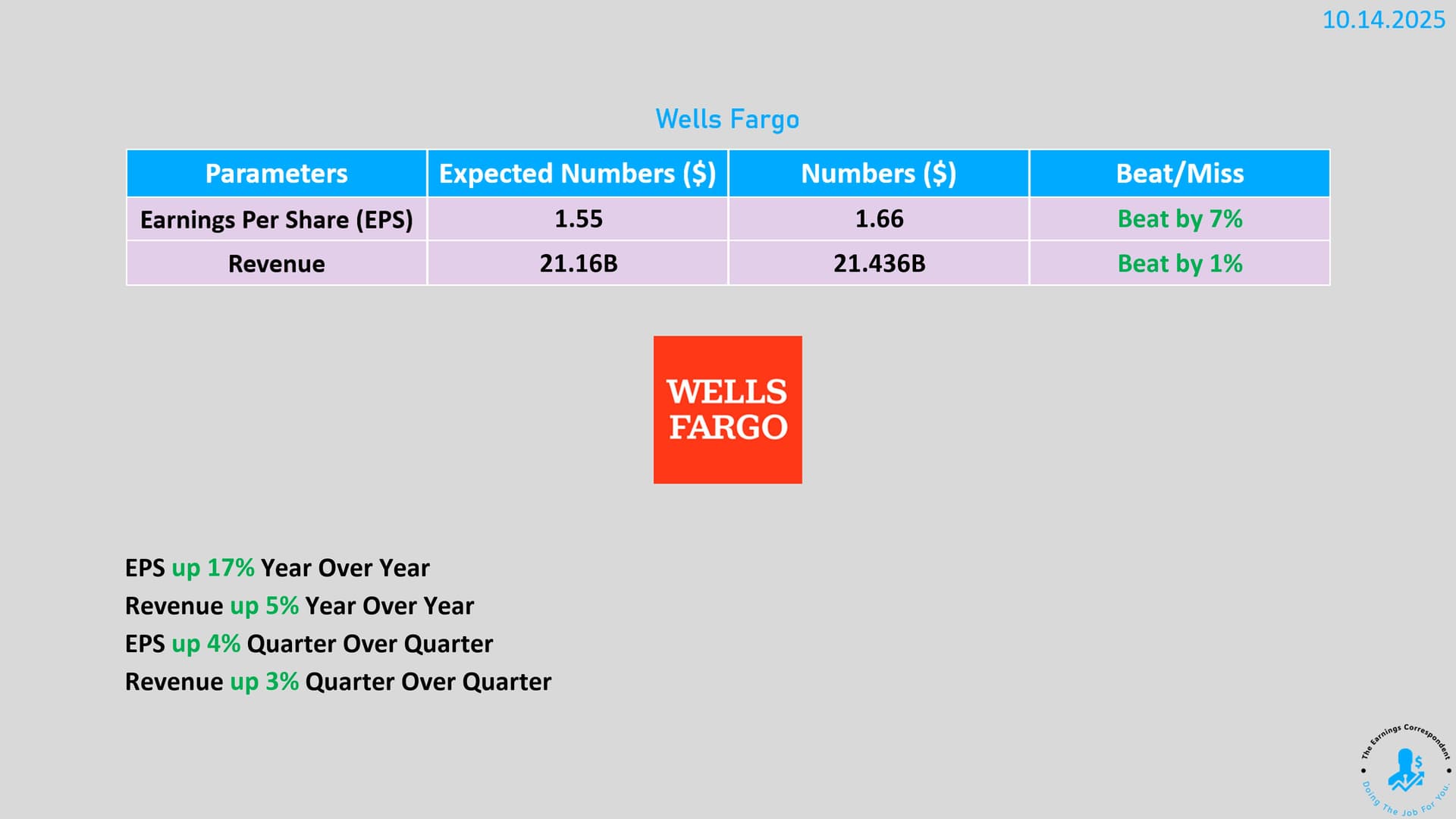
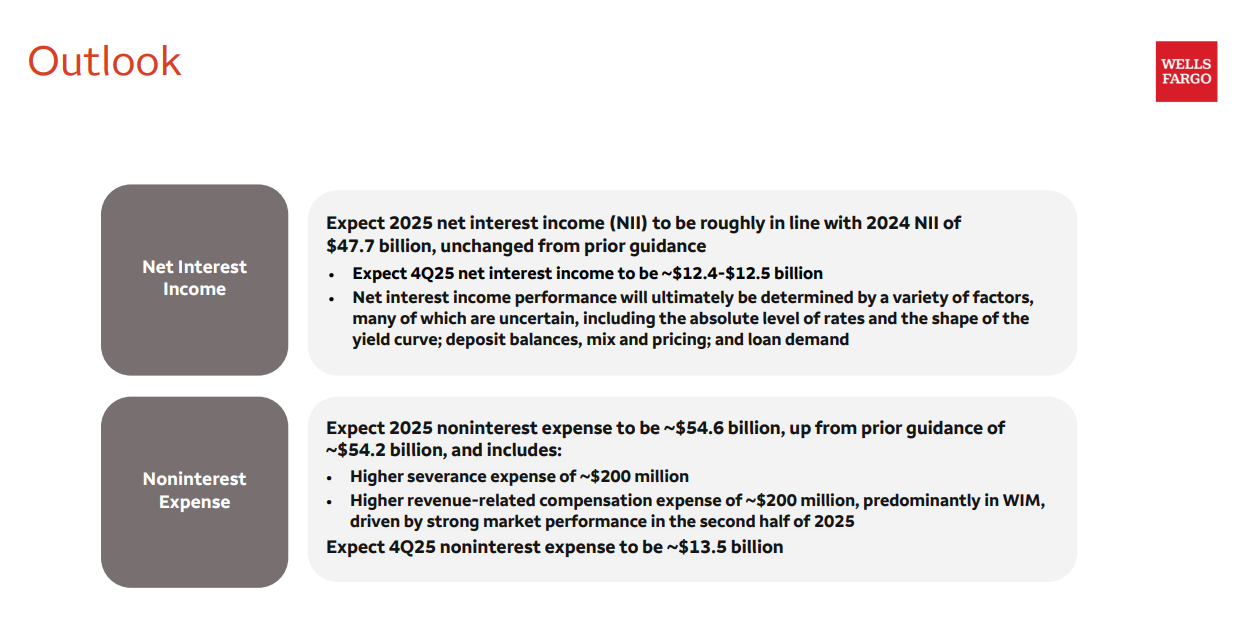
Wells Fargo’s results were strong; the bank’s profit grew and revenue broadly increased across different business lines. Mortgage loans and investment services performed well, in addition, the bank increased its balance sheet size and returned significant capital to its owners through dividends :smiling_face_with_three_hearts: and also share buybacks.

CEO Charlie Scharf stated he is optimistic about the future. According to him, the economy is still strong, customers’ financial situation is also good, and card usage and loan demand are growing well.

https://x.com/earnings_guy/status/1978045815785451729


Company’s Own Materials

image

4 Likes

In Kauppalehti today, a very interesting article about pension companies’ investments and their relationship with the domestic asset management sector:

Since the article is long, it’s difficult to include individual quotes. The core point is probably that domestic managers are well represented among pension companies, especially concerning alternative products. The journalist also provides a relevant challenge in the article, asking why a pension company has a housing fund intended for the average person in its portfolio, when they would have access to better closed-end structures.

22 Likes

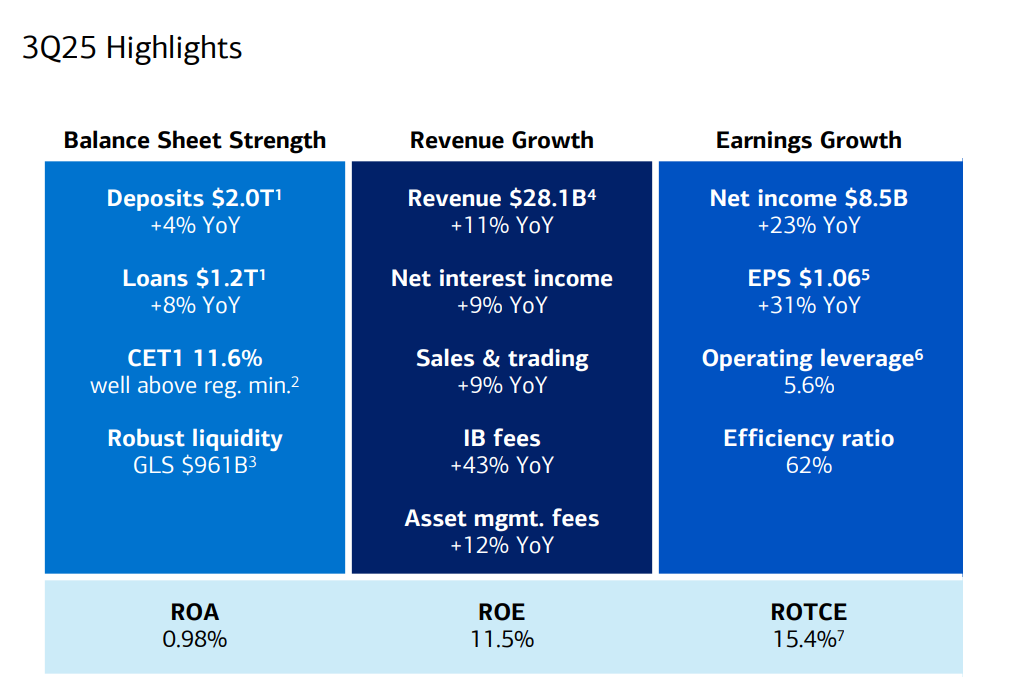
Bank of America posted strong earnings. Revenue and profit grew significantly, especially in the consumer and wealth management segments. Credit losses decreased, and the bank benefited from higher interest rates as well as active trading. The company’s management emphasized that technology and customer investments are yielding results, and additionally, the bank was able to both grow its loan portfolio and distribute substantial profits to its owners.

Overall, performance was stable and results were strong. :slight_smile:

https://x.com/earnings_guy/status/1978411495907094941


image


Company’s Own Materials

image


5 Likes

Morgan Stanley posted excellent results this quarter, and all of its business areas apparently performed well. Wealth management saw a significant inflow of new client assets, and investment banking and trading operated at a record pace.

The company’s management praised the consistent and successful execution of its strategy and strong growth across the globe.

Morgan Stanley clearly benefits from the market recovery and client confidence.

https://x.com/earnings_guy/status/1978422247137161382


Company’s own materials

image
image

4 Likes

Strange things are happening in forest funds right now. S-Pankki Metsä’s return for the last 12 months is -14%, and comments on the forest market are quite negative (https://www.s-pankki.fi/fi/saastaminen-ja-sijoittaminen/rahastot/s-pankki-metsa-a/).

Meanwhile, OP Metsä’s return for the last 12 months is 11%, and comments were positive at least for Q2 (Q3 comments not yet published / https://www.op.fi/henkiloasiakkaat/saastot-ja-sijoitukset/rahastot/kaikki-rahastot/op-metsanomistaja).

It’s absolutely impossible for me to understand how the return difference between funds investing in forests in the same target market can be 25% in a year? This can no longer be explained by any small technical trickery or delay; there’s a blatant difference in valuations here. It seems S-Pankki has seen some capital outflow early in the year, so have they possibly been forced to sell some assets, and would this explain such a drastic valuation difference? In any case, it’s wild stuff and highlights the problem with alternative funds, where the fund company itself also acts as the valuer.

58 Likes

Björn Wahlroos interviewed by EFN Ekonomikanalen. The interview is in Swedish, but English subtitles are available from the menu if needed. Duration 1h 25min. Topics include banks, insurance companies, and financial markets, as well as politics in the Nordic countries and Europe, the forest industry, etc. The Nvidia and Nokia deal and Nalle’s (Björn Wahlroos’s nickname) current portfolio diversification are also discussed.

10 Likes

Last week, among other things, a real estate transaction came to light, where UB Forest Fund was the buyer. Out of pure interest, I looked into what kind of plot it was, as it can be easily found with its property ID. It was a 45-hectare plot in central Finland, and based on satellite imagery, one-third of the plot is pure bog, one-third is stunted bog-mixed forest, and one-third is somewhat growth-capable-looking young coniferous/mixed forest.

I don’t know the purchase price of that particular plot, but seeing it, I couldn’t help but think how some “gel-haired” person sitting in an Espoo office is buying forests just to put cash somewhere. :smiley: However, it’s pointless to expect huge timber sales revenues from that plot.
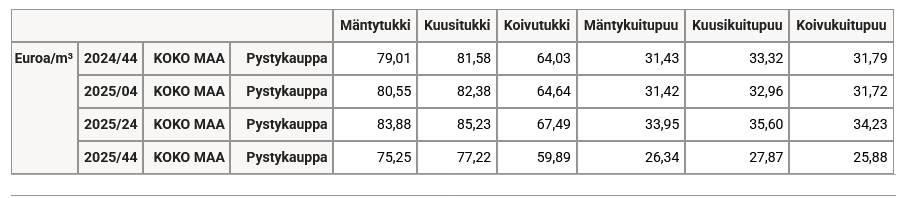
From Luke’s website, I looked at the development of stumpage prices for trees over the last year:

According to this, the price of sawlogs has fallen by about five percent across the board during the year, and the price of pulpwood by over 15%. Based on this, the highest price peak for timber might already be behind us.

These forest funds were discussed already at the beginning of the year, and my view has remained pretty much unchanged. OP-Metsä, which still presents huge return percentages, has made most of its returns through Tornator and revaluations of forests, and in my opinion, this cannot continue indefinitely. There are no buyers for the forests owned by the funds at the valuation levels of the funds, should they need to be converted into cash due to redemptions.

In my opinion, it’s only a matter of time before these funds also close their doors, similar to housing funds. In housing funds, the first redeemers still managed to save themselves before the closure.

35 Likes

Tässä on Sale’s comments on domestic investment funds’ performance in October. :slight_smile:

According to the Fund Report published by Finnish Investment Research, domestic investment funds received net subscriptions of over one billion euros in October. Sales were strong in both equities and fixed income, and sales were also broadly distributed among operators. For the entire year, net subscriptions are almost four billion in positive territory, and the whole year is shaping up to be good in terms of new sales. Value changes were also clearly positive in October, and driven by these, fund assets swelled to 199 billion (9/25 193 bn). With high probability, November will see the celebration of the 200 billion euro milestone being broken in domestic fund assets.

5 Likes

Yesterday, an acquisition took place in the industry when Osuuskunta KPY acquired private equity investor Sentica. Tunnettu pääomasijoitusyhtiö vaihtaa omistajaa – Näin KPY aikoo hyödyntää kauppaa | Kauppalehti

With some experience in the sector, I dare say that this arrangement was not on any sector player’s radar. On paper, the logic of the arrangement remains a bit obscure to me, as I don’t immediately see what KPY brings to the table here. The idea is probably that KPY can accelerate fund sales, but I don’t quite understand how. :thinking:

For Sentica, this smells purely like an exit. Sentica receives KPY shares in the arrangement, which indeed strengthens earlier rumors of KPY’s potential listing. It’s hard to see Sentica wanting KPY shares without knowing that they will become liquid at some point.

22 Likes

You’re probably right about that :laughing: More than half of the people left/were sent away from Sentica already a year or two ago when the new fund didn’t materialize. So, in that sense, this was probably a way to get the last benefit out of the name. That listing plan is indeed very likely; otherwise, a share exchange would hardly have been acceptable.

3 Likes

According to KPY’s updated strategy, in the future, own balance sheet investments will be made in Sentica’s funds. Could selling funds be easier when KPY acts as a co-investor?

2 Likes

Certainly, KPY will be an anchor owner in the funds, and this might facilitate sales when the owner itself has a lot of “skin in the game”.

4 Likes